-
The Hori Hori Garden Knife: A Versatile Tool Rooted in History
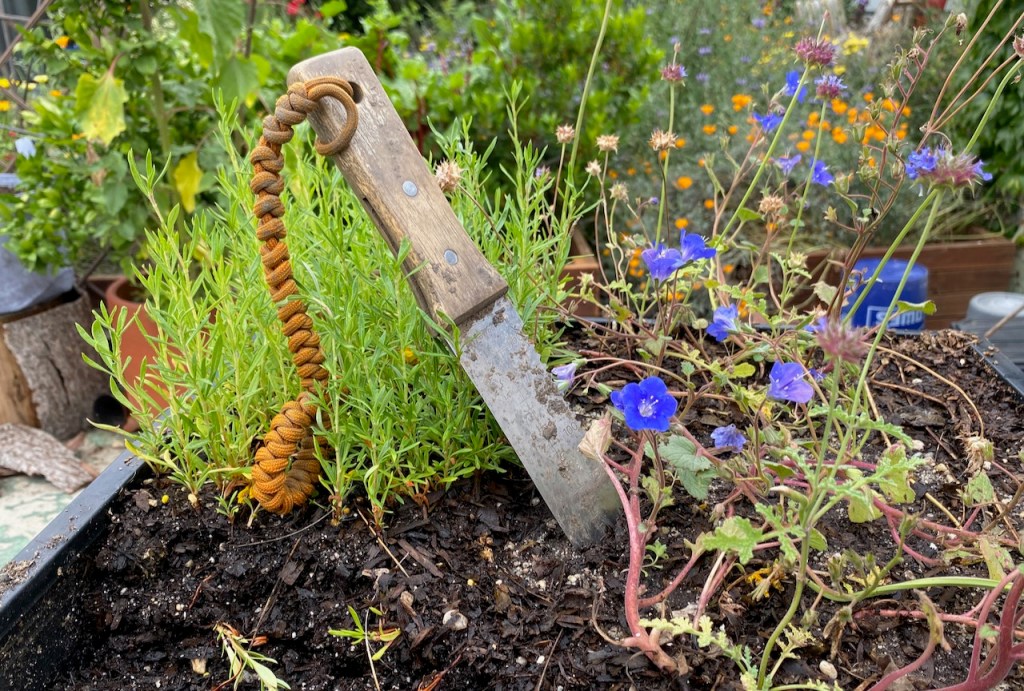
Gardening enthusiasts and professionals are always on the lookout for reliable and versatile tools to enhance their gardening experience. Among the many options available, the hori hori garden knife is a remarkable tool with a rich history and multifaceted uses. In this blog post, I want to explore the origins, features, and various applications of the hori hori knife, shedding light on why it has become an indispensable asset for gardeners worldwide.
The Origins of the Hori Hori Knife
The hori hori knife, also known as a “soil knife” or “weeding knife,” finds its roots in Japan, where it has been a cherished gardening tool for centuries. The word “hori” translates to “to dig” in Japanese, perfectly encapsulating the knife’s primary purpose. Historically, Japanese gardeners used the hori hori knife to remove vegetables and Sanasi plants from the mountains, showcasing its versatility from the very beginning.

Design and Construction
The hori hori knife is renowned for its unique design and durability. Typically, it features a steel blade with a semi-sharp point at the end, allowing for easy digging and cutting. The blade is sharp on both sides, with one side jagged for tougher cutting tasks and the other side smoother for delicate cutting applications. The knife’s compact size, ranging between 11-15 inches, including the handle, makes it a one-handed, go-to tool for gardeners.
Various Styles and Handle Options
Although the hori hori knife maintains a consistent blade design across different models, it offers a variety of handle options. Traditional styles often incorporate wooden or bamboo handles, reflecting the tool’s historical origins. However, rubber and plastic handle variations are also available, providing added grip and ergonomic benefits. Whether you prefer the traditional charm of wood or the practicality of modern materials, there is a hori hori knife to suit your preferences.
Versatile Uses of the Hori Hori Knife
The hori hori knife’s versatility makes it an indispensable tool for a wide range of gardening tasks. Let’s explore some of its primary uses:
- Cutting: With a double-sided blade the hori hori knife effortlessly cuts through different foliage and roots. The serrated side is ideal for tackling tough roots and weeds while the smoother blade excels at more delicate cutting tasks like slicing through small weeds, stems, or bags of fertilizer.
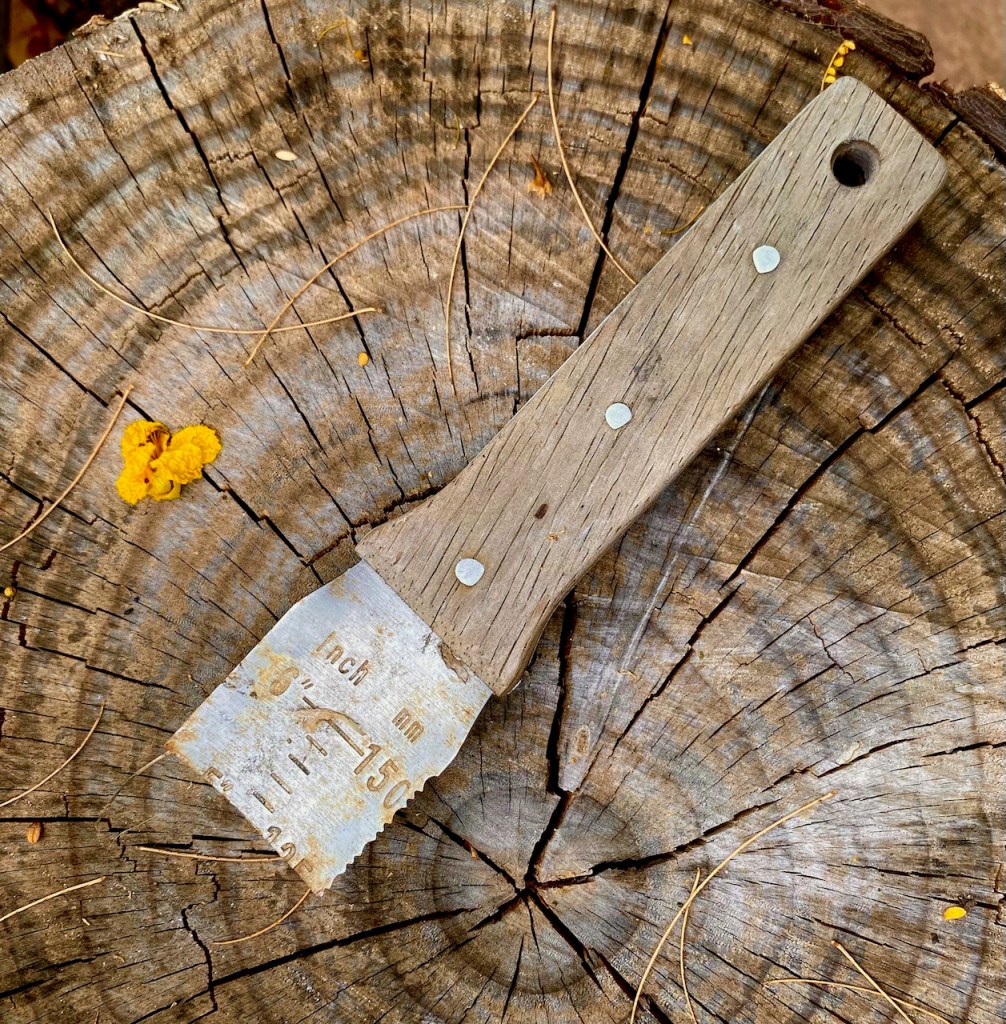
- Planting: The pointed blade of the hori hori knife allows gardeners to dig rows for seeds, seedlings, and holes for larger plants. The built-in ruler, consisting of notches on the blade, assists in measuring the correct depth, ensuring precise planting. The knife’s versatility as a planting tool streamlines gardening efforts.
- Weeding and Removal: Because of its unique shape, the hori hori knife is exceptionally effective in weed removal. The blade aids in loosening the soil around weed roots, enabling efficient weed extraction. This tool saves time and effort, as gardeners can tackle weeds at their roots, minimizing their regrowth. Additionally, the hori hori knife assists in removing old tree stumps and bushes and preparing the workspace for further landscaping.
- Harvesting Root Crops: The hori hori knife’s functionality extends to the harvesting of root crops. The curved tip of the blade facilitates the removal of excess soil, allowing gardeners to lift plants easily. By leveraging this method, gardeners can harvest root crops efficiently, provided the soil is loose enough.
Read: Conserving Water in Southern California
Benefits of the Hori Hori Knife
The hori hori knife offers several advantages that set it apart from traditional gardening tools:
- Versatility: The unique shape and design of the hori hori knife enable it to perform most gardening tasks, reducing the need for multiple tools. Its combination of trowel, knife, and saw functionalities streamlines gardening efforts and ensures efficiency.
- Cost-effectiveness: Investing in a hori hori knife means acquiring a multi-purpose tool that replaces the need for multiple specialized gardening tools. By consolidating functionalities, gardeners can save money while enjoying the benefits of a versatile tool.
Hori Hori knives Are Not Unbreakable
Just a word of caution, hori hori knives can break. I’ve found this out a few times with garden knives I purchased at the big box stores. When it broke, I’ll admit I was using it to try and leverage out a root that was way bigger (and deeper) than I should have been. My guess is the knife was leveraged between the root and a rock in the soil and just snapped in two. My second knife broke at a weak point that was in line with a bottle opener which made it a weak spot.
Read: Starting a Native Plant Garden in Southern California Hardiness Zone 10
I mention this as a word of warning, but as you’ve probably heard hundreds of times, “Use the right tool for the right job.” Hori Hori’s are not a universal tool or multitool. They’re great at digging, edging planting holes, or even measuring depth if your tool has an etched-in ruler. They’re not great pry bars.
Using a Hori Hori Knife in the California Native Plant Garden
All this talk has been about the tool itself. I’ve found it to be a great tool when shaping planting holes and really digging out clay soils when dropping in California native plants. They’re a bit handier than a shovel and nimbler than just using a mattock to rough-cut soil out. Because they have a sharp edge, they’re great for cutting weeds and roots. In that way, they are a universal tool, but only when it comes to digging and shaping the soil. I even use mine to mix potting soil amendments in large containers.
Why Choose a Hori Hori Knife over a Standard Trowel?
While a gardening trowel serves its purpose in specific tasks, the hori hori knife surpasses it in efficiency and versatility. The hori hori knife’s unique design and multifaceted functionalities makes it a more advanced tool. The ability to dig, cut, and weed with a single tool makes the hori hori knife an invaluable asset for gardeners of all skill levels.
Read: How To Start A Community Garden
The hori hori garden knife, with its rich history and multifunctional design, has rightfully earned its place as a must-have tool for gardeners. From its origins in Japan to its worldwide popularity today, the hori hori knife continues to prove its worth in various gardening tasks. Whether you need a tool for cutting, planting, weeding, or harvesting, the hori hori garden knifes versatility and durability make it an essential addition to any gardeners toolbox. Embrace the hori hori knife and elevate your gardening experience to new heights. I love mine and I’m sure you’ll come to love yours too and make it one of your go-to tools every time you’re working out in the garden.
-
Observing the Marvin Braude Mulholland Gateway Park and Garapito Canyon Trail

California Naturalist Outing
Marvin Braude Mulholland Gateway Park and Garapito Canyon Trail
10:30 a.m.-1 p.m.- Route: Approaching from the parking area up to the fire road to the trail head.
- Weather: Warm and slightly humid. 69°F at start 78°F at end.
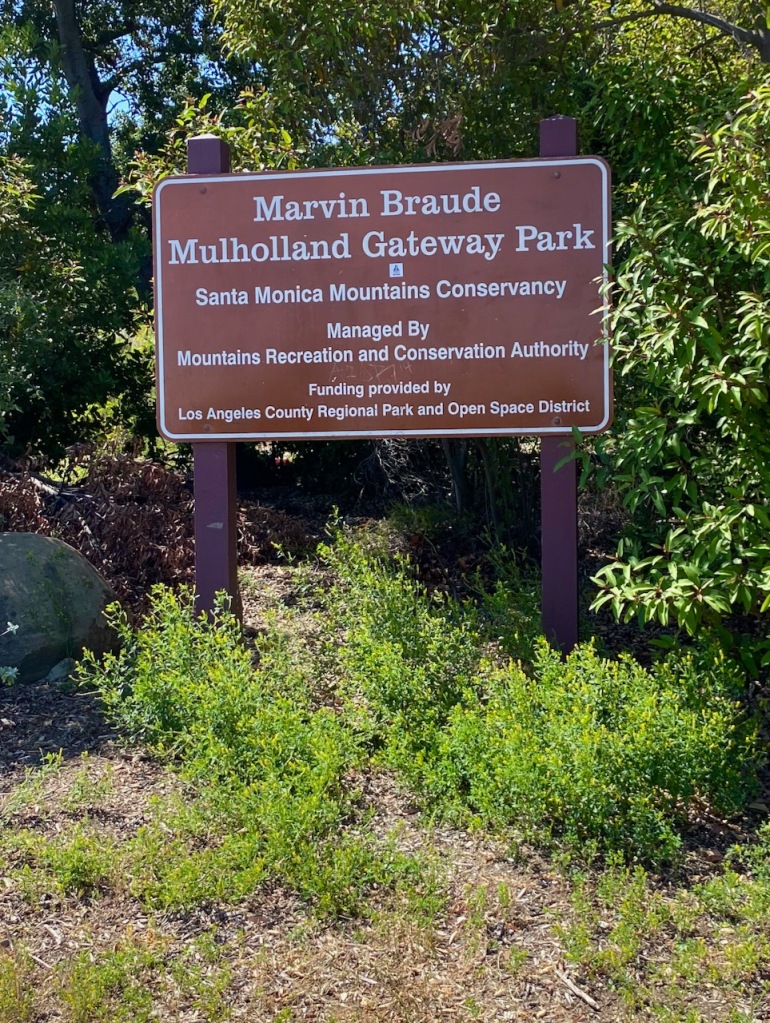
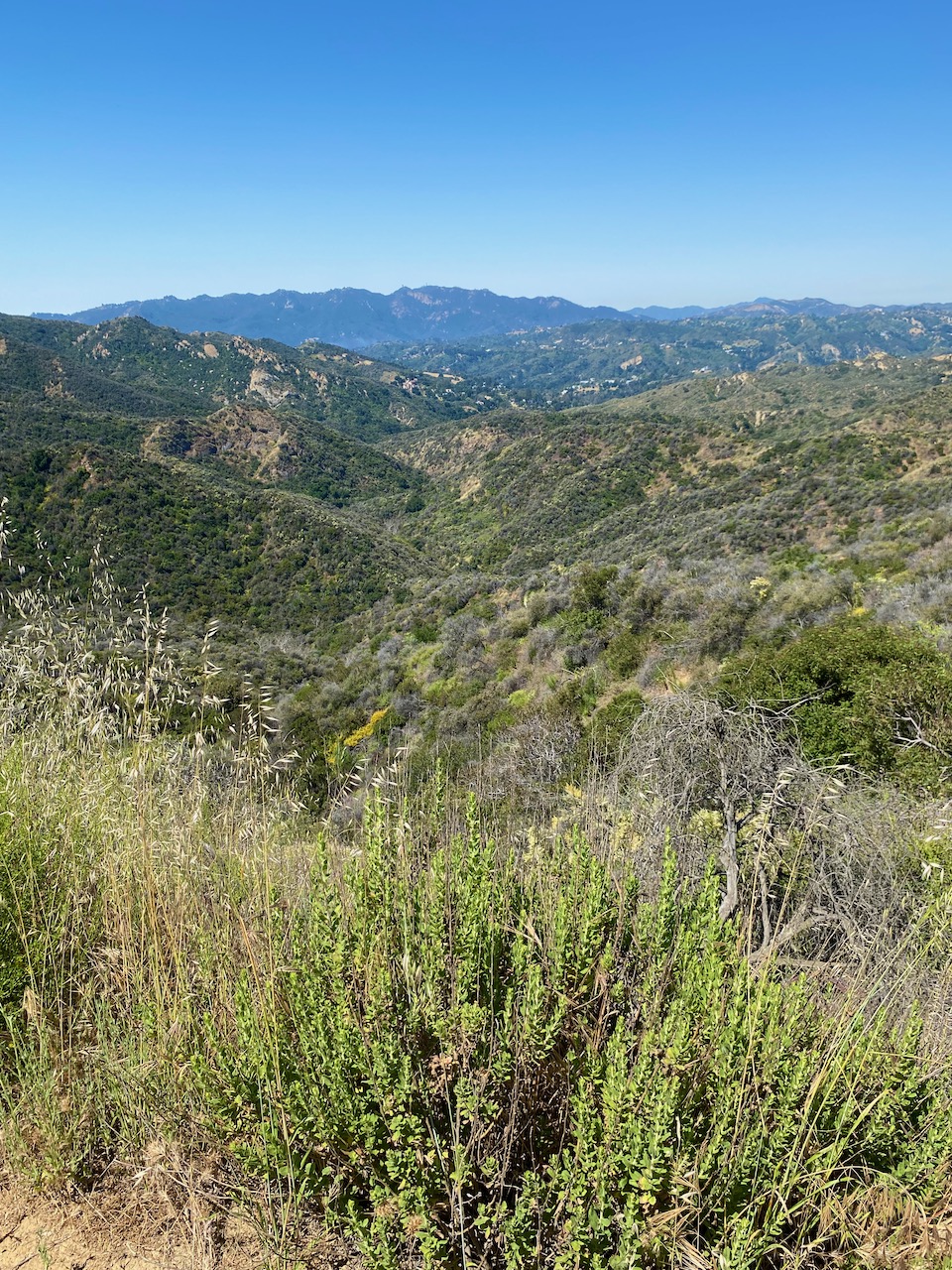
Striking out on a mid-week trek, I wanted to observe the native plants and habitats of the Santa Monica Mountains in May. The weather was still cool and slightly overcast in the morning (what the weatherman calls May grey) but it had burned off by the time I arrived. You could still get a feel for the moisture in the air as you moved through it.
Invasive Species
One of the first things I noticed was how profuse the invasive weeds were. Much like what I observed in the Sepulveda Basin the day before, Maltese Star Thistle (Centaurea melitensis) and annual yellow sweet clover (melilotus indicus) were all along the entry trails and sides of the fire roads. This was in addition to the profusion of yellow mustards. I didn’t stop to check closely, but it looked like the same short pod mustard variety growing in the valley open spaces below. Here it was all along the roads and trails. My guess is that it is easily carried by vehicles and feet passing by once it’s set seed.
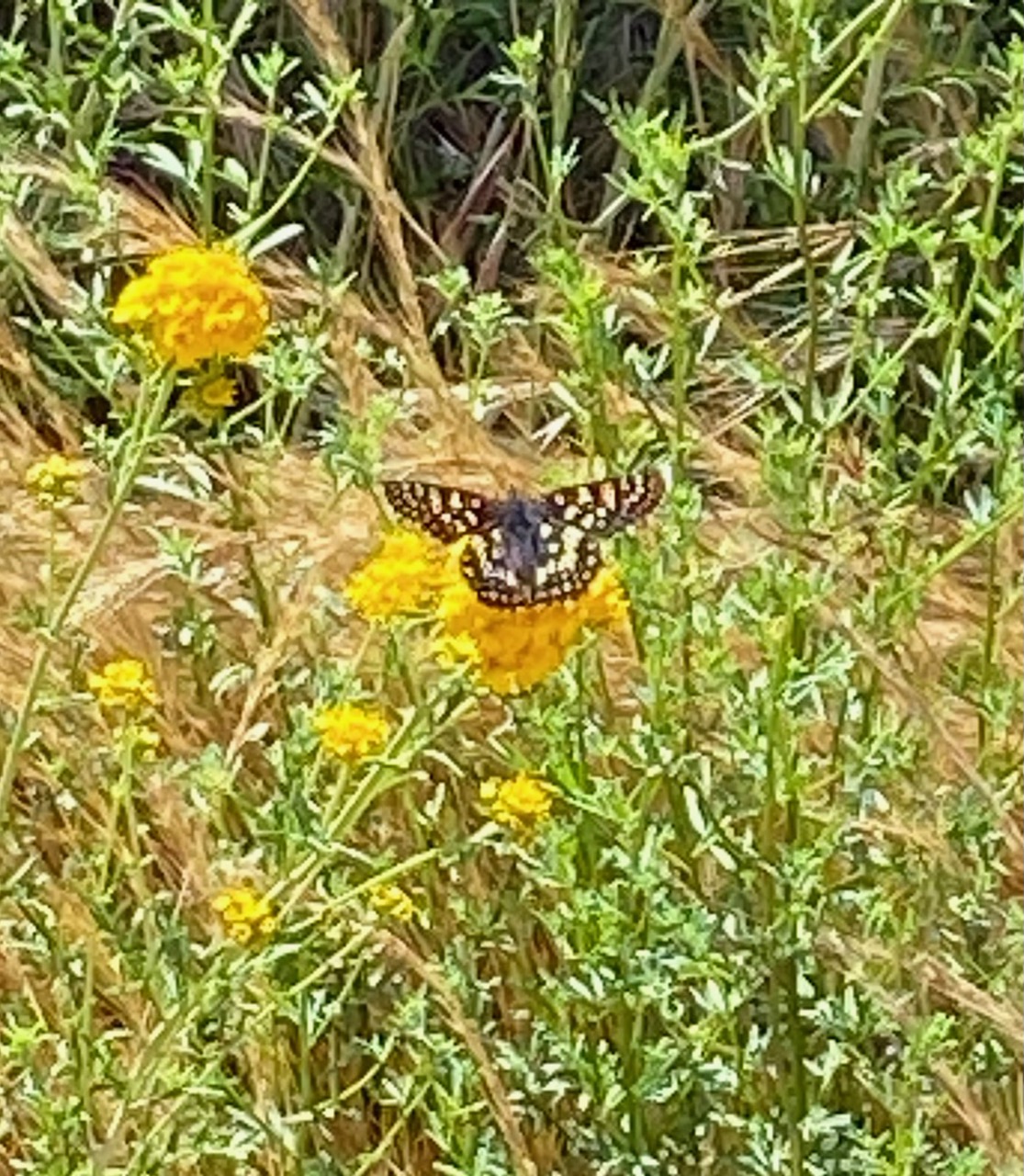
While the sweet clover and thistle looked parched (likely with the now lower soil moisture) the mustard was a lush, turgid green seemingly full of moisture thanks to their long taproots. I had to resist the urge to pull them as I walked by. Maybe a silver lining too so many flowering invasives, the butterflies and European honeybees seemed to be enjoying them. The butterflies looked to be variable checkerspot (Euphydryas chalcedona) which was in great profusion flittering from mustard flower to mustard flower. I wasn’t measuring, but with every pace along the entire journey, I observed no less than one checkerspot, in many of those paces seeing 2 or three in the span of my stride.
Happy buckwheat and sage
Other plants that looked happy in the space were the Buckwheat (Eriogonum fasciculatum) and the sages (California Sage – Artemisia californica and the Black sage – Salvia mellifera). Under full sun and on the flat surfaces of the hilltops, the buckwheat was in full bloom. So too were those on the south-facing slopes. The flowers looked young and fresh in the season. Around them, the buckwheat hosted many bees, grasshoppers, hoverflies, and butterflies. Those plants on the north-facing aspect seemed to be having a slower start to their season.
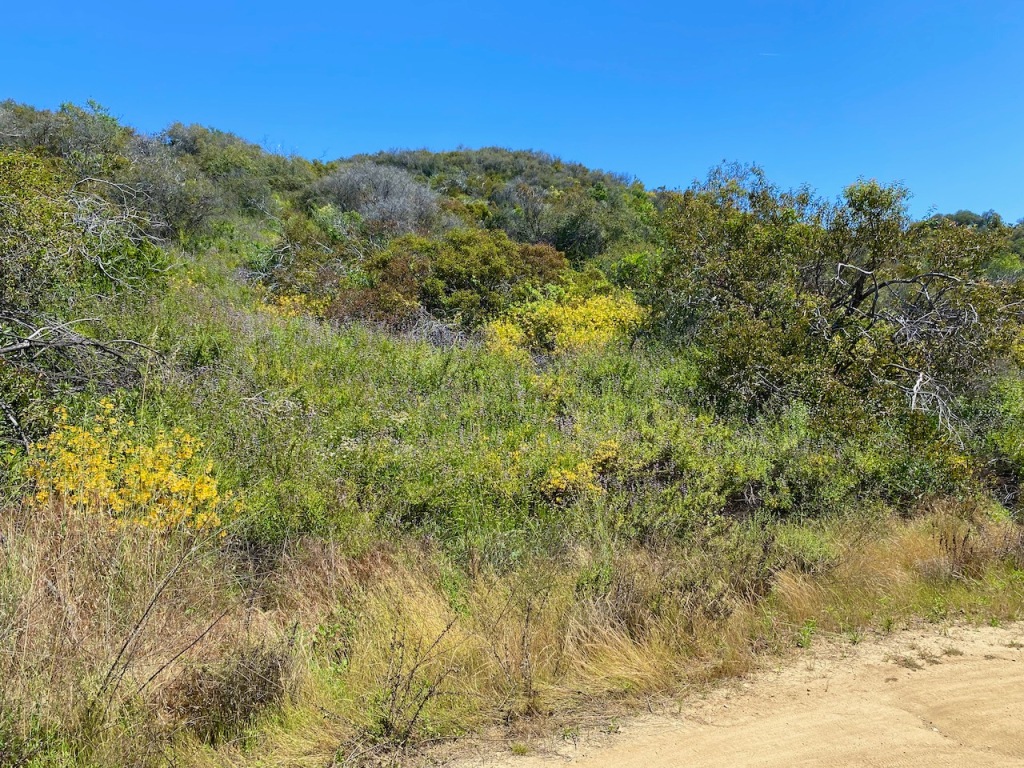
So too were the sages, both black and California sage. Much of the black sage had been in bloom for several weeks with, now, tired-looking flowers. The “cowboy cologne” California sage was looking resplendent in the season, though not yet in flower. My guess is the late warmth of spring is causing it to lag. This follows with my observations of other similar plants that I check weekly in the basin. I’m seeing what seem to be similar seasonal delays in setting flowers. The plants, however, look turgid with moisture and smelled heavenly when brushed by them.
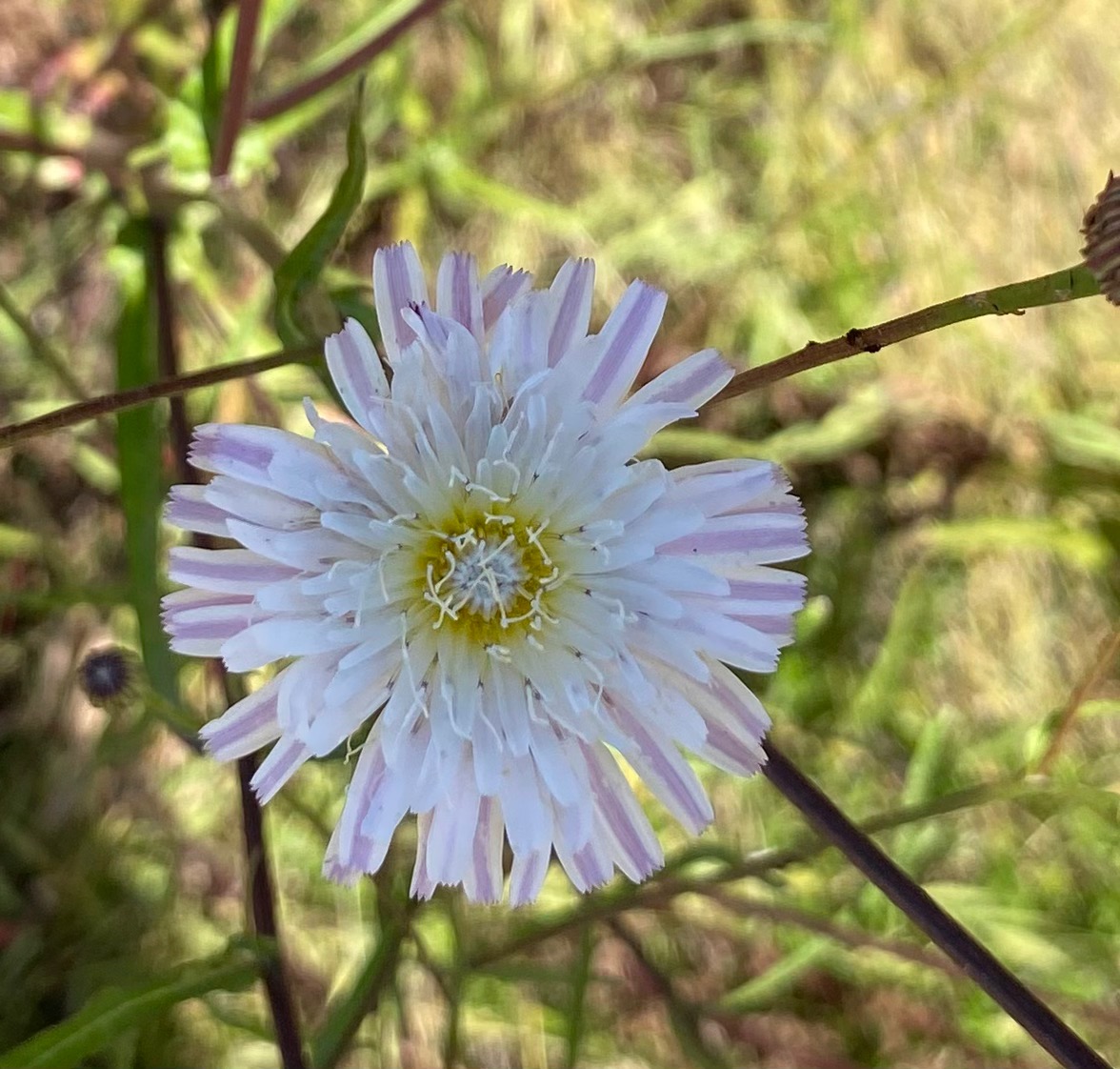
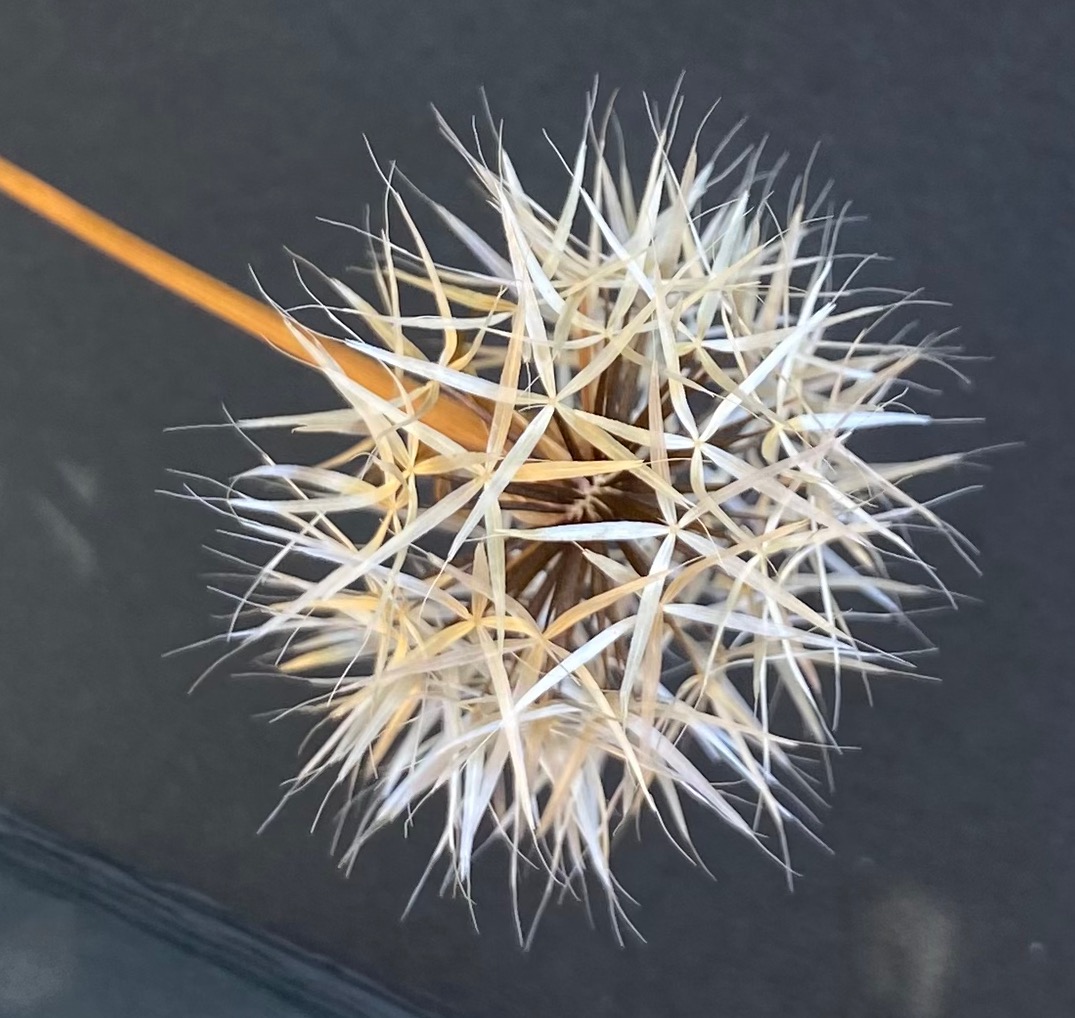
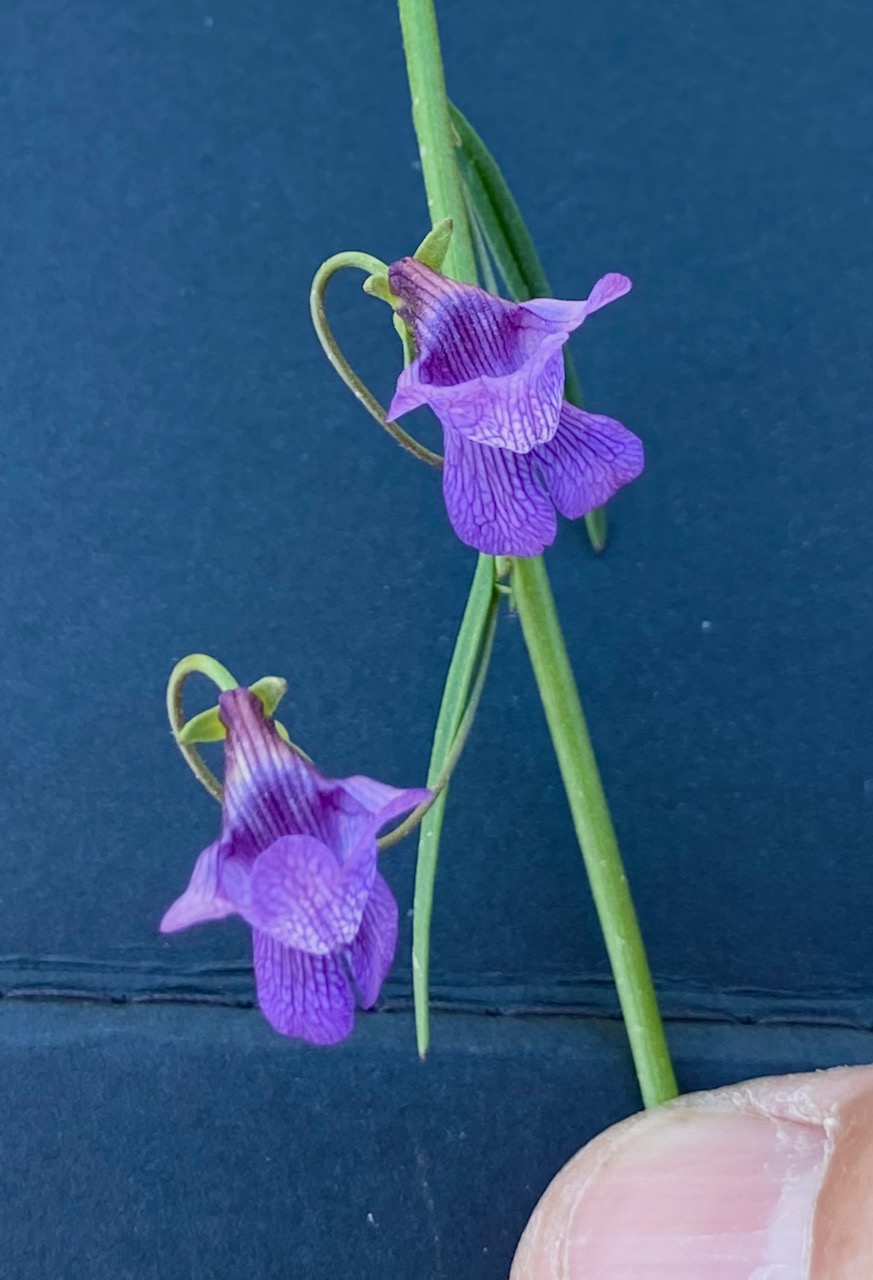
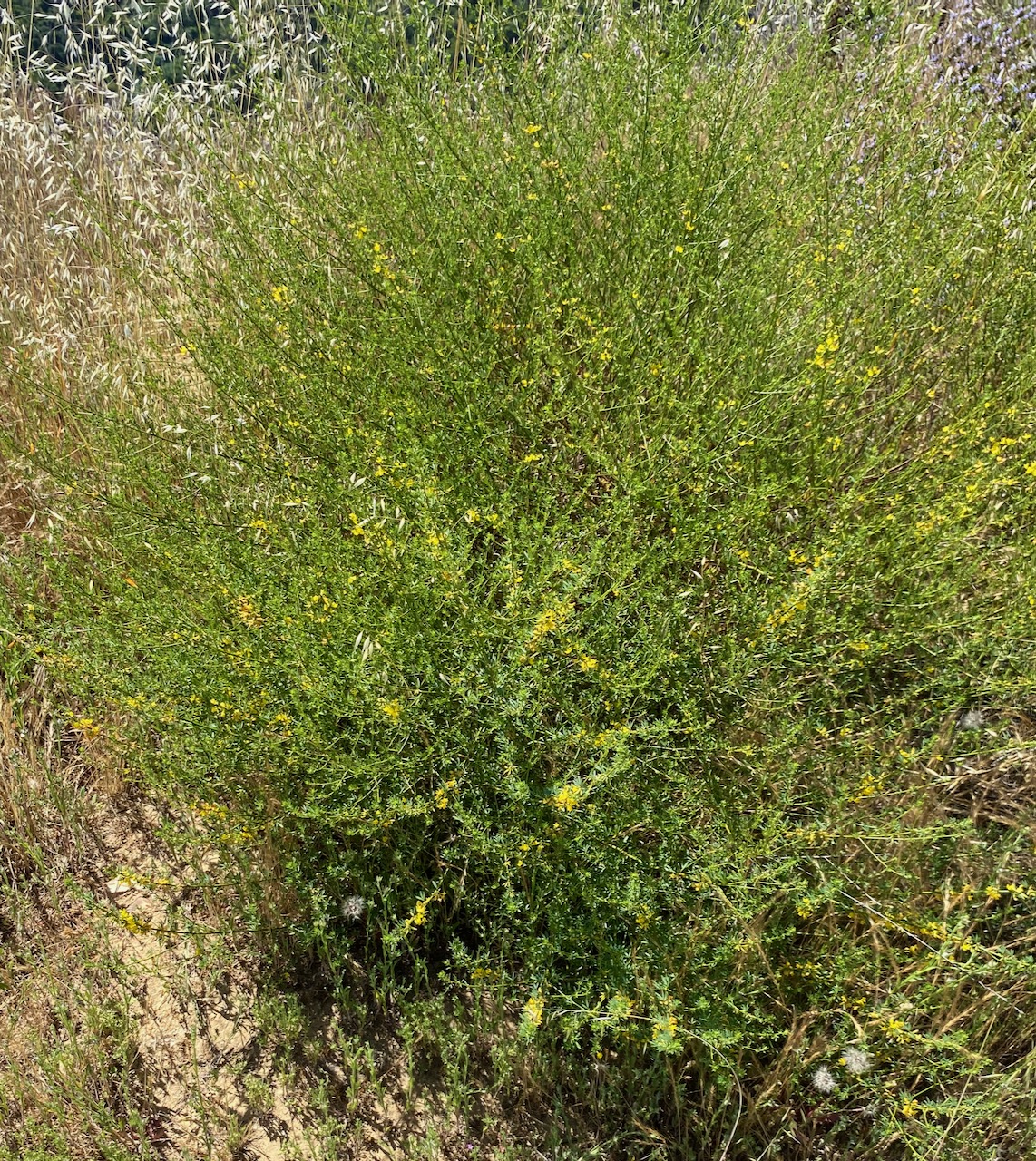
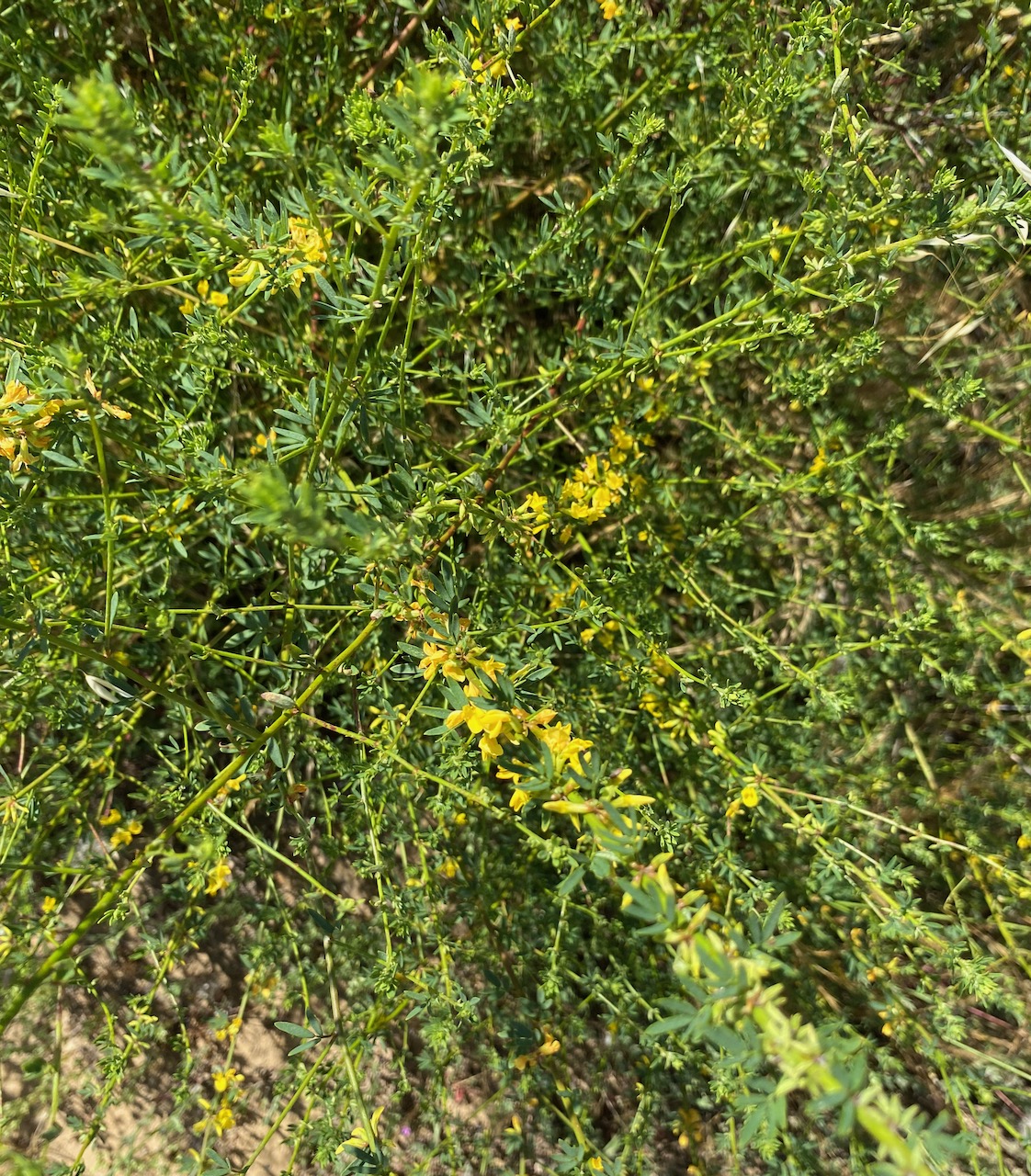
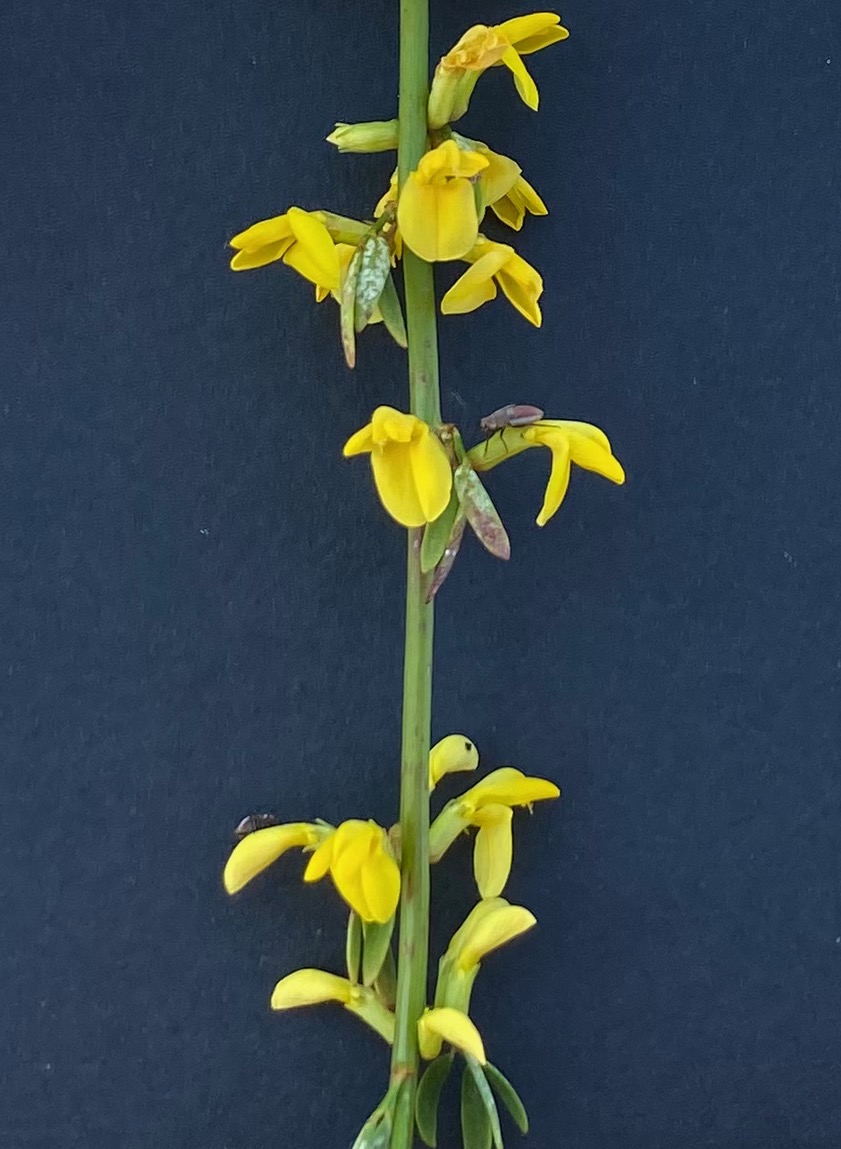
Amongst the sage and buckwheat were several of what looked like Rock Phacelia or maybe Mountain Phacelia (Phacelia californica or Phacelia imbricata ssp. imbricata) happily inhabiting the space growing profusely with the other sage/chaparral plants in the community. Another neat find was the deerweed (Acmispon glaber) thriving and in bloom with columns of small yellow flowers. This plant was also all along the side of the fire road and steep slopes of the hill seemingly in bloom on the southern aspects and ready to bloom on the others.
Not surprising was the volume of invasive grasses and oats all along the road and trails. It was hard to quantify the types or varieties throughout but much of it was dry and setting seed, already through its early growing season. I would like to go back and collect some samples from the space to compare in the future to see if they remain, take hold, or get eradicated. I suspect they will continue to spread with no native competition.
Read: Becoming A Naturalist
Sage Chaparral Communities
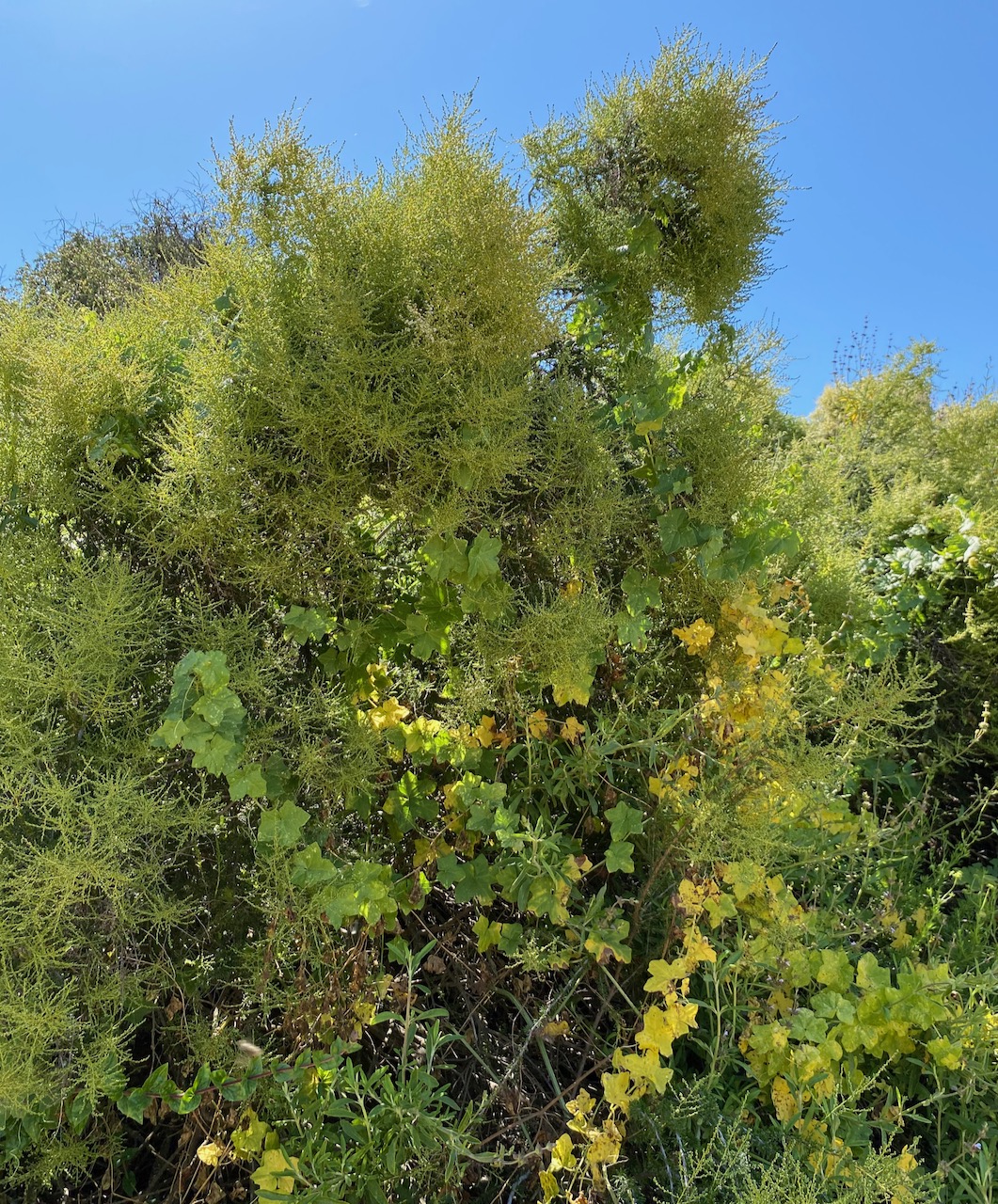
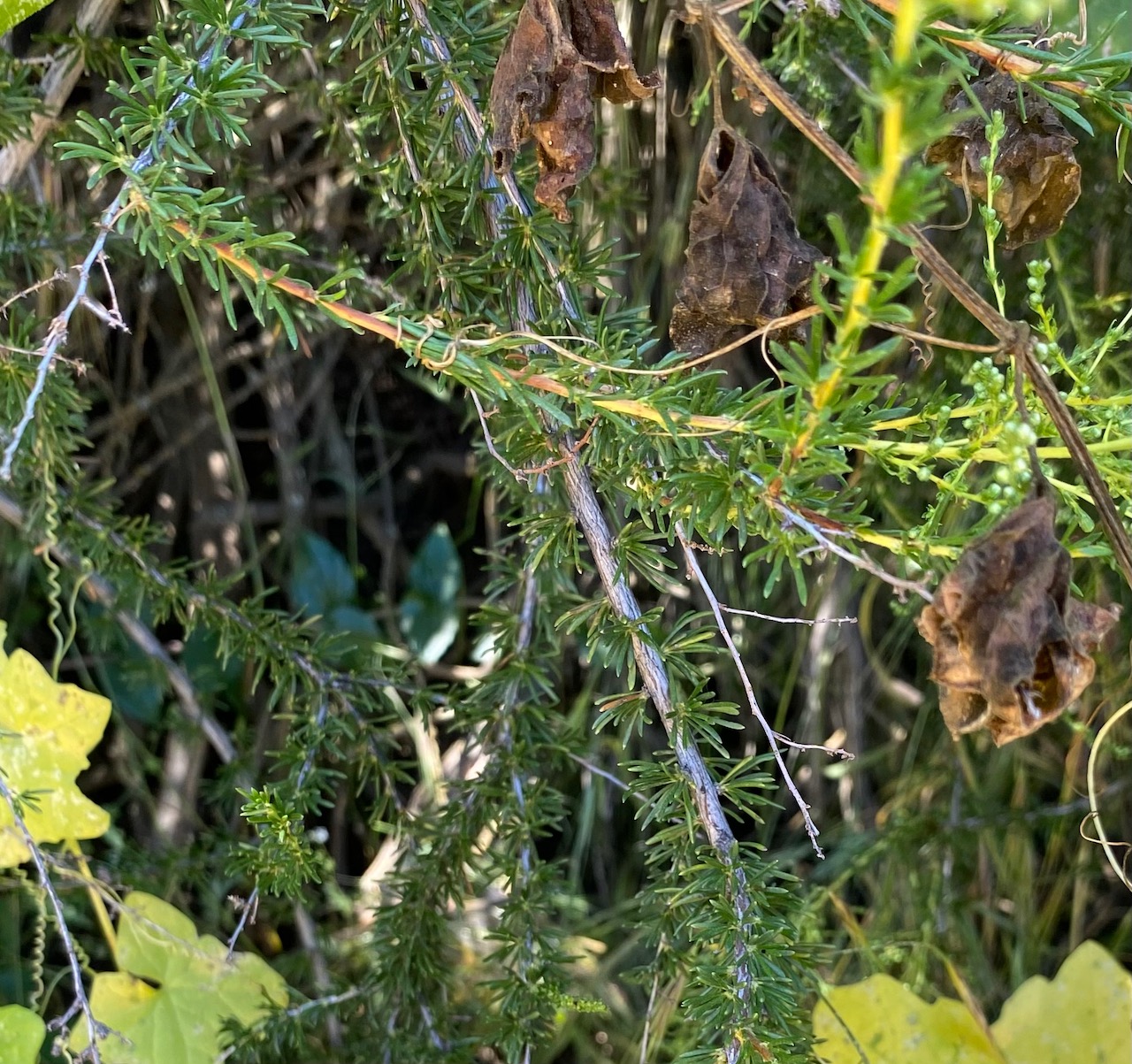
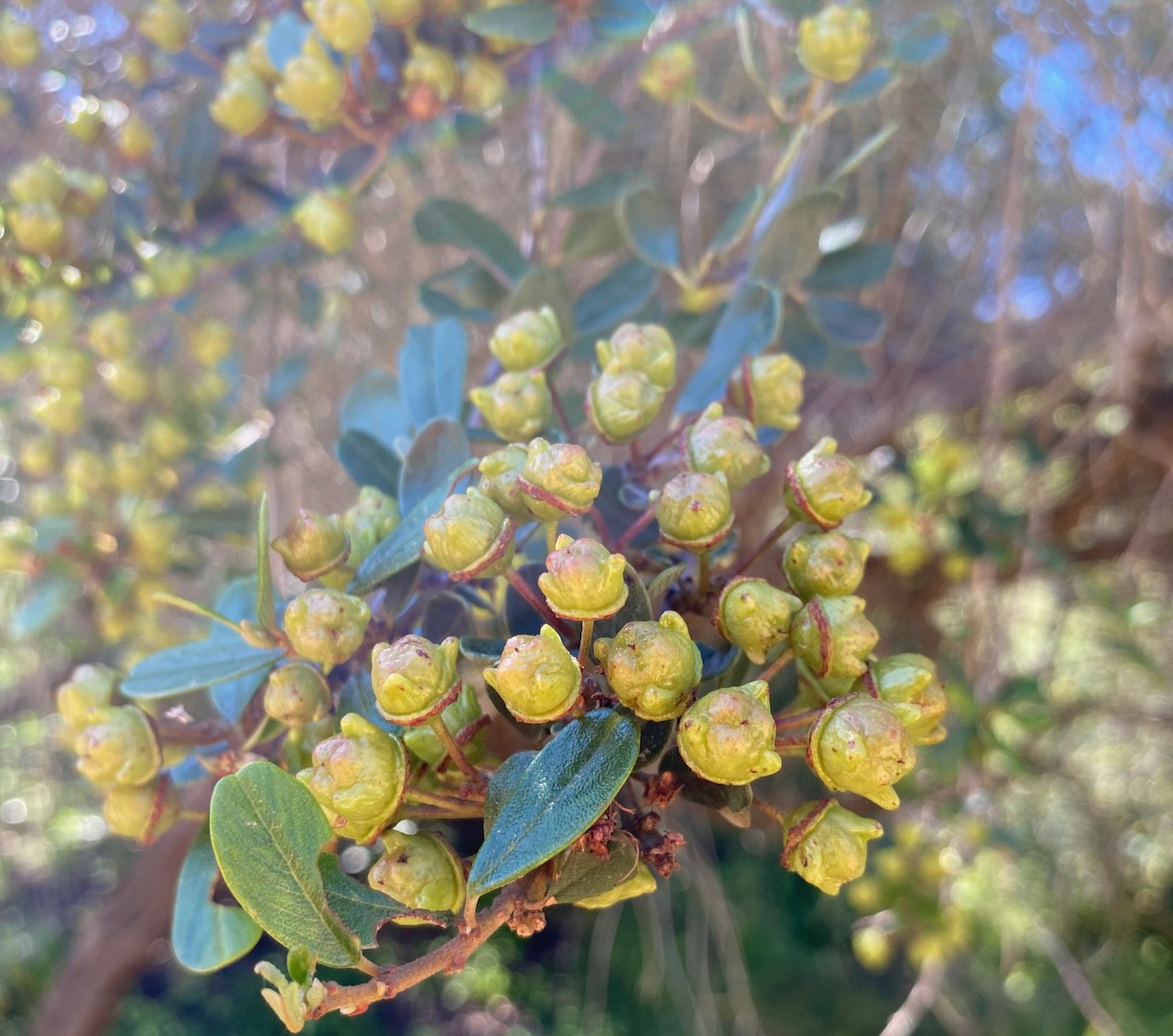
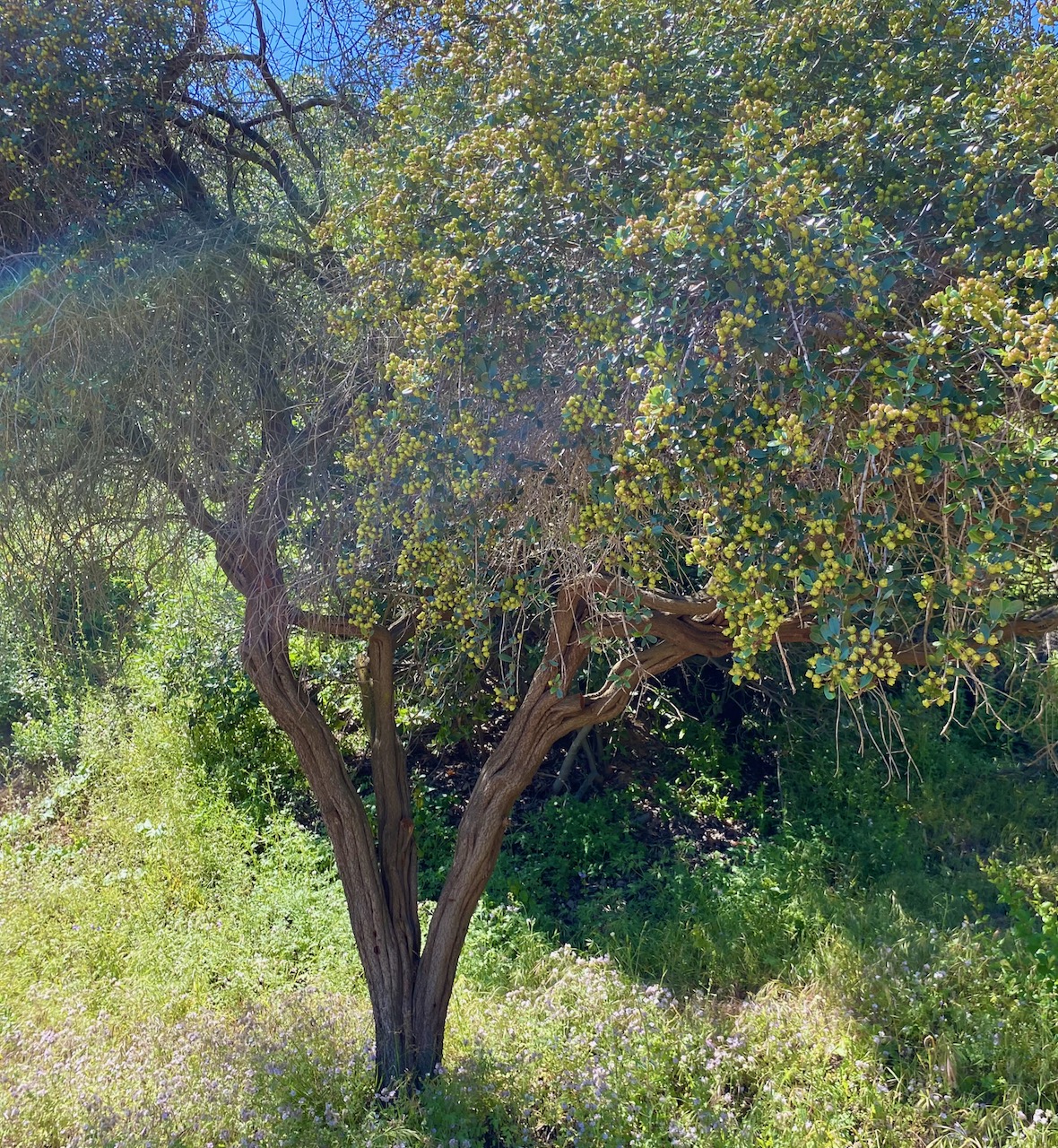
All along the hillsides of the fire road, there were many large laurel sumacs, lemonade berries, and toyons—each in various stages of bloom. I stumbled upon a lemonade berry on a northern aspect already setting its sticky and hairy fruit. Having grown these plants from seed, I have a fondness for them. Chamise, too, was getting ready to explode in bloom on the northern aspects. Many of the plants were covered in creamy white and green flower buds just on the edge of the opening. Another plant in this community ready to burst was the hairy ceanothus (Ceanothus oliganthus).
Anthropogenic Impacts
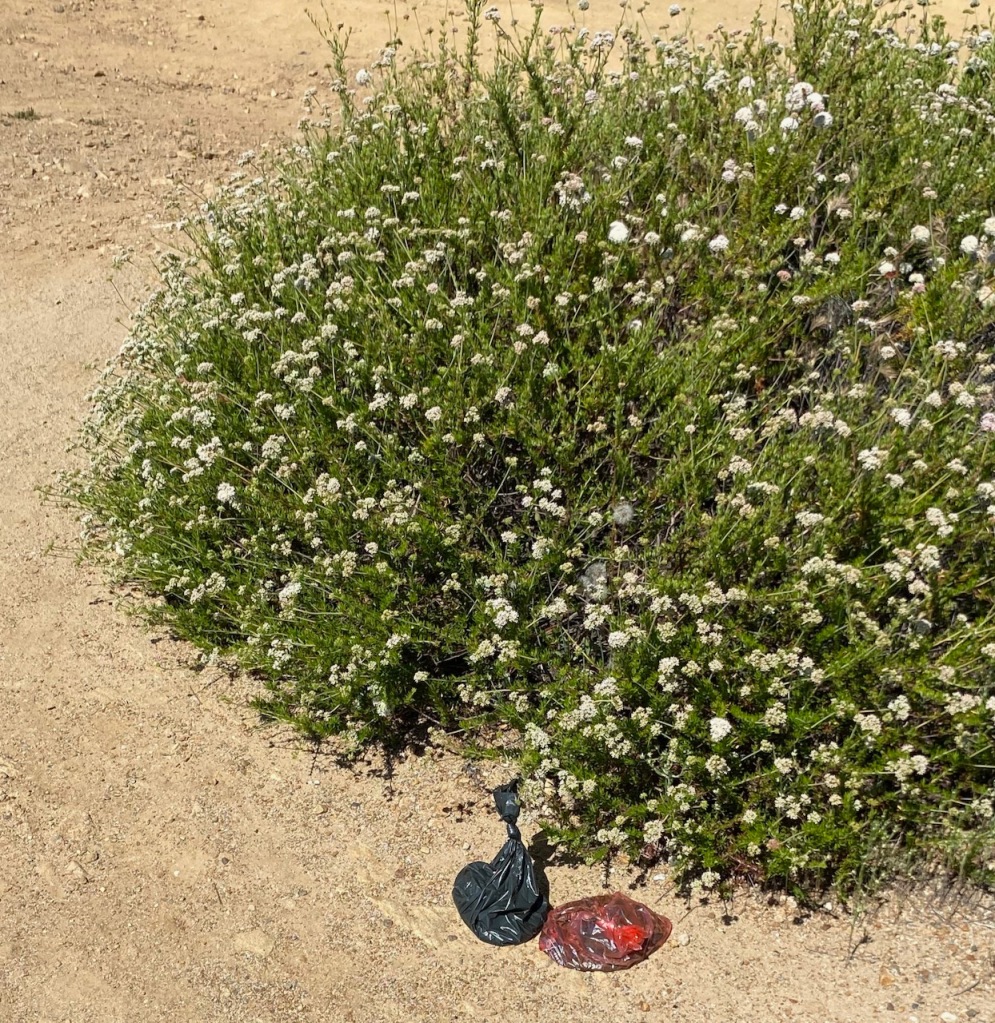
Bisecting the plant community, the fire roads themselves were very wide and looked to be recently maintained. They were very wide with few passersby. I encountered only a handful of trail runners (no fellow hikers) and as many mountain bikers. All in all, given it was a mid-weekday, the trail was quiet and open with not much in the way of human congestion. One thing worth mentioning is the impact of humans as a good many animal/nature lovers leaving bags of dog excrement along the path. As a user of the trail, I suppose I’m grateful that the dog owners harvested the poop and put it in the proper bright-colored bag. But I’m confused as to why they would leave it on the trail in plain sight of any passerby. I suppose people just don’t get the concept of “leave no trace” when it comes to walking their dog.
Garapito Canyon Trail
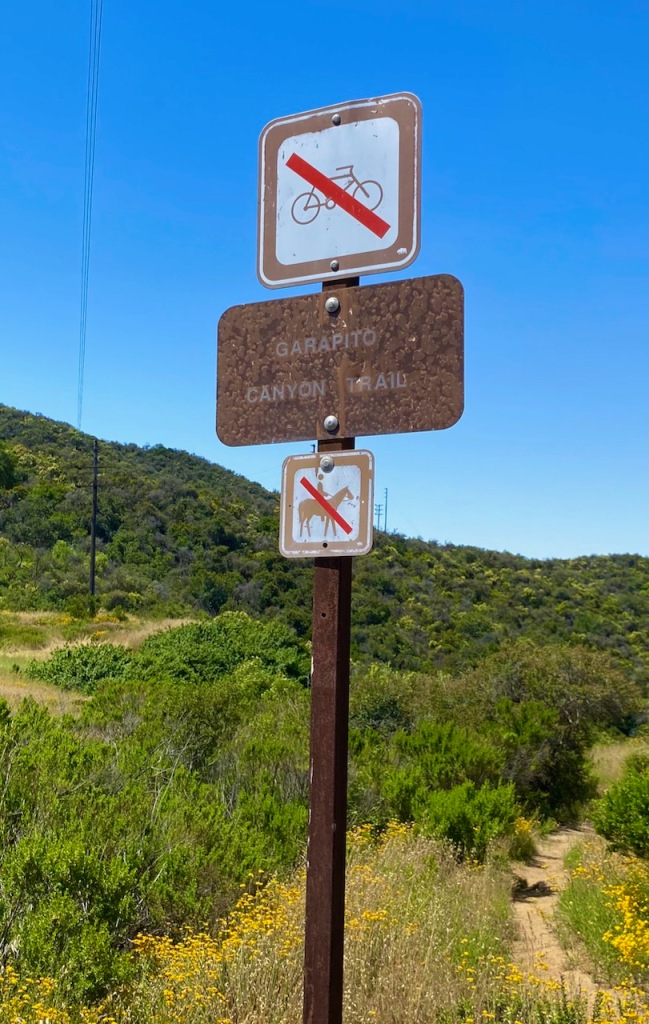
At this point in the journey, I arrived at Garapito Canyon trailhead, which was about a mile and a half from the parking lot. This path wasn’t on my original trek plan, but seeing the return trail to Mulholland Road was closed (parts had washed out making it impassible) I choose to instead investigate down into the canyon.
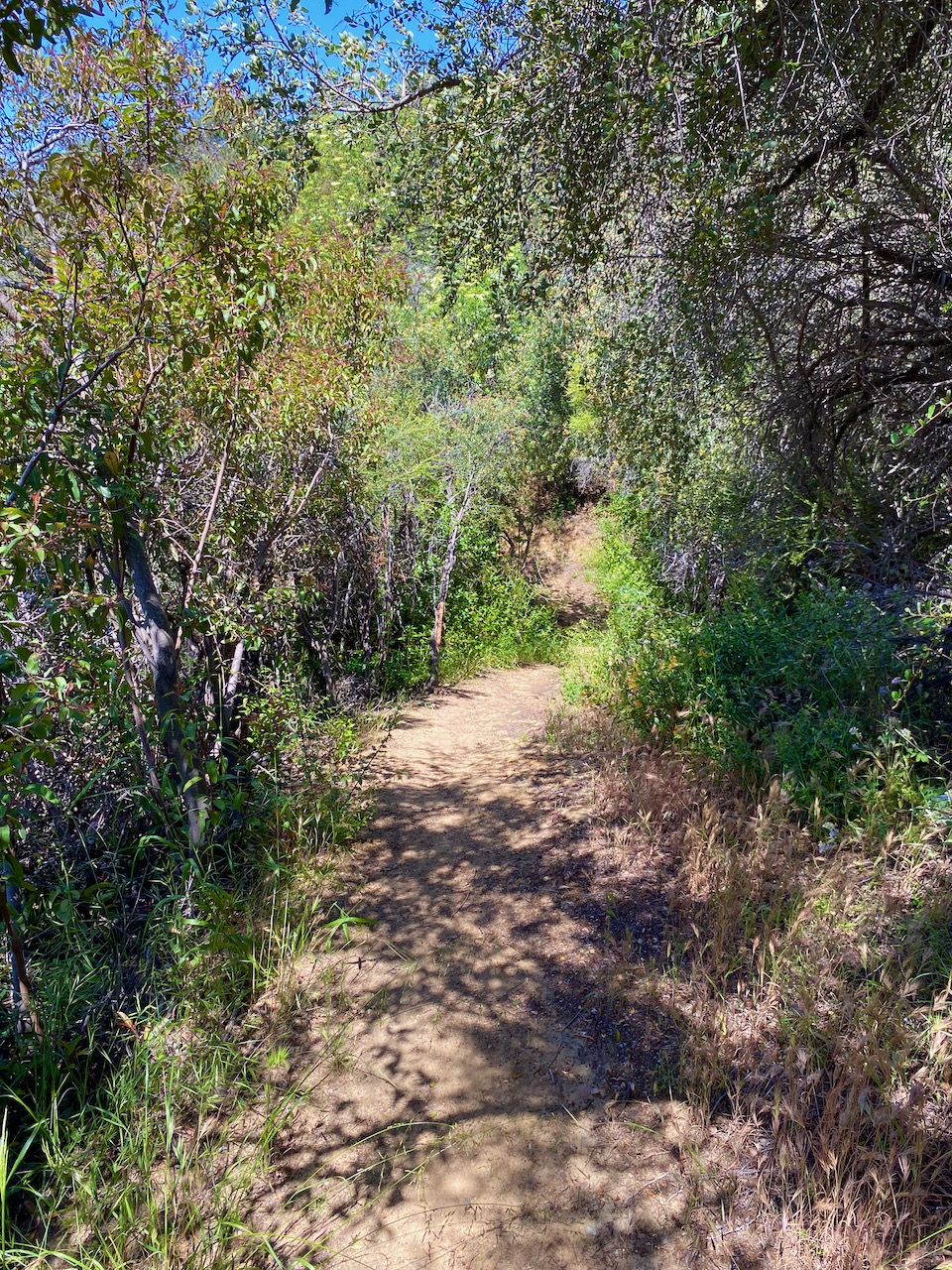
The path down follows a narrow trail that parallels a creek seep from the top of the hill creating a very narrow slot canyon. The footpath is very overgrown with encroaching grasses and mustard plants. Many of the plants along the side of the trail were mature and lush, except for the grasses and mustard at the start of the path. My guess is the top was the victim of fire road rehab with a mass of disturbed soil and no replanting. Nevertheless, once into the canyon, the native plants proved to be a great delight of tightly growing habitat along a slow-flowing creek with several small crossings as the trail wound its way downwards.
Some of the more interesting finds along the Garapito trail were several tall Sycamores jutting up from the floor of the creek bed. In one spot, a tall sycamore grew alongside a tall toyon as though the two were in a symbiotic competition towards the sunlight above. A short distance further, a colony of hummingbird sage (Salvia spathacea) huddled under another sycamore. It was an absolute delight to stumble across it in situ, under a shady canopy on a very quiet trail. Another surprise was a very mature colony of wavy-leafed soap plants (Chlorogalum pomeridianum), some about to bloom—just along the trail. In total, I counted 19 plants in this colony of various ages, each looking haggard, but happy and growing well in the space. The ones ready to flower had stalks nearly 5 feet in height and flowers just days from opening.
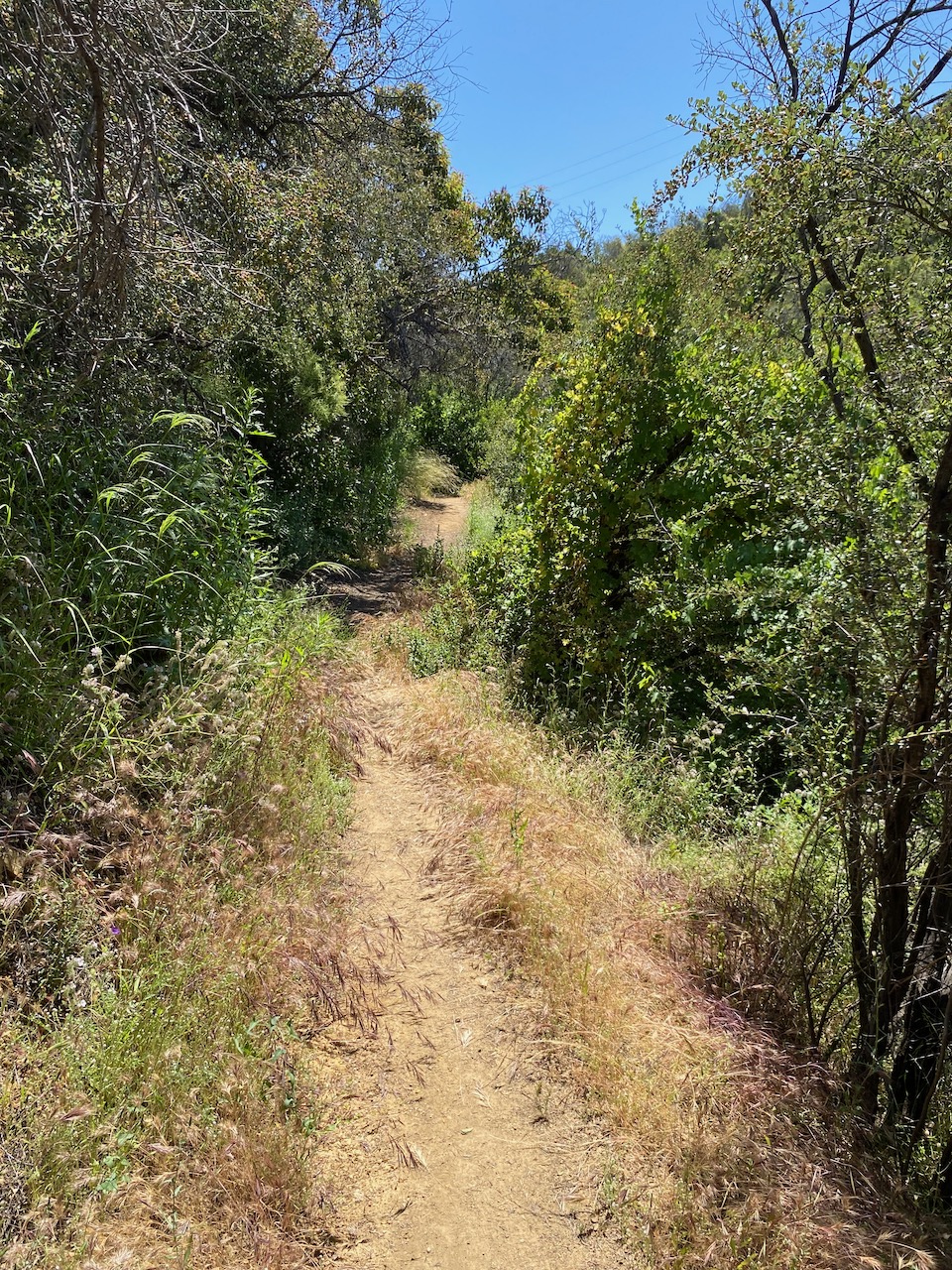
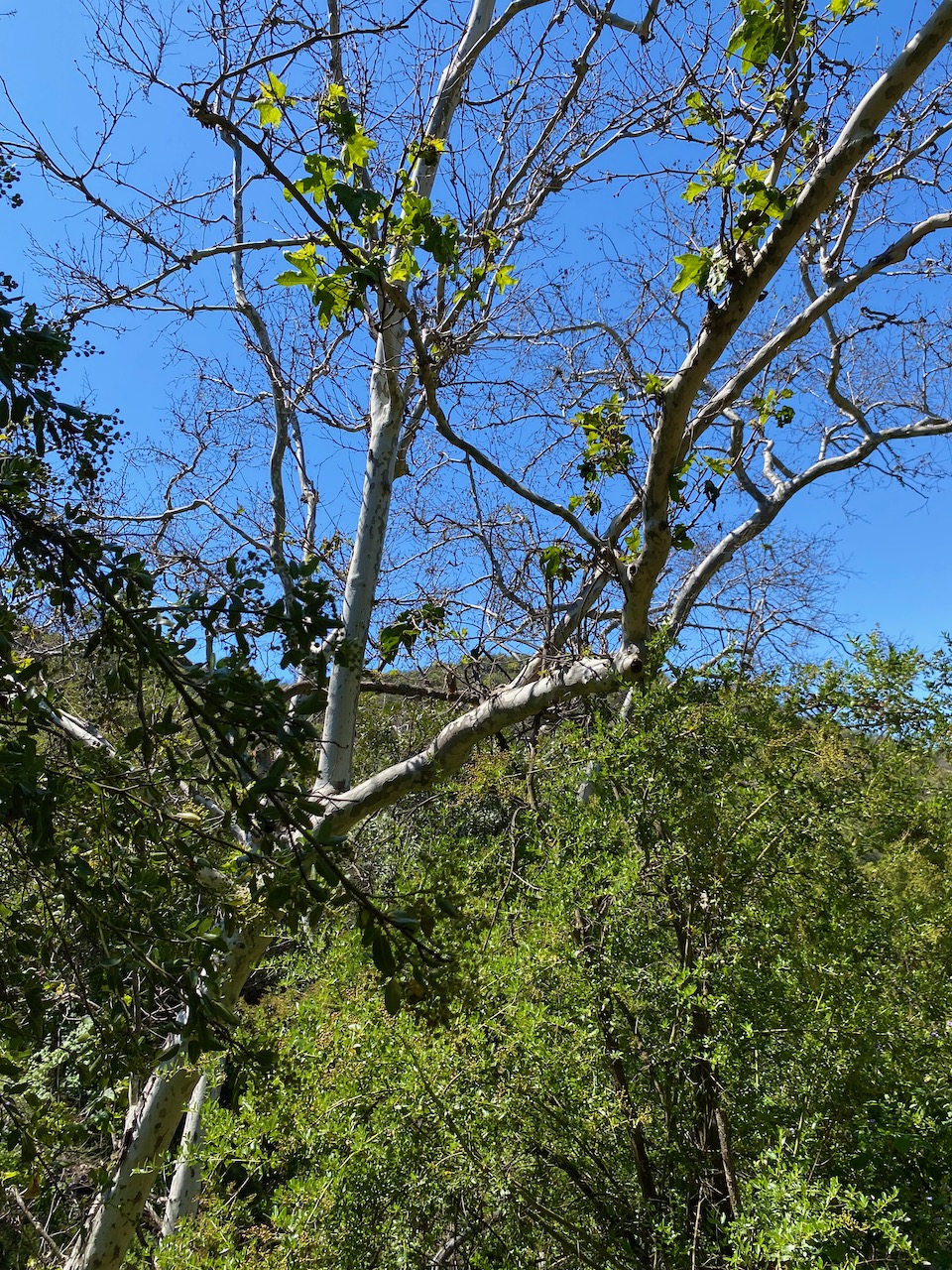
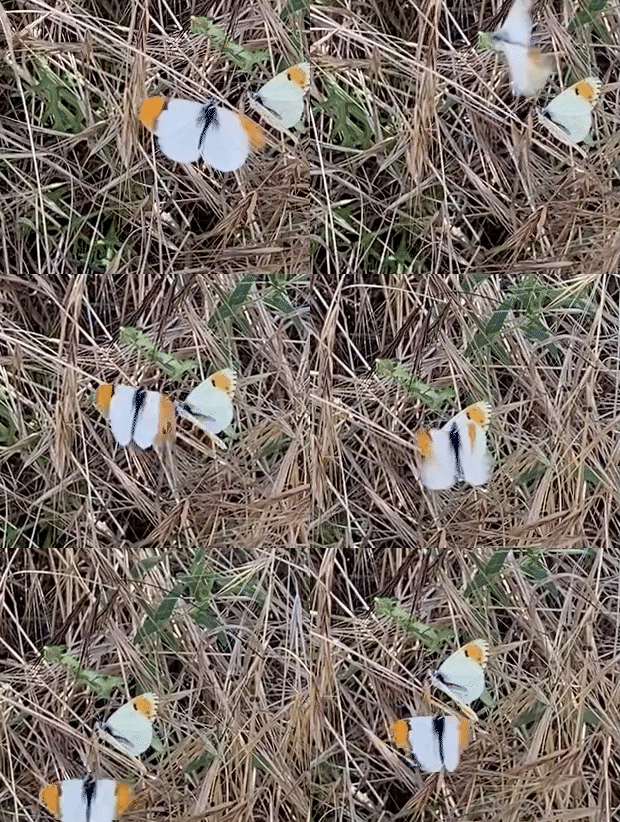
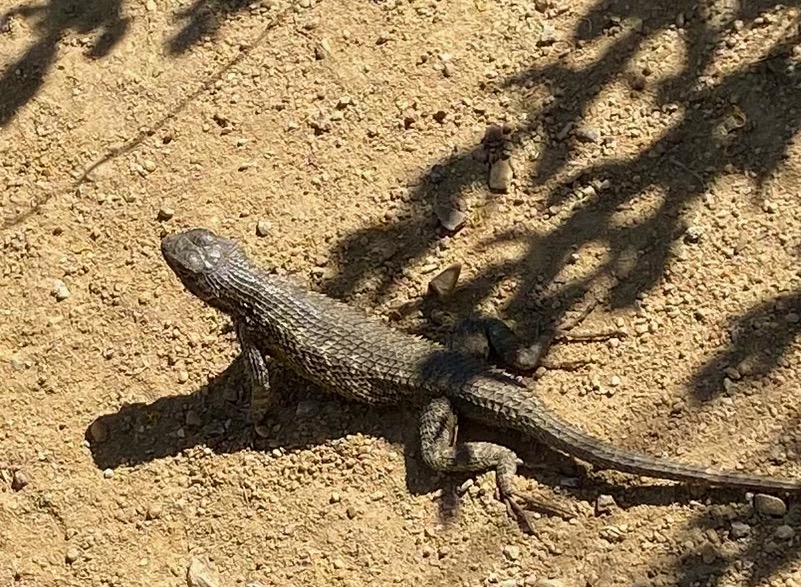
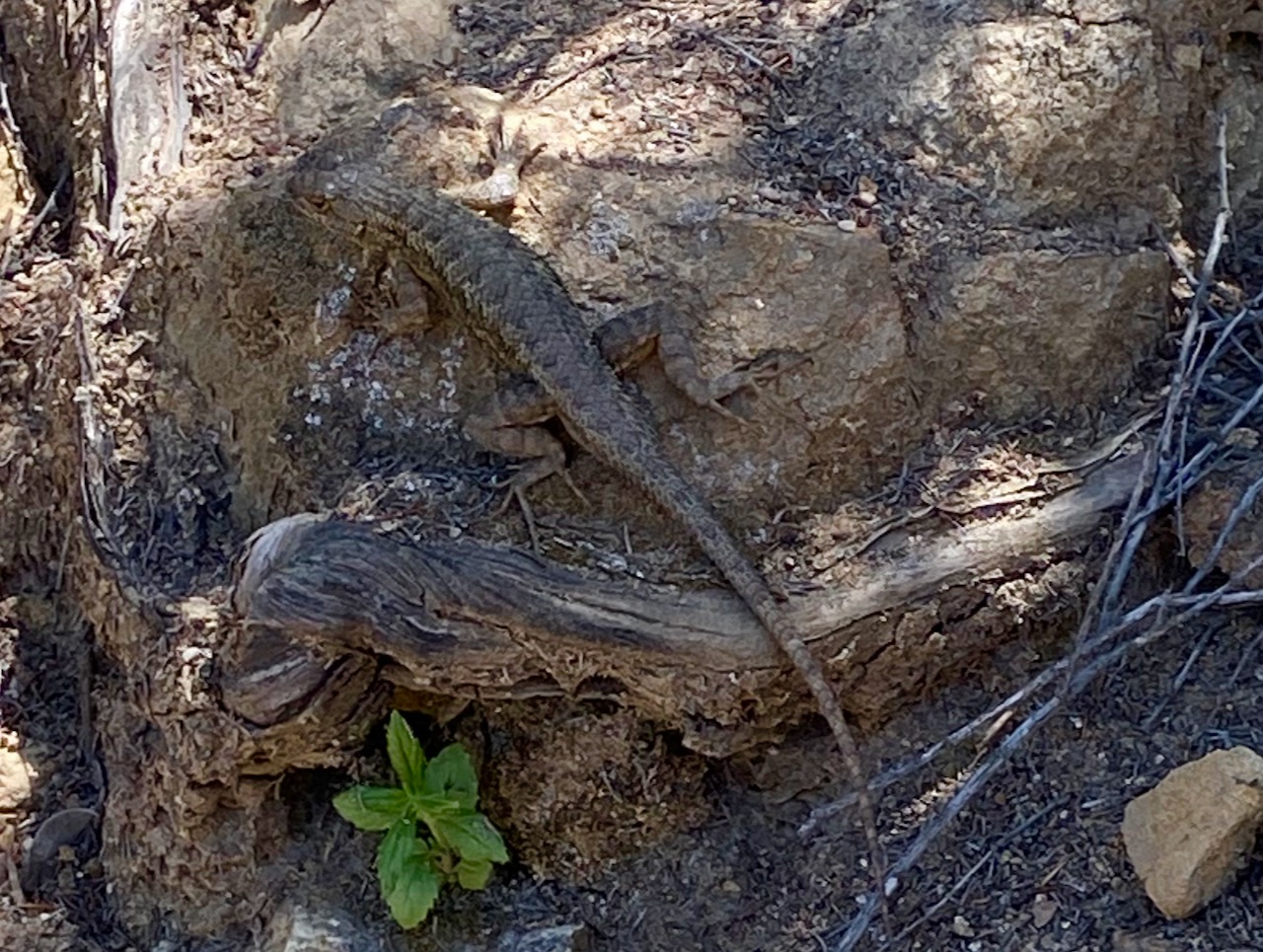
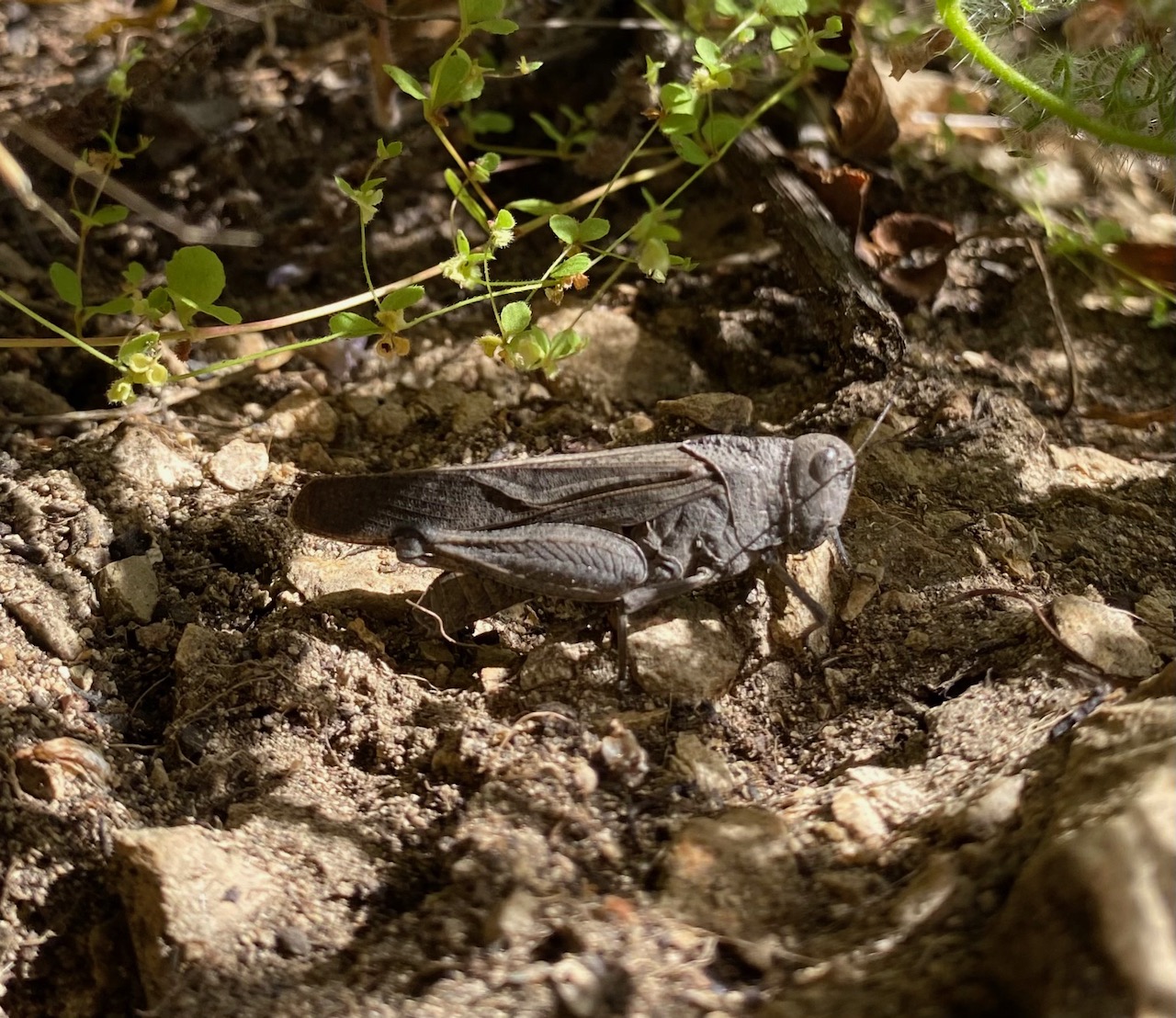
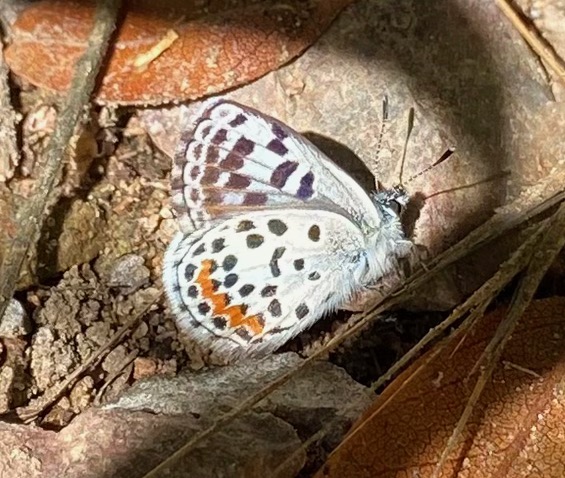
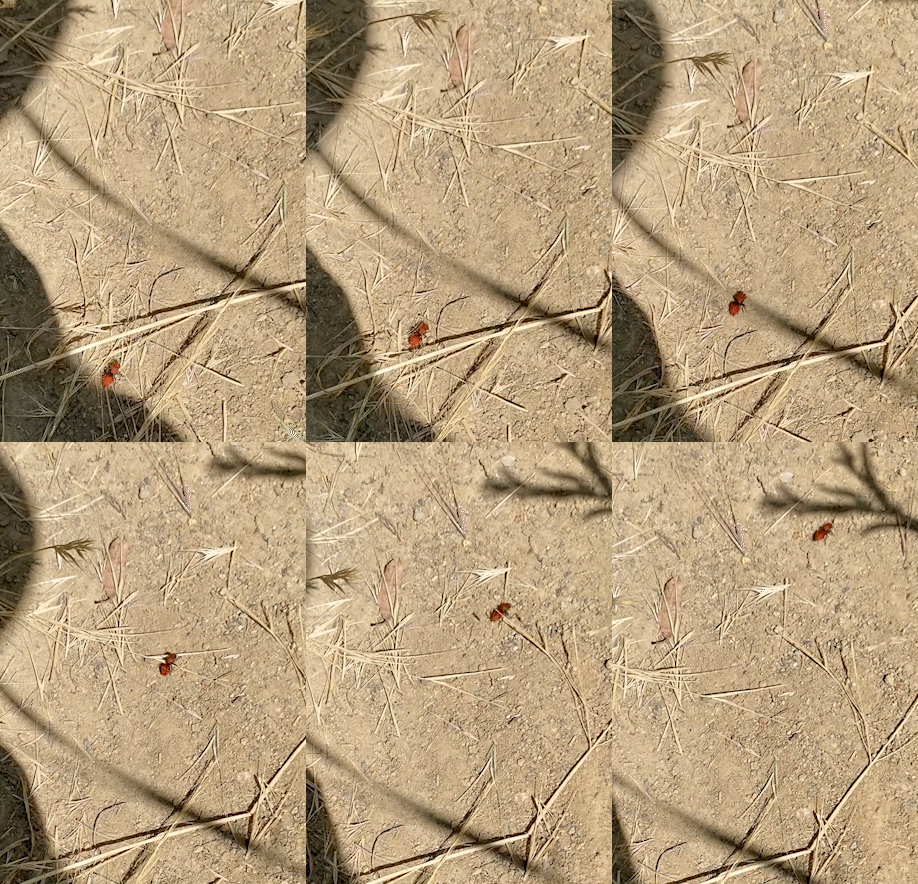
Not only was the trail full of plant life, but so too did it team with an abundance of birds and insects. Of note, I recorded several butterflies (more checkerspots, orange tips, and Bernadino Blue) but also orange wing grasshoppers, Pacific velvet ants, towee birds, and woodpeckers. It was further evident that, in the grasses along the trail edges, some larger mammals pressed their way through making some large transit paths and littering the trail edge with scat. I even happened upon the slithering S track of a snake freshly crossing the fire road above.
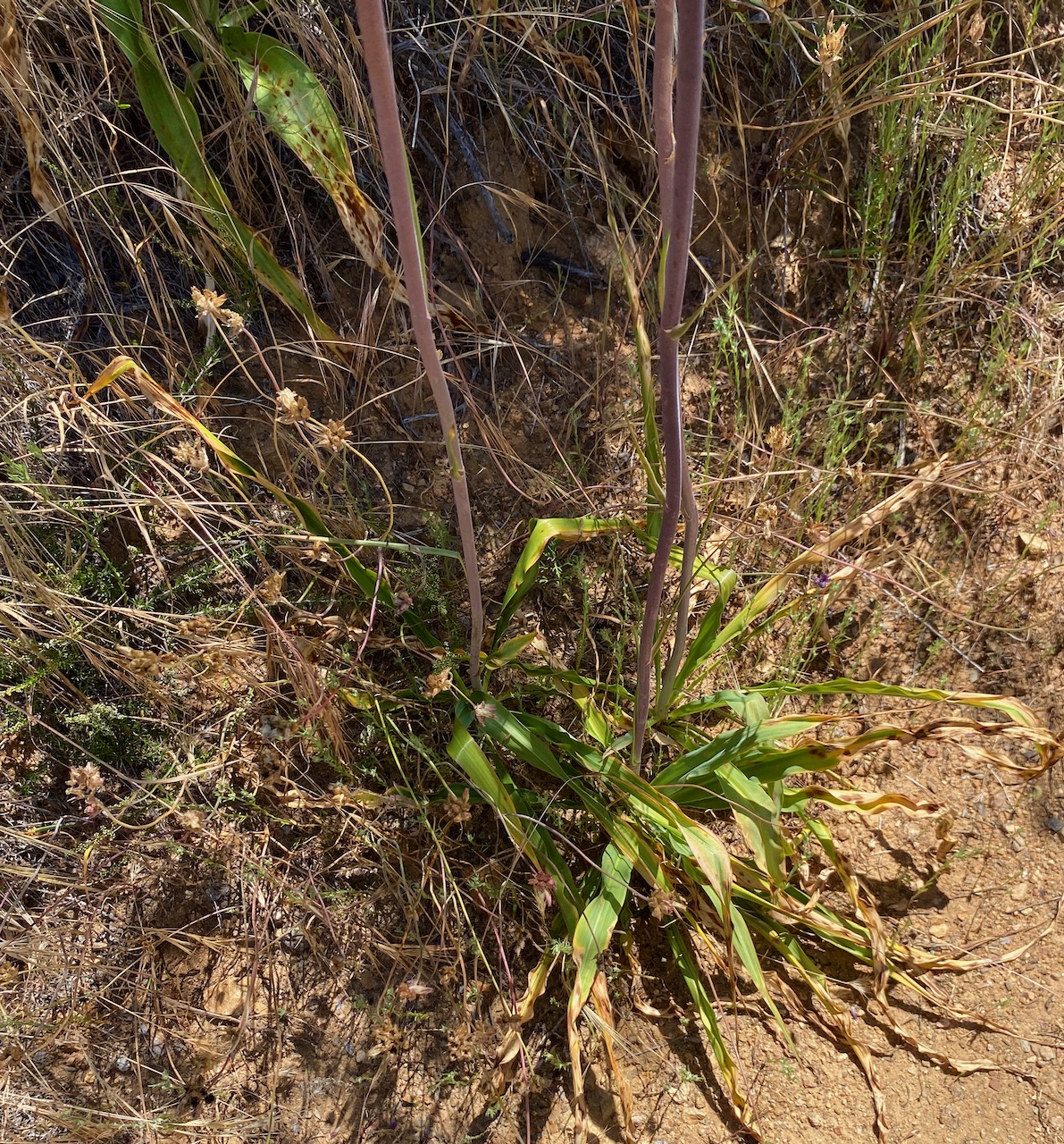
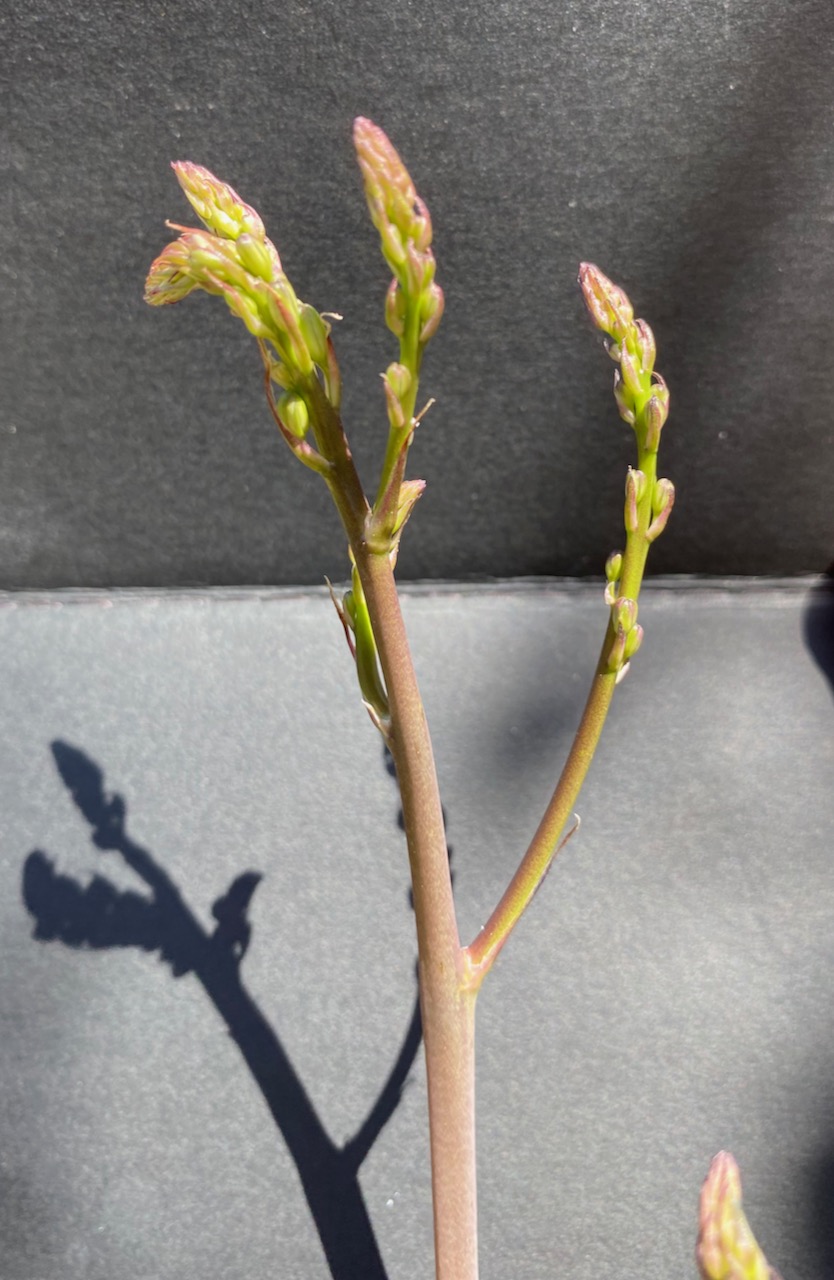
It was at this point, about halfway into the trail that I made my way back up the trail to the start of my journey. The sun was nearing its zenith and bringing with it the heat. Exploring just a few detours back to the front, I spent some time at the park entrance reading the signage on the history of the space and ended my excursion sitting at a picnic table enjoying the cool breeze flowing under the shade of a tree.
Field Observations
- Discarded bags of dog poop (several).
- Walkers/Trail runners.
- Mountain Bicyclists.
- MRCA work crews (very friendly).
- Lots of butterflies, lizards, mustard, and invasive grasses.
- Wide and well-groomed fire roads.
Observed Species
- Poison Oak – Toxicodendron diversilobum
- Coast Live Oaks – Quercus agrifolia
- Western Sycamore – Platanus racemose
- Toyon – Heteromeles arbutifolia
- Lemonade Berry – Rhus integrifolia
- Sugar Bush – Rhus ovata
- Wavy-leafed soap plant – Chlorogalum pomeridianum
- Black sage – Salvia mellifera
- Southern Bush Monkeyflower – Diplacus longiflorus
- Chaparral yucca – Hesperoyucca whipplei
- Twining Snapdragon – antirrhinum kelloggii
- Cliff Aster – Malacothrix saxatilis
- Parish nightshade – Solanum xanti
- Deerweed – Acmispon glaber
- Mahogany Jerusalem Cricket
- Orangetips butterflies – Anthocharis cardamines
- Bernardino Blue butterfly – Euphilotes bernardino
- Pacific velvet ant – dasymutilla aureola
- Silverpuffs – Uropappus Uropappus lindleyi
- California Orange Winged Grasshopper – Arphia ramona
- Hummingbird sage – Salvia spathacea
- Chamise (greasewood) – Adenostoma fasciculatum
- California Sage – Artemisia californica
- Rock Phacelia – Phacelia californica
- or could be Mountain Phacelia – Phacelia imbricata ssp. imbricata
- Buckwheat – Eriogonum fasciculatum
- Maltese Star Thistle – Centaurea melitensis
- Annual yellow sweetclover – melilotus indicus
- Hairy ceanothus – Ceanothus oliganthus
-
Observing the Sepulveda Basin Wildlife Reserve in May
California Naturalist Outing
Sepulveda Basin Wildlife reserve
11 a.m.-1 p.m.Route: Entering space from the dirt parking lot below the archery fields.
Weather: Warm and slightly humid. 75 °F at start 80 °F at end.
An impromptu trip around the Wildlife Reserve to look at recent plantings (habitat restoration with CNPS LA/SMM and L.A. Sanitation and to get a feel for the state of the invasive mustards and grasses in May.
Most everything was still green and lush. This is on the heels of lots of recent rain from a very wet winter. Add the cooler overcast mornings and threat of monsoonal like rains and the planting/growing season is reaching into late May and early June. In particular, the last several days in the San Fernando Valley have been gloomy and overcast to start, burning off to warm, almost hot, afternoons. Summer is just over the horizon.
Like much of the flowers and blooms, the Sepulveda Basin has been slow to show flowers and is enjoying a late into the season bouquet. The clarkia are still a taunt pink, purple and fuchsia—just starting to set seed. The poppies, as sparse as they may be, are vivid and eye grabbing, mixed into the tall invasive grasses and mustard. And lupine showing their purple spears poking through the brush. Normally I would consider this landscape as mostly sage chaparral, but with the invasion of non-native plants, it’s become more a grassland meadow. I’m worried this will be problematic as we get into fire season.
Read: June Wildflowers in Bloom: A Colorful California Delight
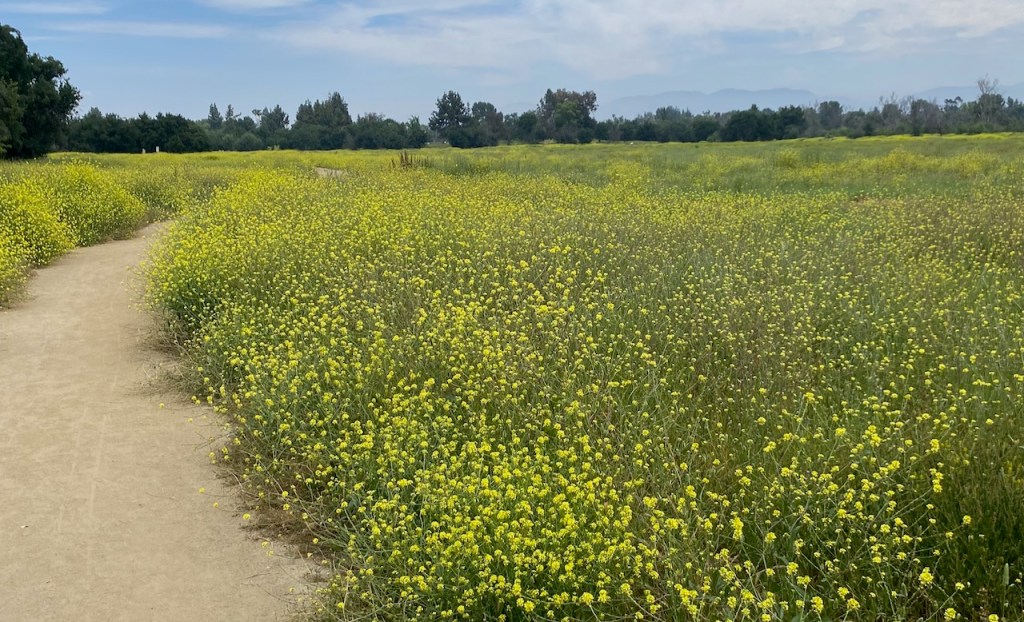
The mustard gets its own mention as they have become nearly 6 feet in height in some places. Each plant is a happy oasis of green and yellow choking out anything that tries to get in its way. To say its thick would be an understatement. But you can see how the areas that the California Native Plant Society and Friends of the LA River have worked to remove it have allowed the native plants to get a foothold.
An interesting consequence of this mustard removal is where other invasives have moved in and established residence. In particular, annual sweet clover (Melilotus albus) and Maltese or Napa star thistle tocalote (Centaurea melitensis). Both have carpeted areas and are growing unchecked. Good that it’s not mustard, but no-less problematic as mono-crops occupying the space growing and ready to set seed.
Also of note, different types of mustard are flourishing. In the east field, Hirschfeldia incana (or short pod mustard) is springing up in areas untouched in years since the fire in 2019. In the west, Rapistrum rugosum (better known as bastard cabbage or turnip weed) is flourishing. Unsurprisingly, the mustard spread seems to be following the paths of humans and their companions. Mustard lines the trail edges and carried by foot and fur as people, dogs, bicycles and joggers enjoy the space. In some locations, the mustard encroaches both sides of the path creating a canopy of mustard “trees.”
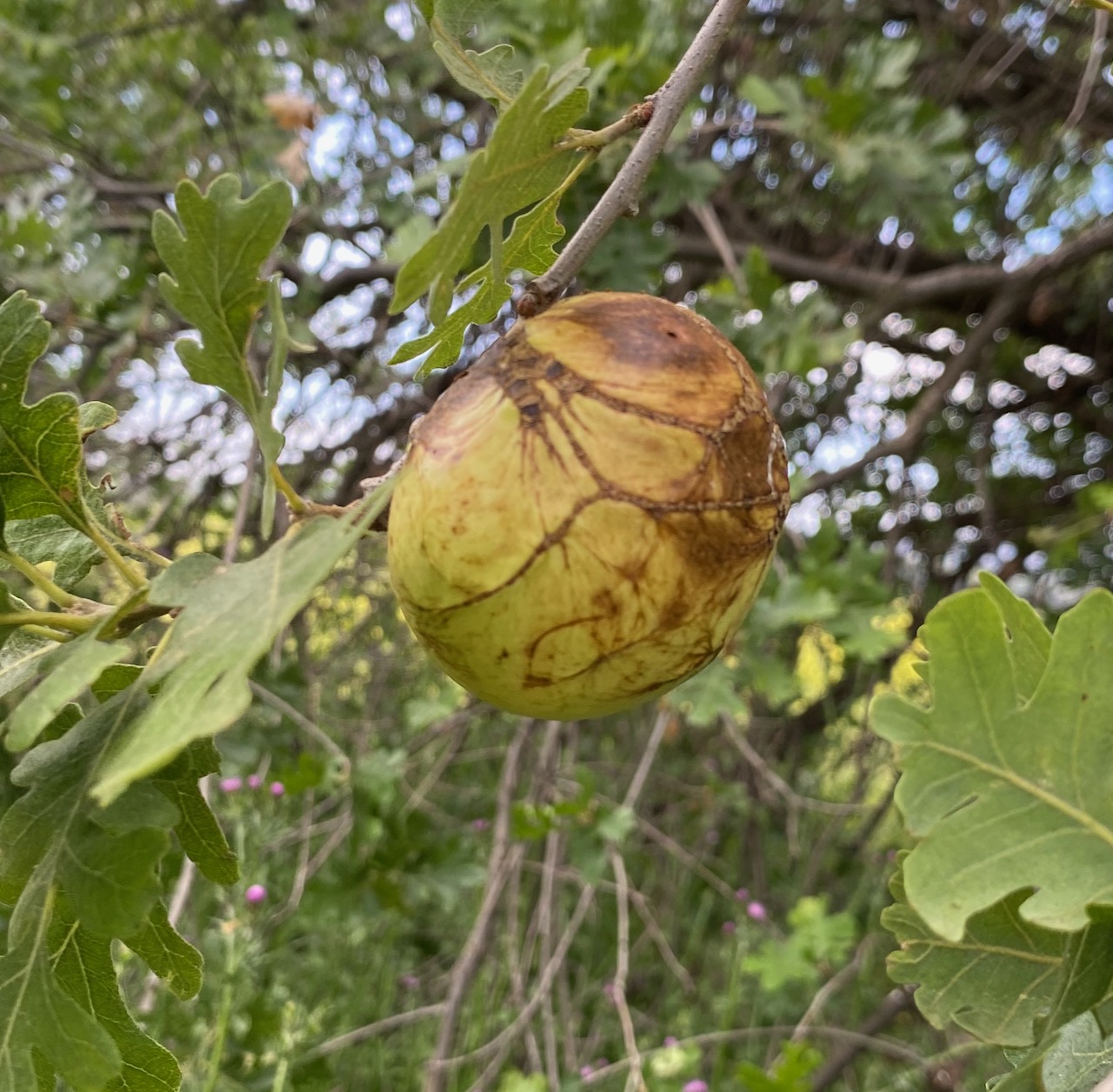
Along the path in the west field on the north side, I did happen upon a racquet ball sized wasp gall in a Valley Oak (Quercus lobata). It had a great deal of heft and density to it as I tested its weight in the tree. It looked to be fresh if that’s possible.



The one last observation of note was the density of the California wile rose (Rosa californica). On the lake side, the rose is absolutely flourishing. So much so that it forms thickets that would prohibit the most armored of gardeners wading into it. Almost nothing can grow out of it. I say that as a toyon (Heteromeles arbutifolia) our group planted in 2022 is sending stems vertically rather than horizontally trying to catch and hold the sunshine. It’s good to see it fighting for the space but I worry the struggle may be more than it can bear.
I should note, the Hollyleaf Cherry (Prunus ilicifolia) blooms are on their way to setting fruit. Still present but looking tired. And the Golden Currant (Ribes aureum) are outstanding. Most of the berries are a deep red-gold with a few ripe for the picking (and tasting). Sweet with a hint of tart. It’s a fantastic treat out in the field. I make it a point to stop and try them whenever I happen upon them.
With that, my observation trip was complete, and I made my way back to the parking lot and concluded my observation trip.
Field Observations
- Lots of invasive mustard and grasses.
- A few people walking and enjoying the space.
- Some walkers had dogs; most were off leash.
- Restoration plants were doing well.
- A few critters (cabbage moth and sphinx moth caterpillar).
- A wasp gall in a valley oak.
- An unopened Trojan condom on the path.
Observed species
- Valley Oak – Quercus lobata
- Mustard – Rapistrum rugosum
- Mustard – Hirschfeldia incana
- Maltease Star Thistle – Centaurea melitensis
- Annual yellow sweetclover – melilotus indicus
- Elegant Clarkia – Clarkia unguiculata
- california poppy – eschscholzia californica
- California Wild rose – Rosa californica
- Toyon – Heteromeles arbutifolia
- Hollyleaf cherry – Prunus ilicifolia
- Golden Currant – Ribes aureum
-
June Wildflowers in Bloom: A Colorful California Delight
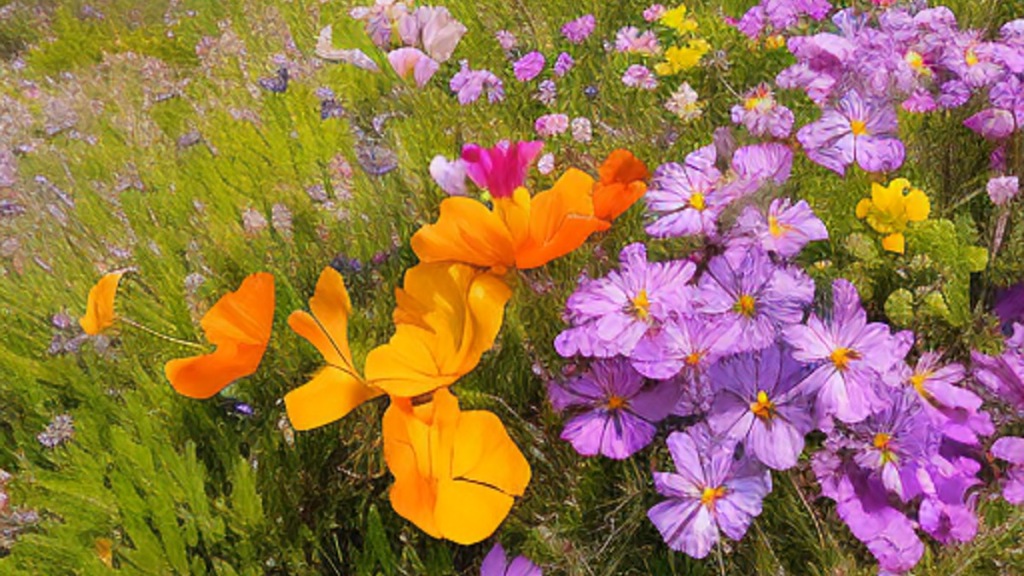
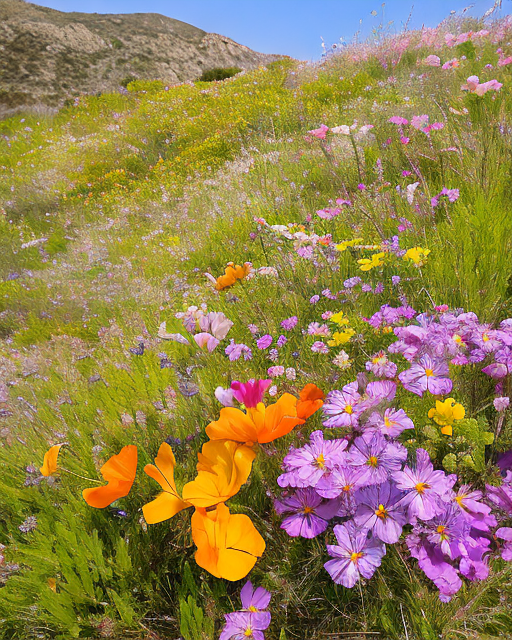
As the sun shines brighter and temperatures rise, California’s diverse landscapes burst with vibrant wildflowers. June is a particularly enchanting month, when many species bloom across the state turning meadows, hillsides, and gardens into vibrant superblooms of color. As we fast approach the midpoint of the year, there are a few of the fascinating California native plants and wildflowers to look for that grace the landscape at this time of year. And, since you’re looking, be sure to take in the scents of their delicate fragrance and the cloud of pollinators drawn to this June bloom around us.
California Poppy
(Eschscholzia californica)The California Poppy, the state flower of California, is a radiant sight that blankets open fields and hillsides in brilliant orange hues. Its delicate, cup-shaped flowers open in the morning and close in the evening, creating a mesmerizing display of color throughout the day. These resilient wildflowers thrive in the arid regions of the state and can be found in abundance in places like Antelope Valley California Poppy Reserve and the Carrizo Plain National Monument. (Just remember to stay on the marked trails and call ahead to confirm conditions are optimal for viewing).
Matilija Poppy
(Romneya coulteri)Also known as the “Fried Egg Poppy” due to its large, white petal-like sepals and golden center, the Matilija Poppy is a showstopper in California’s native flora. Its striking appearance and delightful fragrance make it a favorite among garden enthusiasts. These wildflowers can be spotted in regions with coastal influence, such as Southern California and parts of the Central Coast.
Read: Drought Tolerant vs. Native Plants
California Lilac
(Ceanothus spp.)The California Lilac, despite its name, is not related to true lilacs. This group of shrubs boasts an array of stunning blue, lavender, and white flowers that add a touch of elegance to the landscape. The California Lilac is known for its drought tolerance and ability to attract butterflies and bees. It can be found in various habitats throughout the state, including chaparral, coastal bluffs, and mountain slopes.
Sticky Monkeyflower
(Diplacus aurantiacus)The Sticky Monkeyflower is a charming perennial wildflower that blooms abundantly in June, adorning gardens and stream banks with its vibrant trumpet-shaped flowers. These flowers range in color from deep orange to red and yellow, attracting hummingbirds and other nectar-seeking creatures. The Sticky Monkeyflower thrives in coastal regions, foothills, and canyons of California.
Read: The Hori Hori Garden Knife: A Versatile Tool Rooted in History
Farewell-to-Spring
(Clarkia spp.)The aptly named Farewell-to-Spring wildflowers grace California’s landscapes with their delicate and colorful petals. These charming annuals bloom in various shades of pink, red, and purple, enhancing the beauty of meadows and grasslands. The flowers of the Farewell-to-Spring genus typically have intricate patterns and are often visited by butterflies and native bees. Look for them in open spaces and disturbed areas throughout the state.
Read: Starting a Native Plant Garden in Southern California Hardiness Zone 10
June in California is a time of natural splendor when the state’s native wildflowers take center stage. From the iconic California Poppy to the elegant Matilija Poppy, the landscapes come alive with bursts of color and fragrance. Exploring the diverse array of California native wildflowers not only offers an opportunity to appreciate the state’s natural beauty but also fosters a deeper understanding of the delicate ecosystems these flowers support. So, grab your camera, lace up your hiking boots, and embark on a journey to witness the enchanting spectacle of California’s native wildflowers in full bloom this June.
-
Conserving Water in Southern California

Southern California is known for its arid climate and frequent droughts, which can lead to water shortages and restrictions. It is important to conserve water at home to help reduce the impact of these droughts. I thought it was a good idea to explore a few simple ways to save water at home during a drought in Southern California.
Conserving doesn’t mean not using. While agriculture in California uses the most water in the state (roughly 80%), households’ businesses and governments consume the other 20% for irrigation, production, and operation. Not quite a drop in the bucket, but given every drop comes at a cost, saving at home can save money while doing good for the environment.
One of the easiest ways to conserve water at home is to capture it when it falls freely from the sky.
Collecting and Storing Rainwater
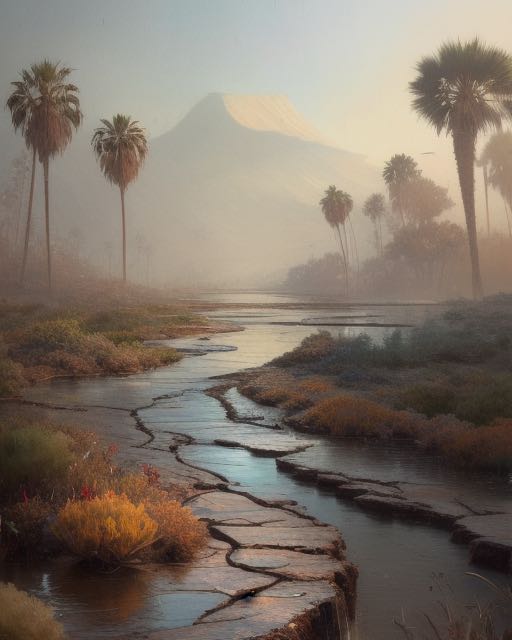
Rainwater harvesting is an effective way to conserve water at home during a drought. Rainwater can be collected from the roof of your home or garage and stored in a rain barrel or cistern. This collected water can be used for irrigation or other non-potable uses, such as washing cars or pets. It’s not recommended for watering animals or pets because it may contain urban pollutants. You can use your collected rainwater in a water can move around the garden which can be effective when used on potted and in-ground plants.
To collect rainwater from the gutters on your roof, simply modify your existing downspouts with a kit or a professional to redirect the downspout into your barrel. Rain barrels can be purchased from hardware or garden stores, or you can make your own using a food-grade barrel and some basic plumbing supplies. Some cities and counties offer free rain barrels, usually during an environmental push when drought conditions start to look on the horizon.
Read: Starting a Native Plant Garden in Southern California Hardiness Zone 10
When choosing a location for your rain barrel, place it near a downspout and on a stable surface. To prevent mosquito breeding, be sure the barrel is covered and has a tight-fitting lid. Using a screen can help keep mosquitos and other pests from getting into the water and causing any issues.
Using Drip Irrigation and Grey Water
Drip irrigation is an efficient way to water plants and reduce water waste.
Instead of spraying water over a wide area, drip irrigation delivers water directly to the roots of plants, where it is needed most. Drip systems can be purchased from hardware or garden stores. Drip irrigation systems have a low entry cost and are relatively easy to install. Broadly, the setup requires knowing what you want to water and how much water you want to put onto it.
Read: Desalination in Southern California: Balancing Water Supply, Ecosystem, and Economy
Greywater comes from household activities like laundry, dishwashing, and bathing. Greywater can be used for irrigation if properly managed, specifically by using biodegradable soap products that are safe for the environment. Dr. Bronner’s Castille soap is a great option, as are Oasis and Ecos laundry soaps. To use greywater for irrigation, install a separate plumbing system to divert the greywater from the waste line and into a separate system to irrigate your plants. This may be a big lift for a homeowner, but there are organizations such as Greywater Action and Greywater Corps in Los Angeles that help homeowners install systems of their own. It’s important to be aware of and follow all local regulations and guidelines when installing and using greywater systems.
Mulching is another excellent tactic for making drip irrigation and greywater harvesting work well together.
Removing (Killing) Your Lawn
Another drought saver is removing your green grass lawns and replacing them with drought-tolerant and/or native plants. This can be a big step in conserving water and reducing the need for irrigation.
Drought-tolerant plants are adapted to dry conditions and require less water than traditional landscaping plants. Native plants are well-suited to the local climate and require little to no additional water once established. Both types of plants can add color and interest to your landscaping while reducing water use.
Read: Drought Tolerant vs. Native Plants
Native plants can be a big help by providing habitat islands for birds and bugs in your neighborhood. With more green grass lawns and pervasive rock lawns, installing a native garden is an excellent way to save water and help the local wildlife survive and thrive in your neighborhood.
Making Your Home Water-Wise
Conserving water at home during a drought in Southern California is necessary in helping to reduce the impact of water shortages and restrictions. Making your home water-wise by collecting and storing rainwater, using drip irrigation and greywater, and replacing green grass lawns with drought-tolerant and native plants are all simple ways to conserve water at home. By implementing these practices, we can all do our part to help preserve this valuable resource.
-
Starting a Native Plant Garden in Southern California Hardiness Zone 10
Gardening with native plants is becoming increasingly popular due to their many benefits, including improved soil health, reduced water use, and support of local wildlife populations. For those living in Southern California Hardiness Zone 10, there are numerous native plant species to choose from that can thrive in the unique climate and soils of the region. Given the challenges of planting here, this short comprehensive guide on starting a native plant garden in Zone 10 looks at which species to use and the benefits of doing so.
Read: Native Plant Nurseries Around the San Fernando Valley
Choosing Plants for Zone 10
When selecting plants for a native garden in Zone 10, it’s important to choose species that can handle the hot, dry summers, mild winters, and occasional frosts.
Fortunately, California has diverse geography offers a wide range of native plant species that can thrive in these conditions. Some of the most popular native plants for Zone 10 gardens include:
- Wildflowers
- Lupine (Lupinus). There are a number of native lupine species that are endemic to California. Silver lupine, sky lupine or Arroyo Lupin are just a few of these delicate drought friendly purple flowers that bloom mid-spring and self-seed year after year.California Poppy (Eschscholzia californica). This iconic flower is the state flower of California and blooms with brilliant orange and yellow hues in the spring and summer.
- Elegant Clarkia (Clarkia). A beautiful addition to the garden, clarkias are vibrant long-stemmed flowers that grow in clusters along mountainsides. Like the others, it will readily reseed where grown.
- Manzanita (Arctostaphylos spp.). These evergreen shrubs feature stunning red, white or pink flowers and provide year-round interest with their beautiful bark and foliage.
- Ceanothus (Ceanothus spp.). This flowering shrub is known for its stunning blue flowers and is an excellent choice for attracting pollinators to your garden.
- Toyon (Heteromeles arbutifolia). This tall, evergreen shrub produces beautiful white flowers in the summer and bright red berries in the fall and winter, making it an excellent choice for wildlife gardens.
- Sage (Salvia spp.). This herbaceous perennial is popular for its fragrant foliage and showy flowers that attract hummingbirds and other pollinators. It comes in a wide array of fragrant varieties with foliage that ranges from deep green to white. Popular varities include: White sage (Salvia apiana), Black sage (Salvia mellifera) and blue sage (Salvia clevelandii).
Some other personal favorites are yarrow, buckwheat and Palmer’s Mallow.
Read: Southern California Planting Zones
Watering Needs

One of the benefits of using native plants is that they are typically well-adapted to the local climate and require less water than non-native plants. However, it is still essential to water newly established plants regularly, especially during the first few months after planting. In general, when planting native plants in Zone 10 should be watered deeply once a week during the dry season and less frequently during the wet season.
Read: Drought Tolerant vs. Native Plants
A good watering pattern to follow for fresh/newly planted natives looks like:
- 2x a week for the first 2 weeks.
- 1x a week for the next 4 weeks
- 1x every 2 weeks for the next month
- 1 x every 2 weeks for the next month
- 1-2x per month through 12-24 months
The big takeaway with watering native plants after their initial establishment period is that they like deep and infrequent waterings that encourage the roots to push deeper into the soil around them as they grow and look for moisture and nutrients.
Also, this watering schedule is depends on the weather. A sudden heavy rain or a surprise heatwave will modify the watering schedule.
Read: Solar is the Only Option
The best time to plant California native plants in zone 10 is from late fall (end of October) until early May, depending on the weather. Too much rain or heat create less than ideal environments for plants to take root and thrive.
Mulching Native Plants
I am a firm believer in mulching. Not only does mulch help retain moisture in the soil, it also keeps the root zone of the plants cool, provides a source of slow nutrient re-investment as it breaks down (much like a forest floor) and provides a space for decomposer insects that help to transport nutrients and aerate the soil providing valuable oxygen to the top soil life.
Personally, I’ve found a lot of native plant gardeners are apprehensive about using mulch. In my own garden (and in soil profiles in the wild) when you look at that first 6 inches of soil, you can see the diversity of life there, especially when moisture is held in and the sunlight kept off.
Looking closely, you can find communities of mycorrhizal and other fungi thriving in those dark, damp aerated ecosystems living symbiotically with the plants growing around them.
Benefits for Wildlife
In addition to their beauty, native plants provide many benefits for local wildlife populations. Having co-evolved with local birds, insects, and other animals, native plants provide many species with food and habitat. By planting a native garden in Zone 10, you can help restore and support long lost local ecosystems and attract a diverse range of wildlife back into your yard. Some of the wildlife species that are attracted to a native garden in Zone 10 include:
- Hummingbirds. Many native plants in Zone 10 produce flowers that are rich in nectar, making them an excellent food source for hummingbirds.
- Butterflies. Native plants can provide both food and habitat for butterfly species, including the monarch butterfly.
- Bees. Native plants are essential for supporting bee populations, which are crucial for pollinating crops and other plants.
- Birds. Many native plants in Zone 10 produce berries and seeds that provide food for local bird species.
In addition to supporting local wildlife populations, native gardens can also help reduce the need for pesticides and fertilizers, which can be harmful to the environment.
Starting a native plant garden in Zone 10 is an excellent way to support local wildlife populations, reduce water use, and beautify your yard. By selecting native plants that can thrive in the local climate and providing them with proper watering and maintenance, you can help to restore lost ecosystems and support native wildlife.
Read: The Hori Hori Garden Knife: A Versatile Tool Rooted in History
- Wildflowers
-
Drought Tolerant vs. Native Plants
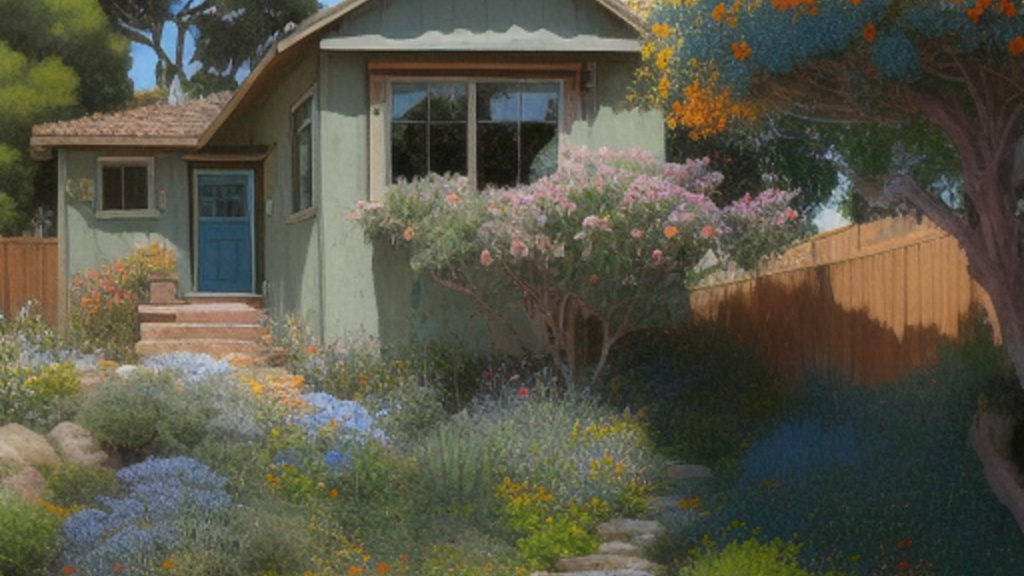
Drought-tolerant and native are two categories of plants with many overlapping similarities.
Drought-tolerant plants can go for long periods with low water availability without suffering damage or dying. This means they can usually tolerate long periods of drought and higher heat. Most of these plants have evolved to live in arid and semi-arid environments. Their foliage, stems, and roots evolved to manage water or reduce water loss through transpiration.
Drought-tolerant plants come from various regions, including deserts, grasslands, and Mediterranean climates.
Read: Solar is the Only Option
Many drought tolerant plants found at the big box stores, like Home Depot and Lowes, come from Australia or South Africa. Both regions prone to long periods of dry arid weather.
Using plants like this were part of my early mistakes in making a low-water, drought tolerant garden when I replaced my lawns. There were tons of options in the garden center. They had all the right words on the tags and signs: water-wise, drought tolerant, easy care. And they all came with a “money back guarantee” should they die in the first year.
Read: Desalination in Southern California: Balancing Water Supply, Ecosystem, and Economy
It wasn’t until I ran into issues of slow/no growth with root bound plants, a wildlife-dead zone (areas that bugs and birds avoided) and alien looking plants. There had to be other options.
Going native

This is why I decided to give California native plants a try.
Native plants are those that occur in a particular region or ecosystem. Having evolved and adapted to local conditions, native plants are the epitome of right plant for the right place. Being well suited to their local climate, native plants provide the essential habitat for local wildlife.
In a nutshell, native plants support the insects, birds and mammals that have evolved using them for sustenance.
Are native plants drought tolerant?
They can be. Native plants can be either drought-tolerant or not drought tolerant. Depending on their specific characteristics and the climate of their native range. Using California native plants as an example, the right plant in the right place isn’t a mantra for enthusiasts. It means the right plant can thrive in the right place. Most native plants adapted to the specific ecosystems they’ve evolved in. Some have wide-ranging habitats while others very narrow and specific ones. Planting a fern that is from a cool damp cloud forests in a zone 10b full sun yard and the native plant will show how unhappy it can be. That doesn’t mean it’s not drought tolerant.
Read: How To Start A Community Garden
So, all drought-tolerant plants are not native, and all native plants are not drought-tolerant. Yet, there are many native plants that are also drought tolerant. Because California native plants evolved to survive in regions with periodic droughts or low rainfall they are an excellent choices for water-wise gardens. They can thrive with minimal irrigation, reducing water consumption, providing ecological benefits.
Using native plants is a sustaining holistic approach and an excellent way to embrace the environment. While drought tolerant plants have a place in the garden, native plants make a for a better option.
-
How To Start A Community Garden
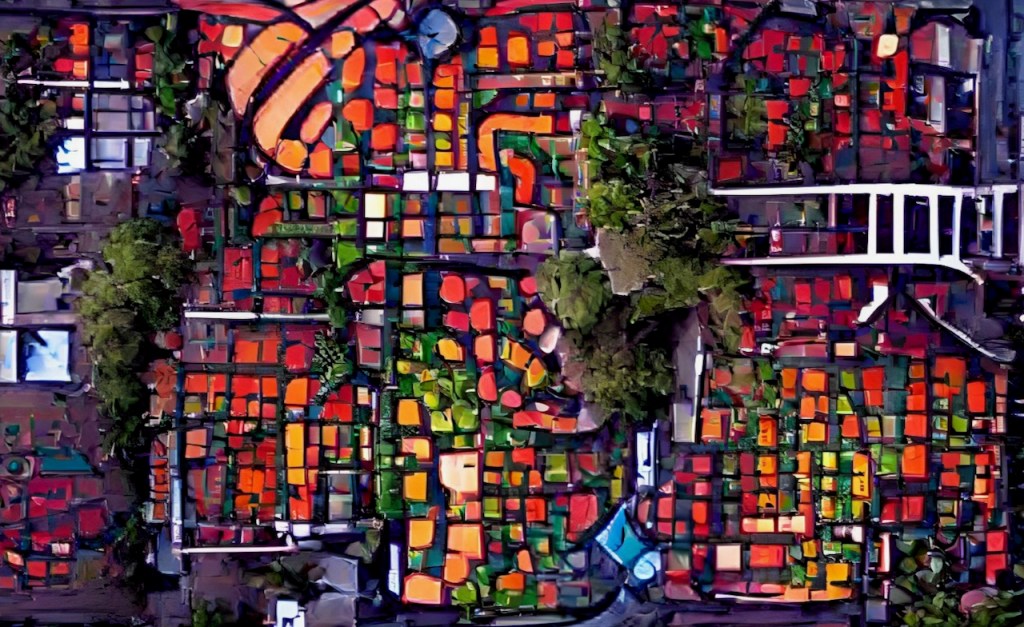
Food and nutrition are important elements in any sustainable community. Fresh vegetables and fruits, healthy air, and a sense of community with those who live, work and go to school around you. One of the best ways to achieve this in a neighborhood is by starting a community garden. A great resource in that process is the University of California Agriculture and Natural Resources Community Garden and Master Gardener programs.
Community gardens have a rich history in Southern California and are a great way to help connect with those around you and establish lifelong networks of cooperation and collaboration by providing healthy food and activities. Luckily, there are several resources available to help establish, educate and nourish community gardens in your neighborhood.
What is a Community Garden?
Community gardens typically serve areas without access to private garden plots or those without adequate space where they live to develop a garden at home. This could include those who live in apartments or rental homes, or those whose living space isn’t suitable to use as a garden.
Defined as any piece of land gardened by a group of people, community gardens are plots of land used by a group of people using individual or shared plots on private or public property with permission. The community garden could produce healthy fruits or vegetables, herbs or flowers, or even ornamental or native plants to benefit the people and community around them.
Read: The Hori Hori Garden Knife: A Versatile Tool Rooted in History
Ultimately, a community garden is about the community. In starting a garden for the community, the goal is to bring other like-minded community members together to share in the experience of gardening and encourage others to participate in the activity. Community gardens tend to grow over time as more community members join in and participate—extending the reach and encouraging more people to join in on the activity.
Types of Community Gardens
There are several different ways to approach starting a community garden in your local area. Gardens tend to take on the local flavor of the area around them through the cultivation of foods and plants of the greatest interest. Some of the different types of gardens you might consider include:
- Neighborhood Gardens: Typically, individual plots on a larger parcel of land in and around the neighborhoods where people live.
- Residential Gardens: Gardens shared among stand-alone houses or apartments and cared for by the residents around them.
- Institutional Gardens: These types of gardens are extensions of public or private organizations like churches, parks, or other community-connected entities.
- Demonstration Gardens: Ideal for educational and recreation, demonstration gardens function as hands-on classrooms to host workshops, teach gardening techniques, or share ideas in the community.
- School Gardens: Primarily an extension of their location, school gardens are a unique opportunity to share fresh food and vegetables within academic settings, especially in areas where food deserts may be present.
Where to Begin a Community Garden?
Starting a Community Garden may seem a challenging task. Where to begin? How to find the space? Or even how to learn how to be a better gardener to teach others. Luckily, the University of California Agriculture and Natural Resources office has many resources available to help organizers establish a community garden and grow it into a healthy nourishing oasis of food and productivity in your community.
The UCANR can provide support in the way of Master Gardeners to help plan, educate and train local community members to start a garden. For those who want to go to the next level in their community, the UCANR offers an annual Master Gardener training course to give that extra boost of confidence to produce and manage your community garden.
To learn more about starting a community garden or becoming a Master Gardener, visit the University of California Agriculture and Natural Resources website.
Looking for more information? UCANR has developed an extensive introduction to Community Gardens that can help springboard your thoughts into action and help begin your community garden journey. Stay in touch with us by subscribing to our Community Gardener Newsletter.
-
Observing the Sepulveda Basin Wildlife Reserve in July
California Naturalist Outing
Sepulveda Basin Wildlife reserve
11 a.m.-1 p.m.Route: Entering space from the dirt parking lot below the archery fields.
Weather: Hot, 80 °F at start and 101 °F at end. Sky was mostly clear, air was humid and heavy.
I began this excursion by entering from the north of the lake. My first encounter was the shouldering remains of what looked like a campfire beneath a large poplar tree. The poplar tree has a wide sweeping open space around its trunk with all the leaf litter and debris (literally) broomed away by the now, absconded camper. Having burned close to the trunk the fire had been dealt with by another passing naturalist.


This visit was to do a bit of reconnaissance and species observation.
The surveying was for upcoming fall planting west of Haskell creek into the open field that opens out to Victory Blvd. As a wild space, it’s been woefully neglected and ravaged by years of neglect and damage from repeated fires.
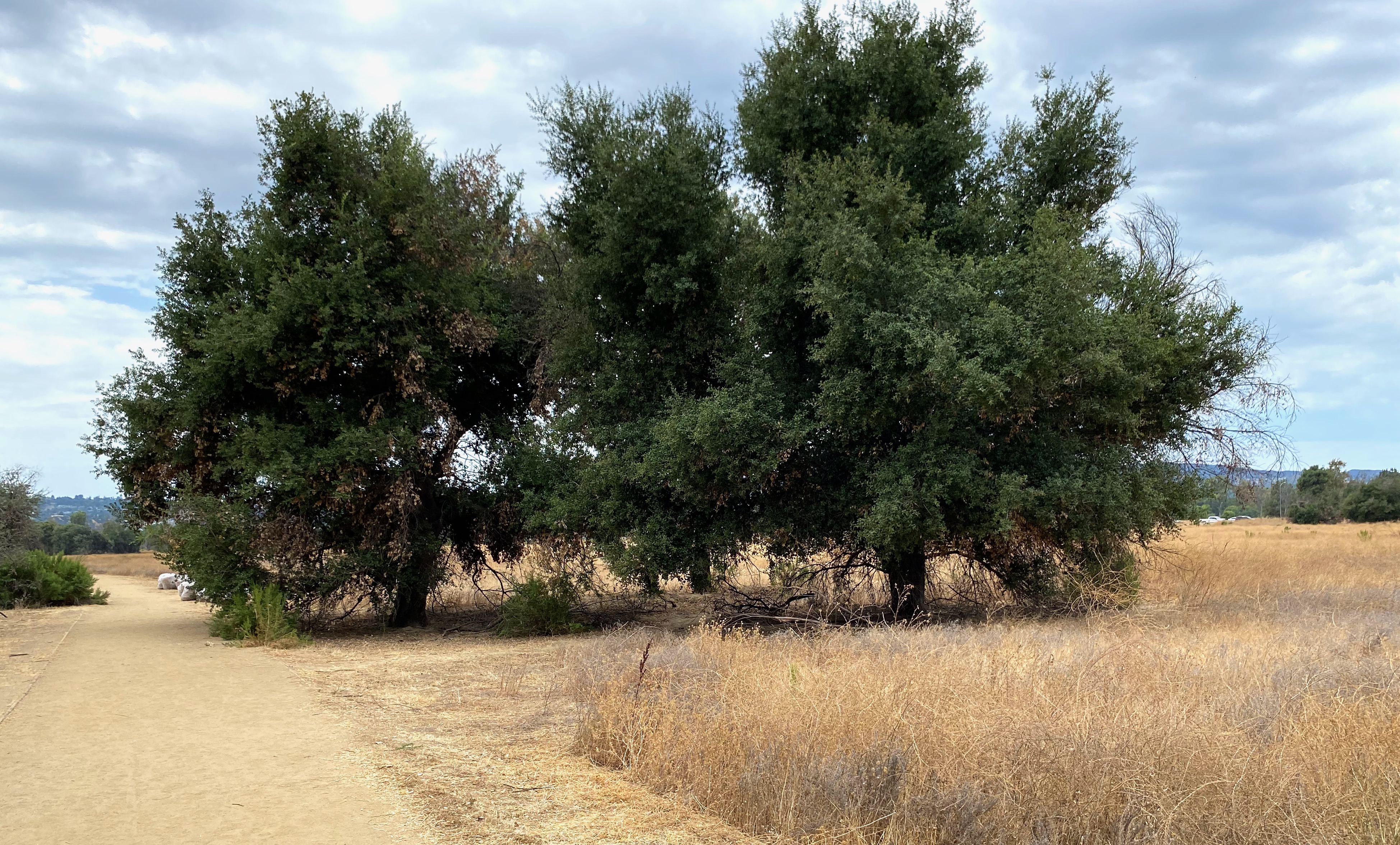


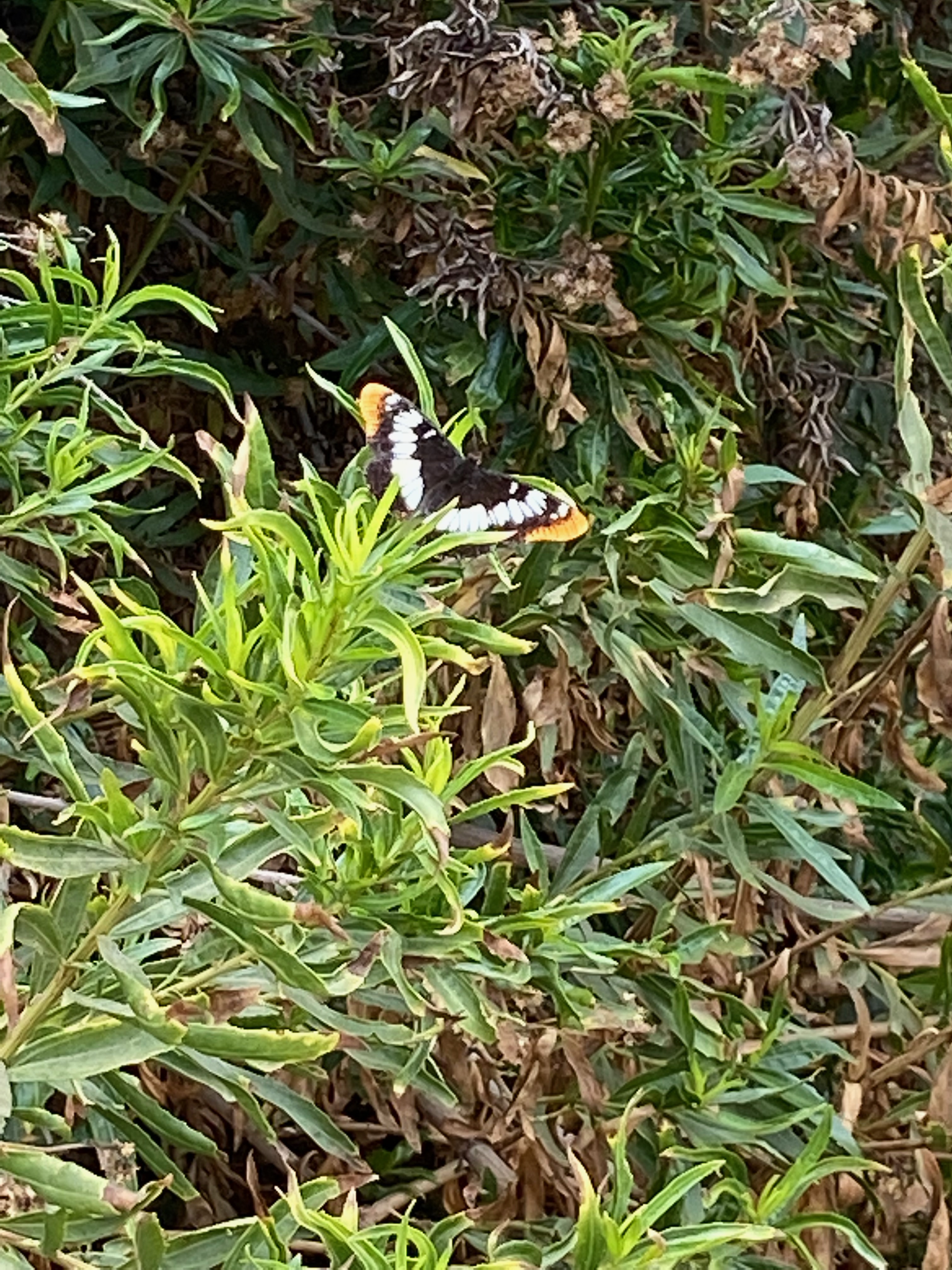

Burning to the ground in 2019, the Sepulveda Basin Wildlife Reserve became a moonscape of ash replaced with mustard, weeds, and fennel. The planting plan for 2022-23 is to install 60-70 different individual plants:
- Trees (sycamore, oak, and bay laurel)
- Shrubs (toyon, lemonade berry, sugar bush, and laurel sumac)
- Herbaceous scrub (several sages, buckwheat, and other pollinator and bird-friendly species).
I’m hopeful that this mix and volume of planting will jumpstart a natural process in the space that we can build on in the years to come.


Past Plantings
Checking on plantings from 2021-22, many of the installed plants in late 2021 and early 2022 seem to be thriving. Most have survived their first season in the wild. The three Toyons from 2020 have tripled in size as have buckwheats and Artemisia Californica planted in 2022. Milkweed seems to have found some footing on the north side, making it to fat fluffy seeds ready to float away on the breeze.
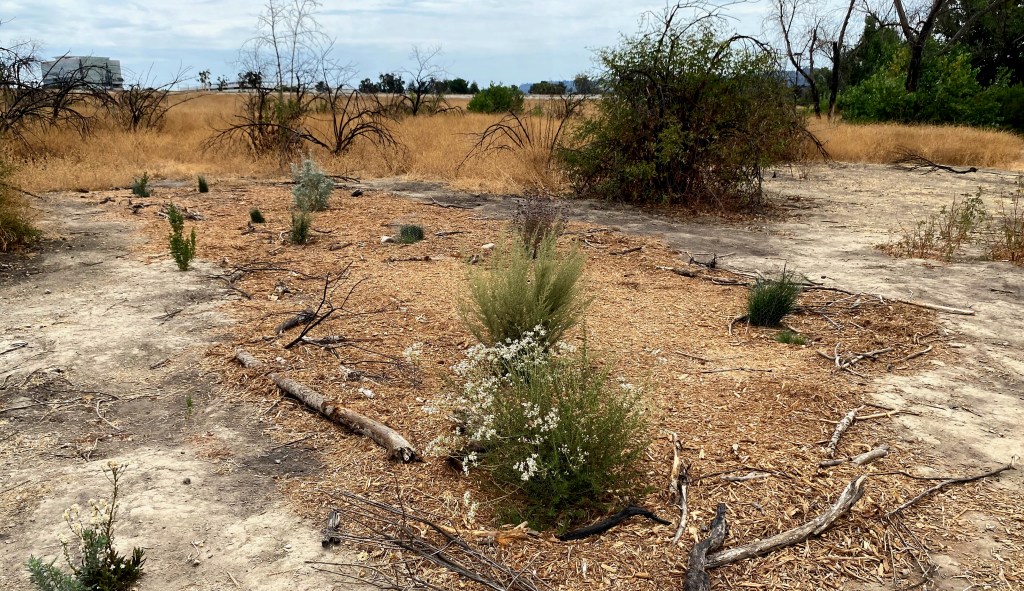
South of Burbank
Moving through the tunnel to the south (dam) side of the Sepulveda Basin wildlife reserve revealed jewels amidst the dry invasive mustards and grasses. Along the path that parallels Burbank Blvd. are a few sugar bush (Rhus ovata), toyon (Heteromeles arbutifolia), lemonade berry (Rhus integrifolia), and buckwheat (Eriogonum fasciculatum).

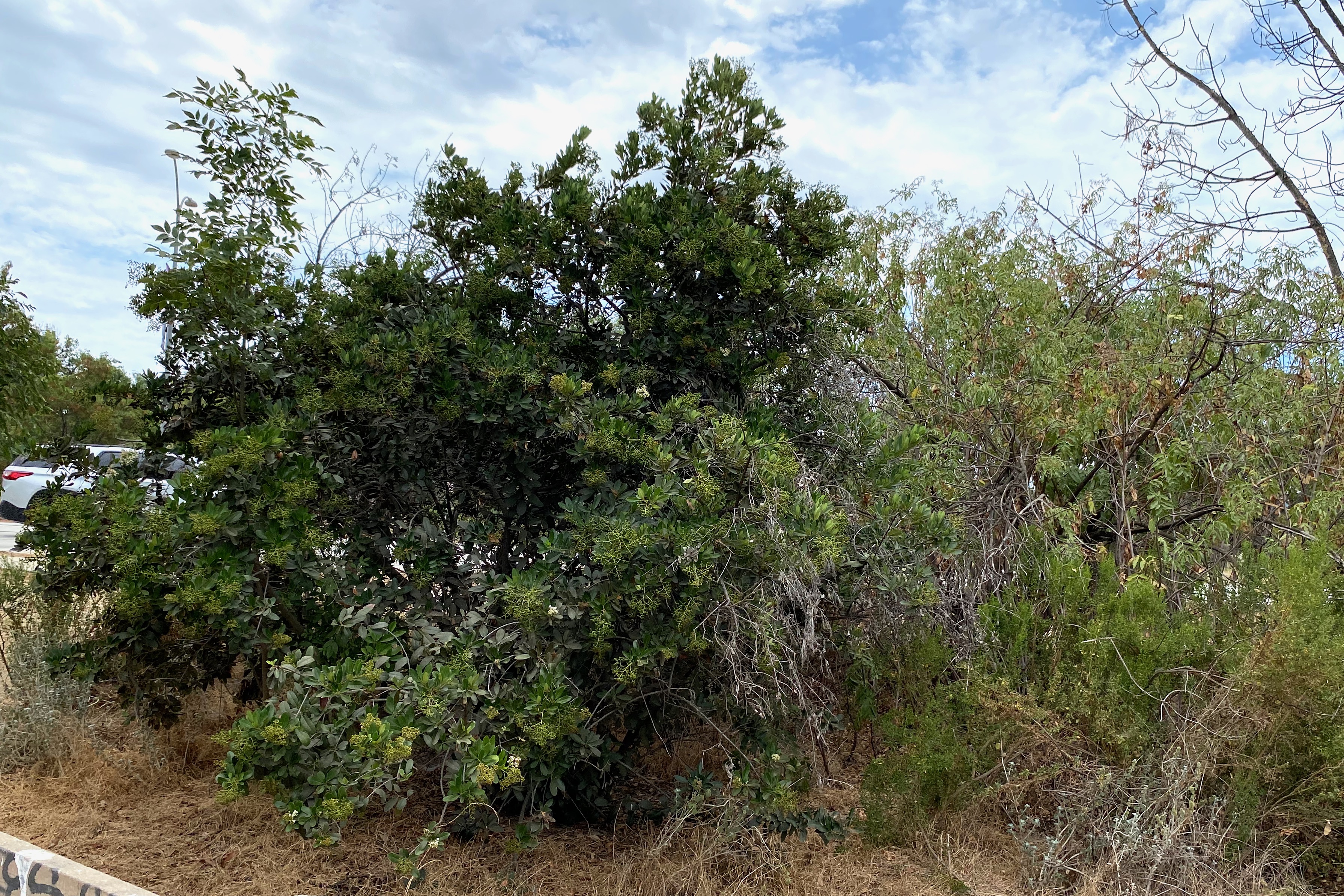


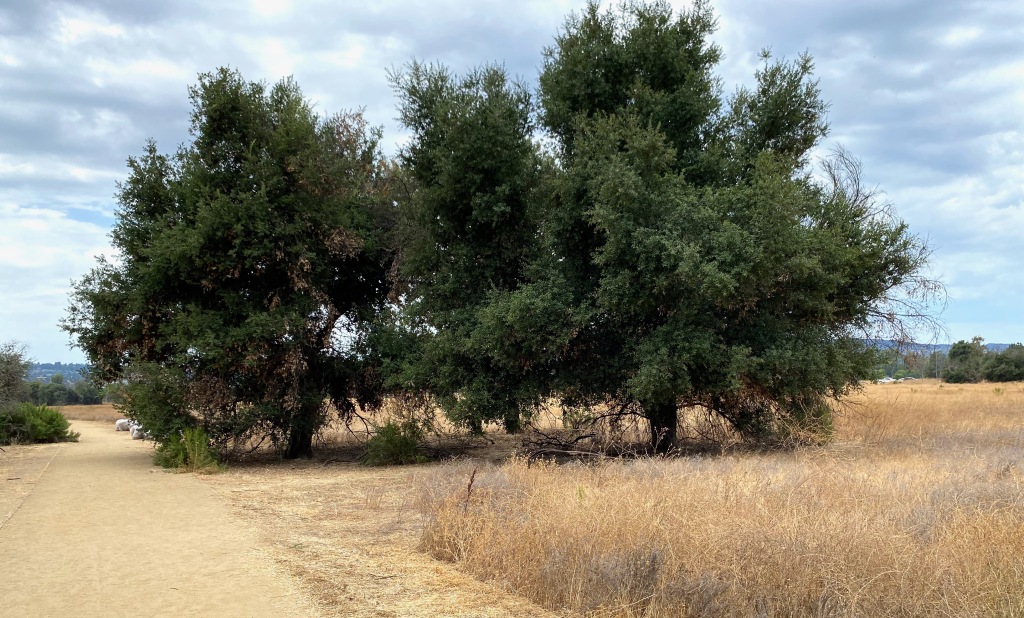
These native gems were stand-outs against the fields of mustard that had been left to take over the space. Another gem was a stand-alone majestic oak. This grand old tree was hard to miss.

Also, not hard to miss was the burn scar from an arsonist or encampment that occurred in the last week of July. As I heard it, the Los Angeles Fire Department ran a bulldozer through and cut a tiny loop fire line around it. I’m sure the fire had a big impact, but the brute force of the dozer line added to the damage. Ash and charred vegetation ringed by dozer tracks. I’m not sure what a better solution would have been. Maybe better management of the space? More patrols and more enforcement? Most of the city resources are stretched so thin.

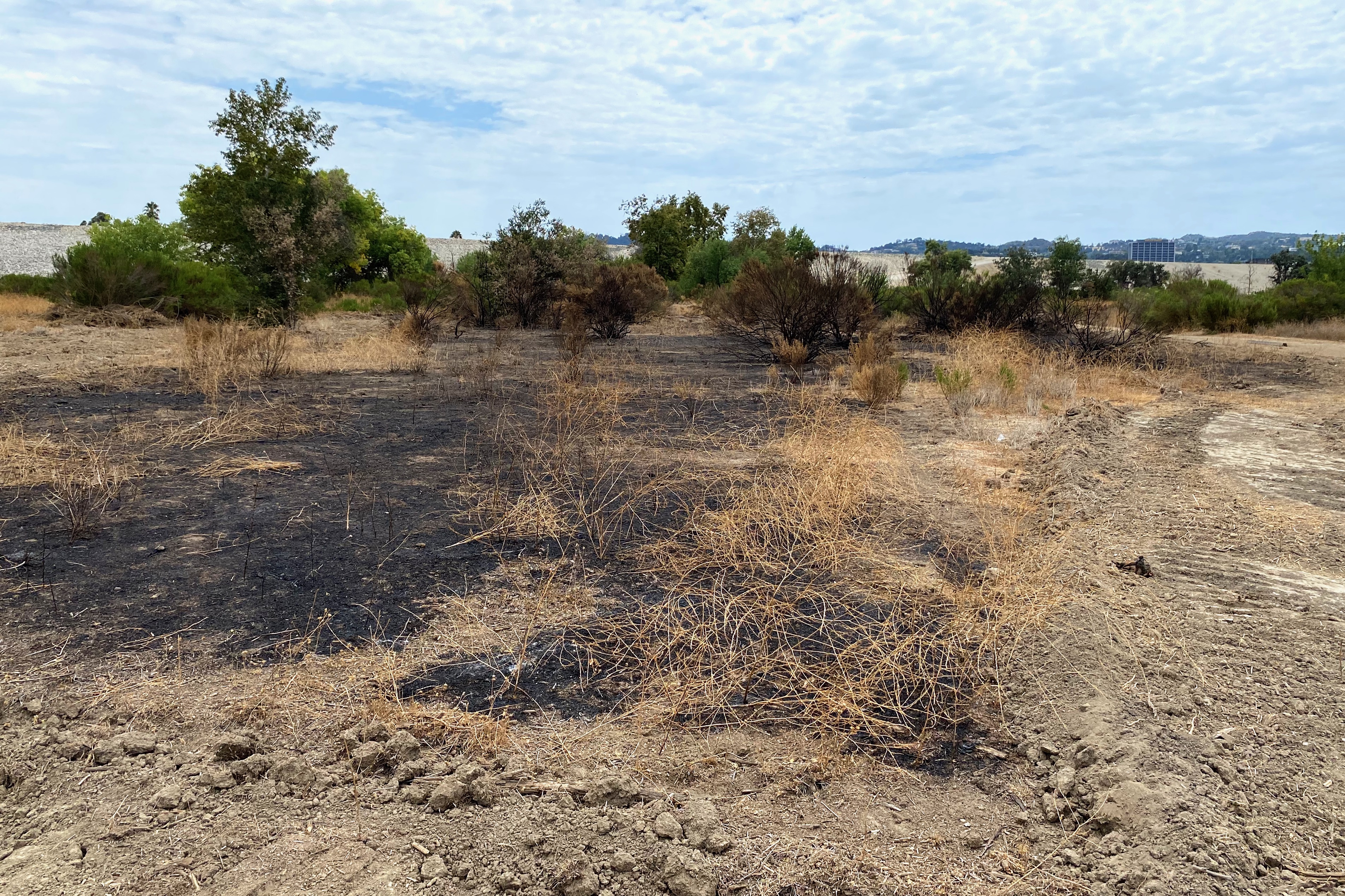
Through the dam side of the reserve, I made a wide loop to where the Los Angeles River runs into the Sepulveda Dam and circled back up through the tunnel and back to the parking lot. Temperatures had reached a hot and humid 100, give or take, and the air felt heavy. The open space was teaming with people fishing, flying drones, and riding single-wheel dirt scooters. What I didn’t see were a lot of were people soaking in nature around in the open space of the basin.
-
Solar is the Only Option

I am firmly concluding that solar energy is the only way to go.

Solar Panels and Electric Cars.
Created with dreamWith fuel costs rising, drought becoming an annual occurrence in the west, and annual heat emergencies getting worse and worse. We need to find alternatives to old systems of energy production that, as the temperatures go up, continue to fail, and expose us more to the elements.
Add to that list the sudden increase in gasoline prices. If we can get more solar panels onto roofs and electric cars into driveways we can, maybe, make a dent in the impacts of automobile pollution and air quality.
Here’s how I see solar working in the home setting:
- Solar panels on the roof
- A battery backup to store the collected energy
- An electric car in the driveway to utilize that collected and stored solar energy.
We’ll see improvement as more electric vehicles enter the marketplace and offset our need for carbon dioxide-producing combustion engines. This would be an improvement as one car can produce 4.6 metric tons of carbon dioxide annually. For context, one metric ton is about the equivalent mass of a single-family house. And this is per car, per year.
Getting regular commuter households in the suburbs that rely on daily drivers to get to and from work would benefit from this setup the most. Sure, it may not be the ideal situation for an Uber driver or tradesman with a work truck, but I’m not convinced that it wouldn’t work. Just imagine no fuel costs.
Yes, the up-front costs might be high, but when you think that the average annual household expenditure on gas is between is close to $5,000 a year–over a very short time the costs of solar could easily amortize out and pay for themselves.
Solar to power the house
What makes solar the most exciting is the ability to get off the grid and onto a self-sustaining (with a power wall) independent home. I wish there was a more accessible, cheaper way to retrofit older homes. Also, I wonder if it’s worth retrofitting a dwelling that is pushing nearly 100 years old wood-frame bungalows, such as what covers much of the suburbs across the southland.
The obvious answer is, yes, it’s worth it for the energy cost savings and environmental impact. But it’s not worth it enough for local or state subsidies to make it price neutral (or free). If it saved revenue the state would offer grants to cover the cost and reap the benefits. Grants might be the best option here. The benefits would be huge despite the high cost. But grants for solar upgrades are few and far between the installation accessible only to the affluent.
Solarizing public spaces
An obvious solution is putting solar on every public building, parking lot, and covered public space. Why this isn’t happening more is baffling. Cities, counties, and states could leverage their monolithic purchasing powers to build, install and cover every open flat space with panels to offset their electrical costs and lower the need for power plants and unsustainable energy production. We can see the beginnings of this happening, but there’s a lot of resistance locally to putting in solar panels.
I imagine until the federal government demands it (and funds it) municipalities and counties will act in much the same way individuals in the community have and resist and wait for the funding.
Electric Cars
Personally, the appeal of solarizing the home comes with putting an electric car in the driveway. As more vehicle options hit the market, upgrading homes to be able to power them will likely be right behind. This will be one of the biggest hurdles to getting to solar everywhere. Once we pass the tipping point of many electric cars on the road, putting in an at-home charging station becomes a no-brainer. How much more convenient and cost-efficient can it get: creating your electricity from the sun, storing it, and then using it to power your commute. This is a win-win scenario.
With so many convincing points, it’s clear to me that solar is the answer to our need for power. This may not be true in places with limited sunlight, but in locations with bright sun, long days, and ample sky, solar becomes the simplest solution to the long-term problem of fossil fuels and carbon emissions.
It’s only a matter of time before we’ll see solar everywhere and be reaping the benefits of the clean energy future.
Planting Natives

 Exploring Urban Ecosystems and Patch Ecology