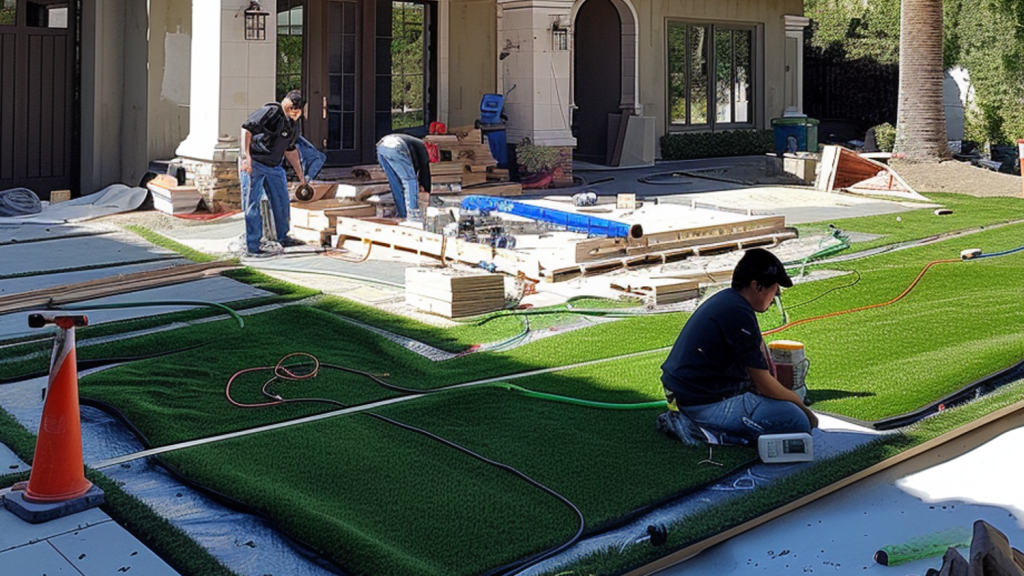
Artificial grass (or astroturf) lawns, also known as synthetic or artificial grass, have become a popular alternative to natural grass for homeowners, businesses, and sports facilities. While these lawns offer benefits such as reduced maintenance and consistent appearance, they pose significant environmental challenges. In this blog post, we’ll explore the environmental downsides of artificial lawns and why natural grass (or even better native plants entirely) remains the greener choice.
Plastic Production and Waste
Artificial turf is made from plastic materials like polyethylene, polypropylene, and nylon. The production of these materials involves significant fossil fuel consumption, contributing to greenhouse gas emissions. Additionally, the lifespan of synthetic turf ranges from 8 to 15 years, after which it typically ends up in landfills. The decomposition process of plastic can take hundreds of years, leading to long-term environmental pollution.
Microplastic Pollution
One of the most concerning aspects of Artificial turf is the release of microplastics. As the synthetic grass wears down, tiny plastic particles break off and can be washed into local waterways, contributing to the growing issue of microplastic pollution. These particles can have harmful effects on marine life and ecosystems, as well as potentially entering the human food chain.
One study says clearly that “microplastics can enter the human body via dermal contact, inhalation, and food intake and pose a significant threat to human health.” Turning your yard into plastic particle fields seems an easy way to ensure you and your family consume even more microplastics.

Heat Island Effect
Artificial turf lawns can exacerbate the urban heat island effect. Unlike natural grass, synthetic turf does not have cooling properties and can become extremely hot in direct sunlight, sometimes reaching temperatures as high as 170°F (77°C). This contributes to higher local temperatures, increasing the demand for air conditioning and thereby boosting energy consumption and greenhouse gas emissions.
This aspect of these faux lawns is one of the most concerning. With heat increasingly becoming an issue for many communities, creating plastic heat islands in front and back of every house will only exacerbate the problem and drive temperatures up in places where it should be coming down.
Read: The Impact of Climate Change on Planting Zones: A Look Ahead to 2050
Loss of Biodiversity
Natural grass lawns support a variety of organisms, from insects to birds, creating a balanced ecosystem. In contrast, Artificial grass provides no habitat or food source for wildlife, leading to a loss of biodiversity. Pollinators, which are crucial for many plant species and crops, are particularly affected by the lack of natural habitats in areas dominated by synthetic grass.
This is a really big impact as spaces with native plants and habitats are dwindling. With the loss of such spaces, bugs, birds and bigger mammals have less and less habitat to exist in.
Water Runoff and Pollution
While artificial turf does not require watering, it can negatively impact water quality. Unlike natural grass, which absorbs rainwater and helps to filter pollutants, artificial lawns can increase surface runoff. This runoff can carry pollutants, such as chemicals used to clean and maintain the turf, into local water bodies, potentially harming aquatic ecosystems.
Read: Harvesting the Rain
This problem will only get worse as the soils below the fake lawn bake and harden into hydrophobic baked clay.
Chemical Use
Maintaining synthetic turf often requires the use of chemicals to keep it clean and free from bacteria and mold. These chemicals can be harmful to both human health and the environment. Additionally, the production of these cleaning agents further contributes to chemical pollution and resource depletion.
It’s becoming such a problem that California is moving to restrict synthetic turf lawns over health concerns.
Choosing a Greener Alternative
While the convenience of artificial turf lawns is appealing, the environmental costs are significant. By choosing natural grass or other eco-friendly landscaping options, we can help preserve biodiversity, reduce pollution, and combat climate change. Sustainable practices such as planting native species, reducing lawn size, and incorporating xeriscaping can provide beautiful, low-maintenance, and environmentally friendly alternatives to synthetic grass.
As awareness of environmental issues continues to grow, making informed choices about our outdoor spaces becomes increasingly important. Let’s strive to create landscapes that benefit not only our homes but also the planet we all share.
 Exploring Urban Ecosystems and Patch Ecology
5 responses to “How Bad are Artificial Turf Lawns?”
[…] Rising Temperatures: Average global temperatures have increased by about 1.2°C (2.2°F) since pre-industrial times. This warming trend means that areas are experiencing milder winters, which allows for plants typically suited for warmer zones to survive further north.Read: How Bad are Artificial Turf Lawns? […]
LikeLike
[…] Read: How Bad are Artificial Turf Lawns? […]
LikeLike
[…] Read: How Bad are Artificial Turf Lawns? […]
LikeLike
[…] Read: How Bad are Artificial Turf Lawns? […]
LikeLike
[…] Read: How Bad are Artificial Turf Lawns? […]
LikeLike