California Naturalist Outing
Upper Las Virgenes Canyon Open Space Preserve – Victory Trailhead
11:20 a.m.-3 p.m.
- Route: From the main (paid) parking lot and starting on the Joe Behar Trail to the left to Fife Drive, looping back to the E. Las Virgenes Canyon Road (fire road) to the start. Round trip, approx. 6 miles.
- Weather: Cool at the start and slightly humid. 64°F, 82°F, and hot under the direct sun at the end.
This was an observation trek to loop on the Joe Behar trail at the Victory Trail Head in the Upper Las Virgenes Canyon Open Space in Woodland Hills, CA.
The parking lot at the start was relatively empty (one car) but with several people returning from the trail. Most were parked in the street in the non-paid area.
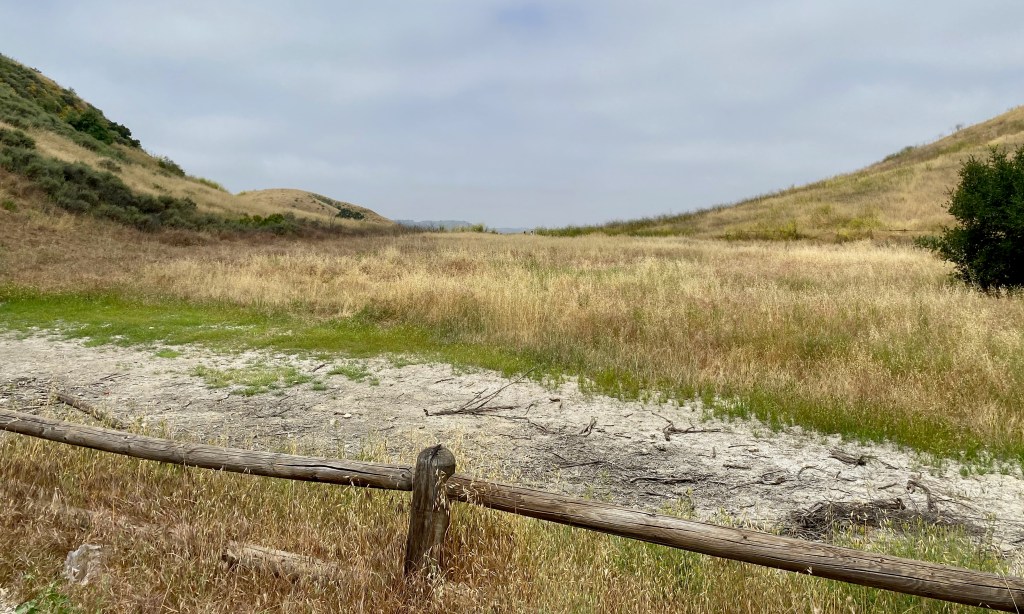
Visually, along the hillside, there was a lot of tall dry grass but not a lot of mustard. This surprised me as in recent years, the mustard was tall and thick blanketing the hillside. In past years, the plant would tower well over 6 feet (much like it is in the Sepulveda Basin at the time of this observation). Now, it seemed as though years of removal had paid off as the mustard only remained in patches and along the trail edge. Of the mustard, it was a tall variety with mature purple stalks with sparse leaf clusters. The type and variety, however, escape my ability to discern the variety. Using iNaturalist, my closest approximation is common field mustard (Brassica rapa) which is listed as having been observed in the area previously.
Lots of Reptiles
One thing I observed in abundance was lizards. Most, if not all, seemed to be fence lizards, with many of the smaller/younger ones with yellow-tinted bellies and missing their tails—no doubt the victims of hungry birds or other predators.
My estimation is that for each stride on the trip, there was no fewer than one lizard with many having two or three. This made for a delicate dance at some points to not land my large clumsy foot right where a spooked lizard evacuated to at the sound of my footfalls.


Near the end of the excursion on the return back, I happened upon a snake that was as spooked at my appearance as I was at his, disappearing into the grass and brush faster than I could to get a good look at it. Its presence reminded me of the fresh snake trail I encountered at the Marvin Braude Gateway trail.
Many Oaks, Little Shade
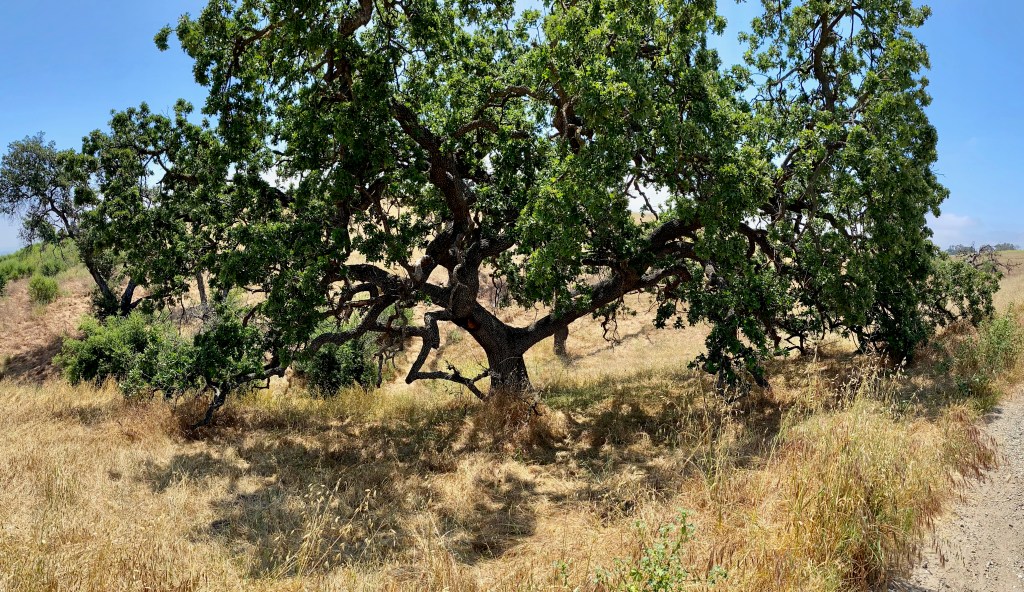
Along the deeply rutted trail, large Valley and Coastal Live oaks dotted the hillsides. Their deep green canopies stretching skyward stood in contrast to the dry tan grasses at the feet. I couldn’t help but wonder if in centuries past their numbers were quadruple what they were now. Scarcely a few on the trail seemed to be more than 50 years old and, of those, several were victims of some pest, storm, or fire and had fallen over dead. Still, some young trees stretched to the heavens and were growing for future generations. Seeing how few trees there were reminded me of something from my naturalist training where, at a point overlooking the San Gabriel Valley, as a group we imagined the world as it may have been centuries past as open plains hosted sage/chaparral and oak forests in thickets. Today, those spaces are filled with people and human-made forests.


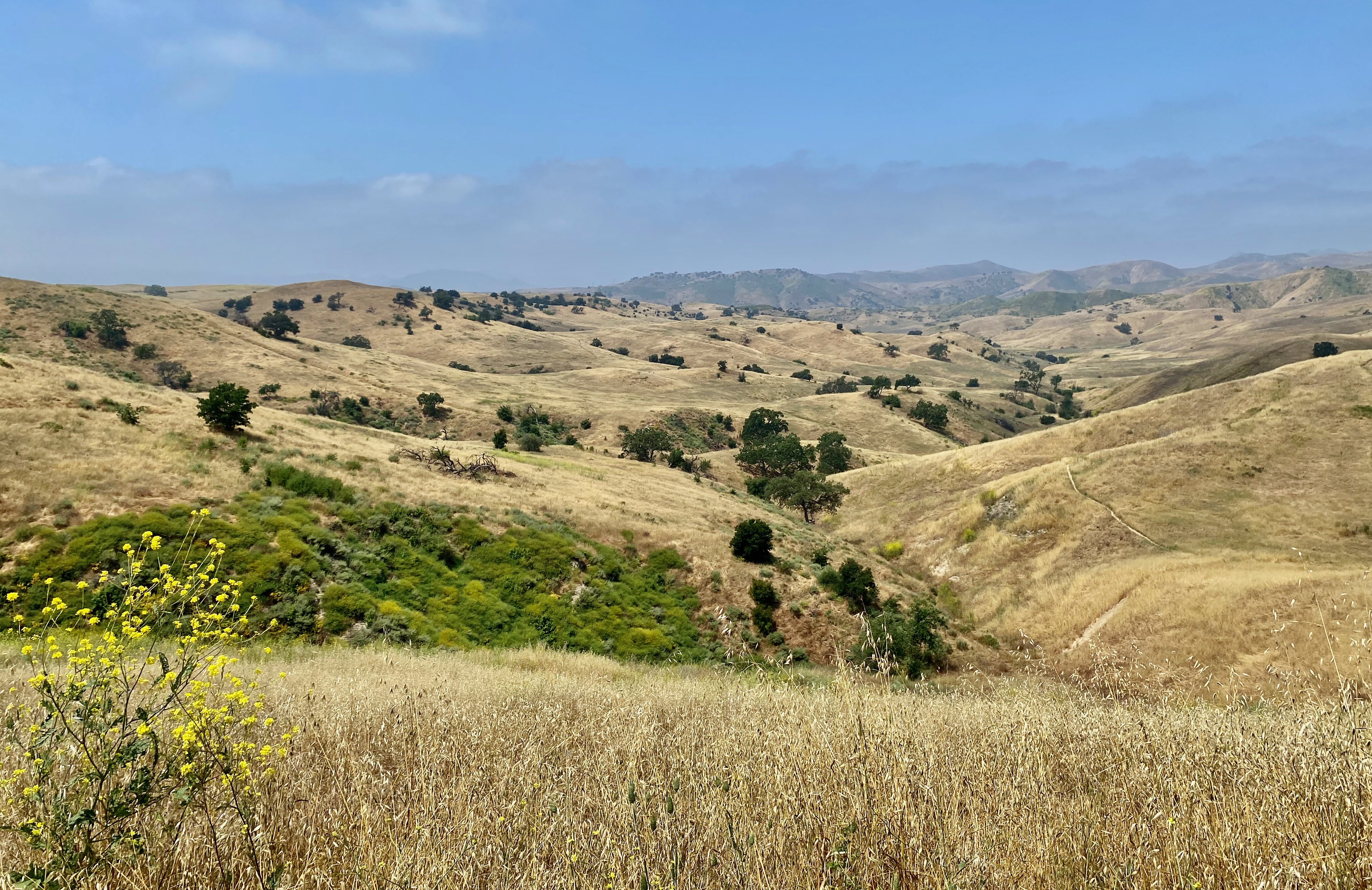

Remarkably, in some spots, groves of oaks seemed to cluster in hillside cuts, likely sources of greater ground moisture and microclimates helping to nurse them along. In one spot, maybe 20 trees formed a grove over an acre with a few close to the trail to hint at shade. Most however were far enough from the trail to be a nuisance to get to by the casual climber.
Annuals Everywhere
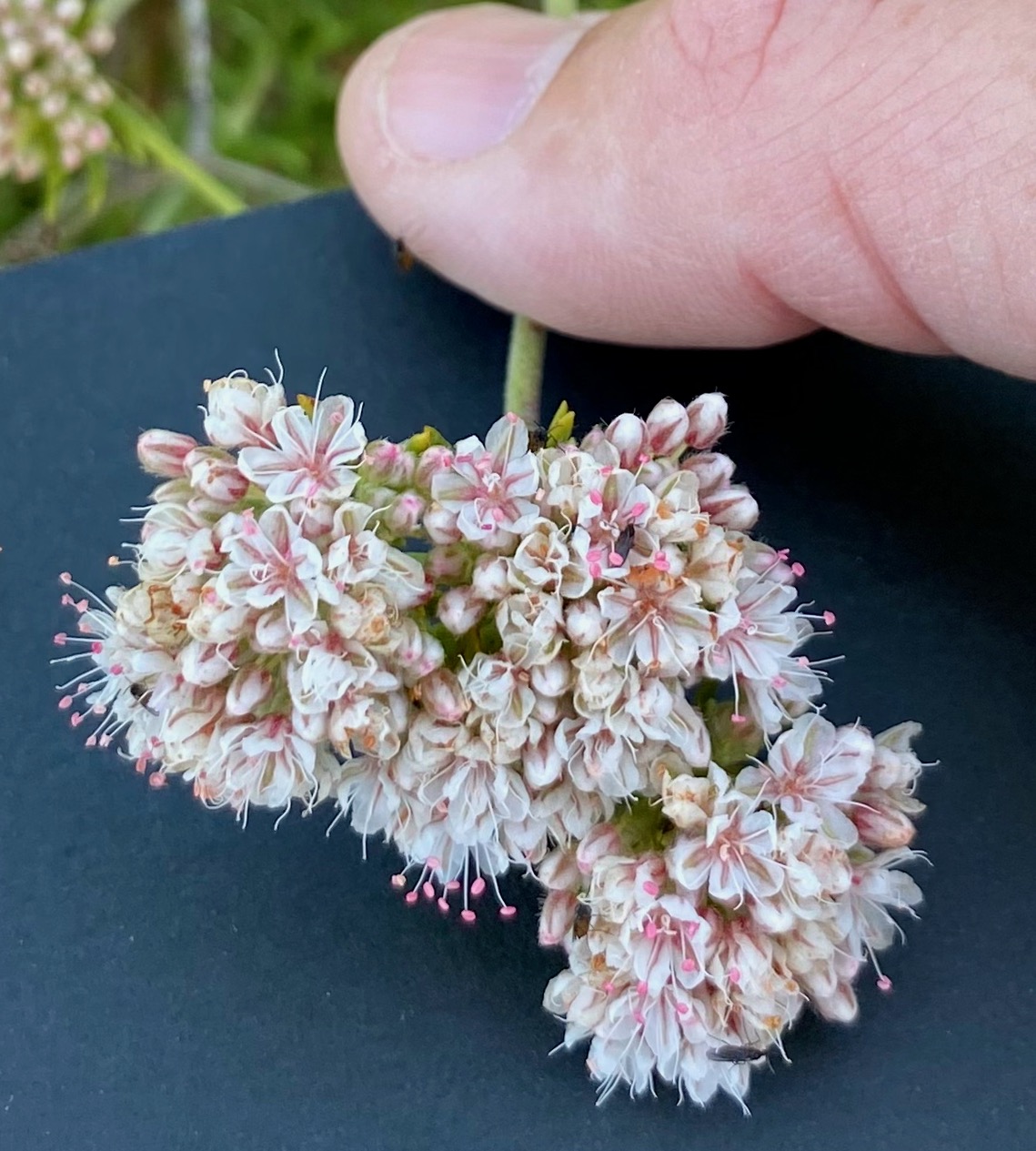
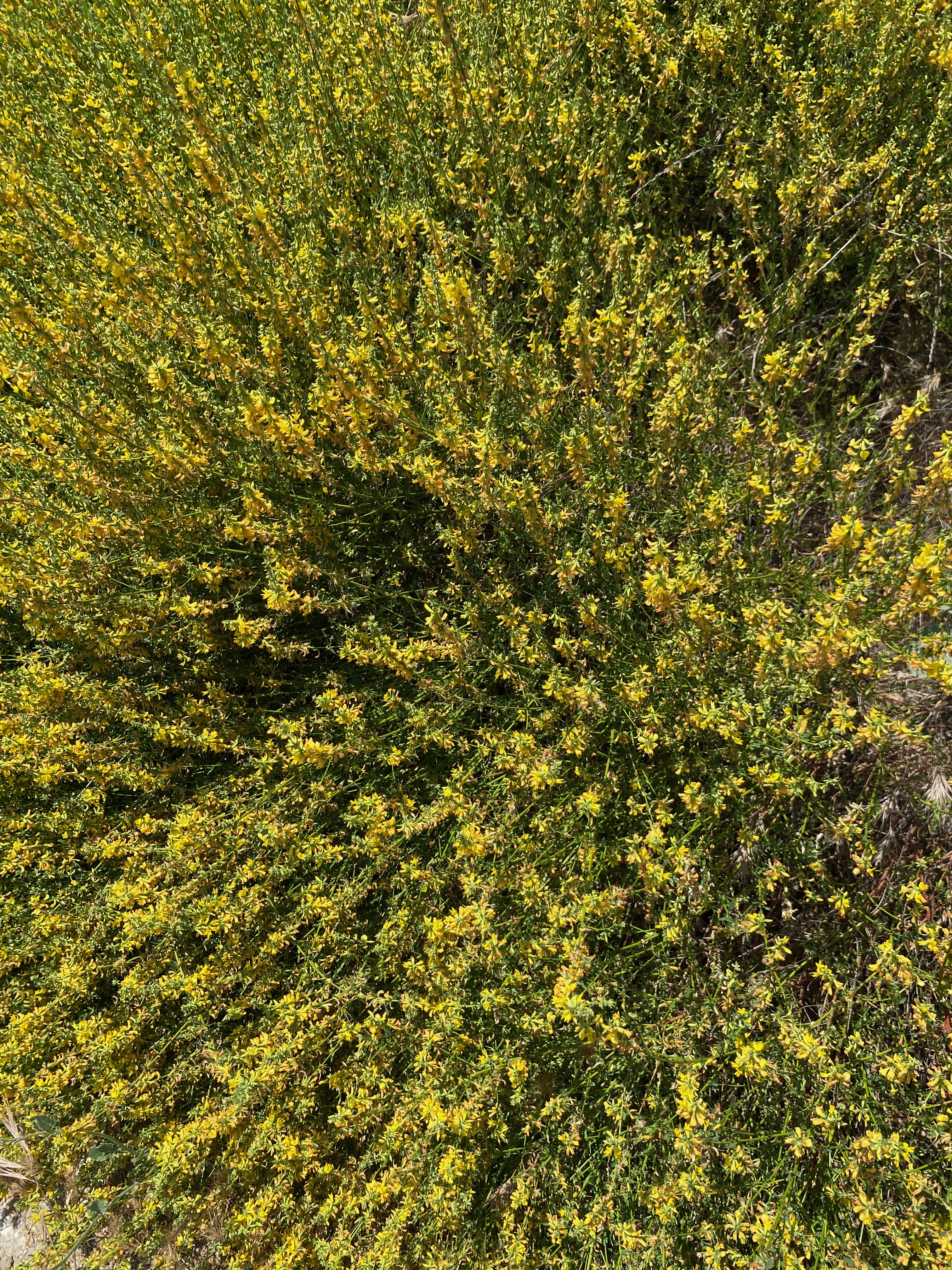
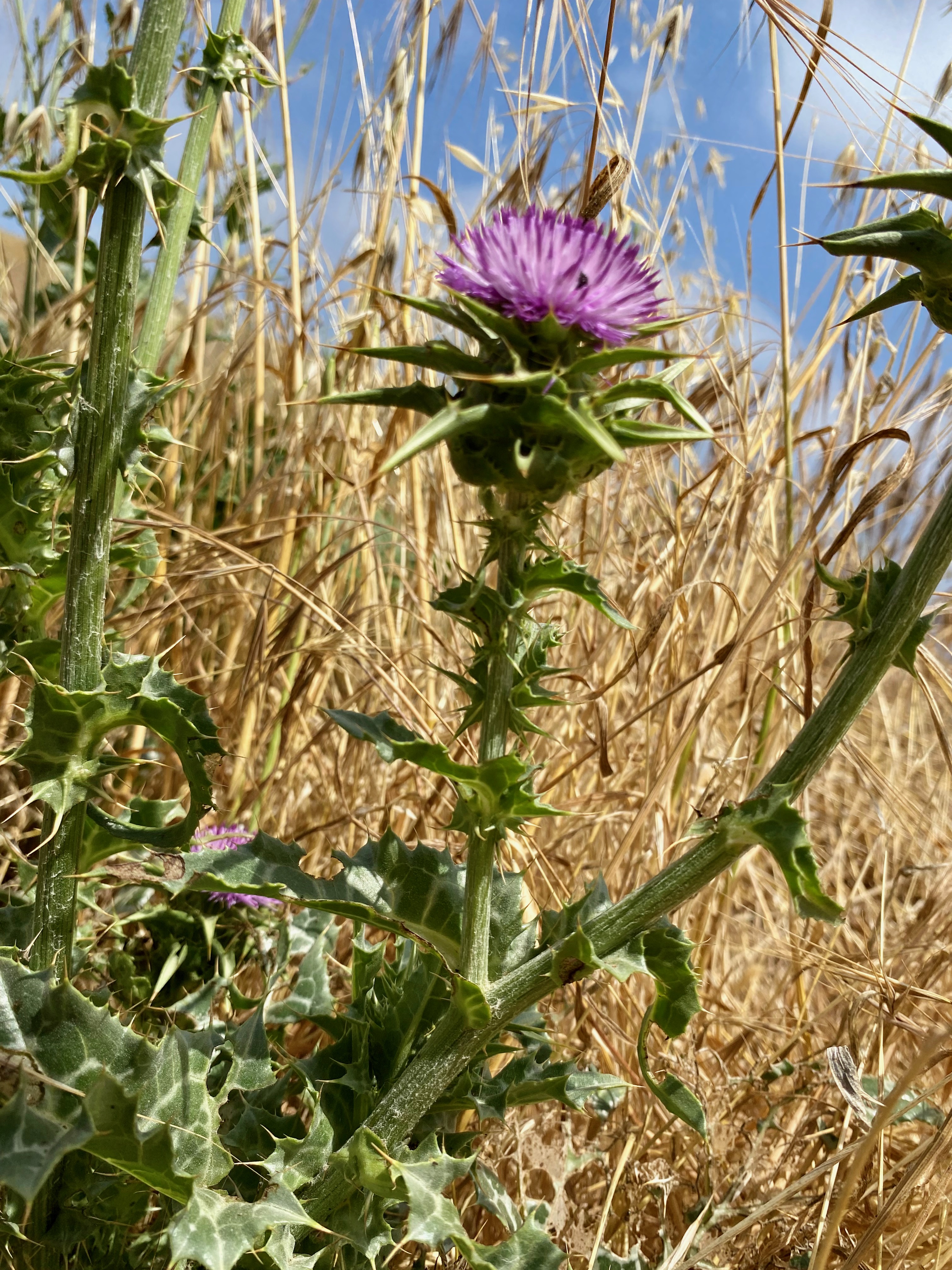
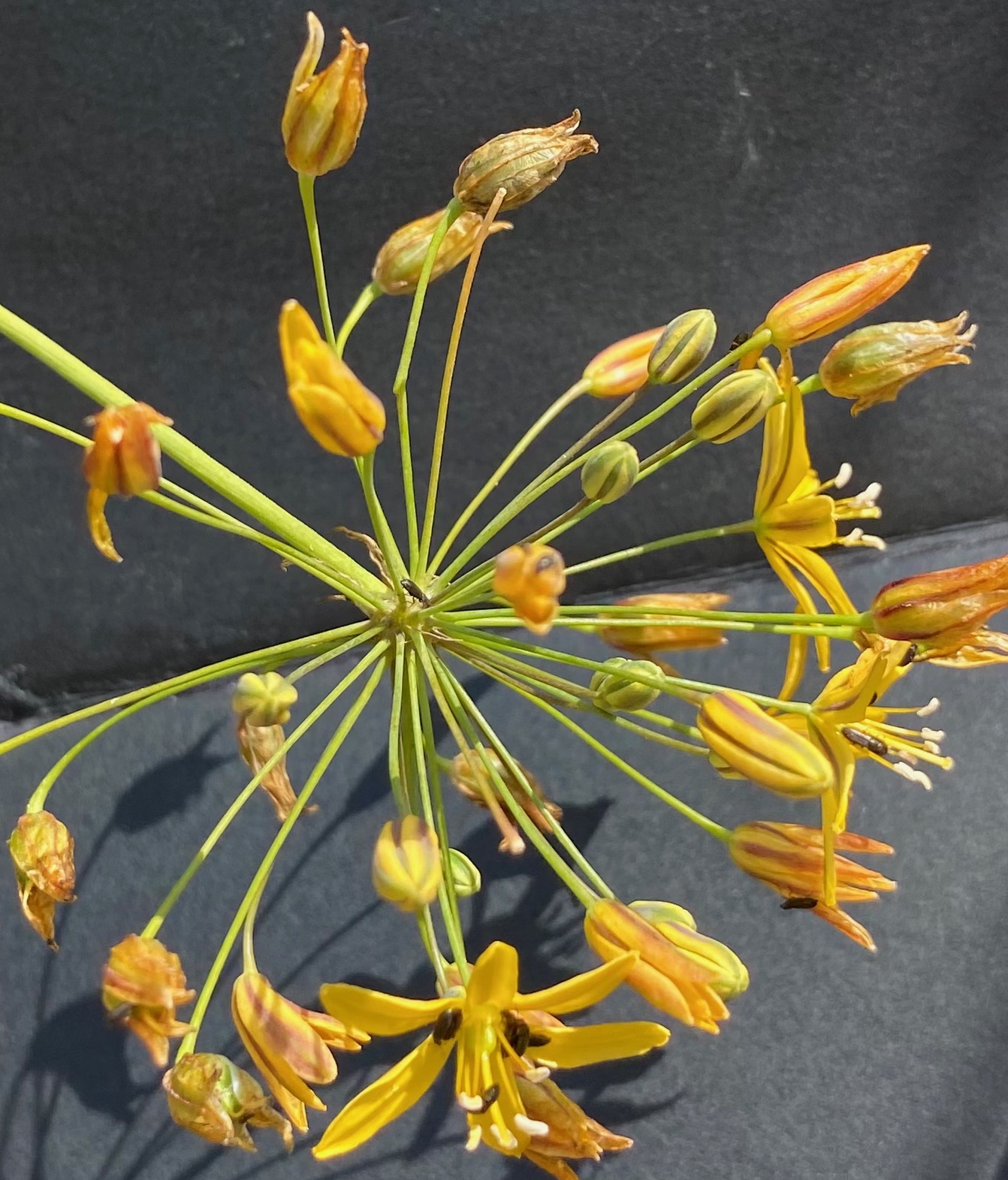
Along the trail, I took great delight in seeing annuals all along the path. Bird’s-foot Trefoil, Goldenstars, thistle, and the occasional poppy all shared space with black sage, deerweed, and Palmer’s goldenbush. Fiddleneck (though looking tired) and buckwheat entering their showy phase with big pom-poms of flowers. Annuals were not everywhere, but were just enough to make their presence known. There were, of course, sweet clover and cheese wheel weeds in abundance, along with occasional patches of vetch in full bloom with their purple inch-long flowers hanging over like dripping colorful tassels. The Maltese Star-thistle was everywhere but not so high as to make the space look unpassable.



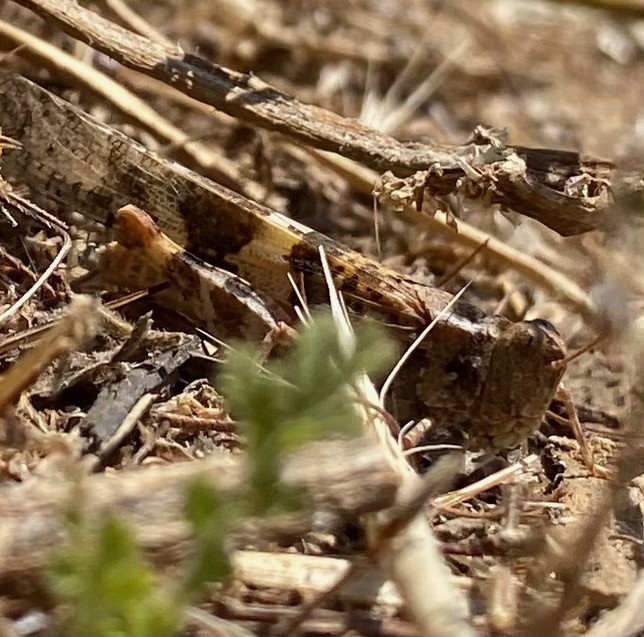
Like the Santa Monica Mountains, the grasshoppers were prolific, always staying a how or two out of each footfall. These grasshoppers (Pallid-winged Grasshopper – Trimerotropis pallidipennis) seemed unremarkable appearance-wise but in great abundance all along the trail. Like the lizards, they occupied every pace of the trip, usually in abundance (five+ in every other pace). It seemed like as the sun came out and that increased, their numbers increased along the trail with me.
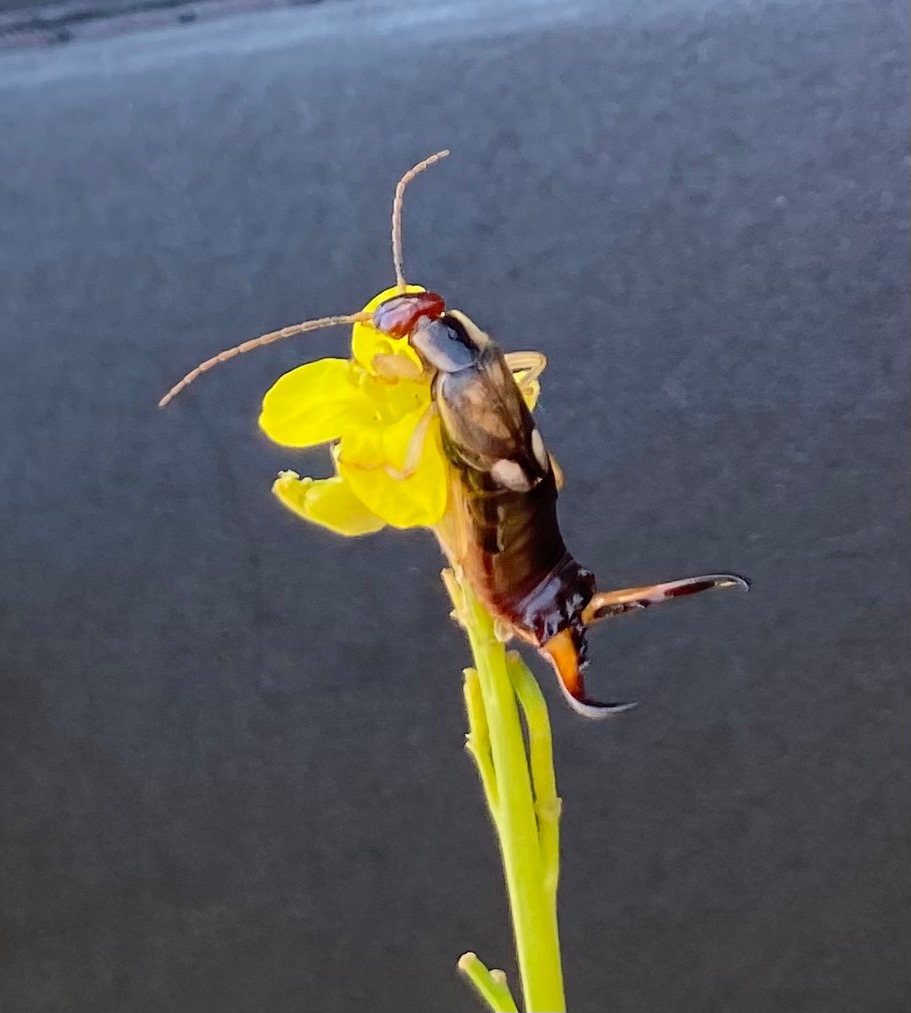
Another critter I was surprised to see in such great profusion was European earwigs. With their giant rear pinchers, these detritus eaters were casually sitting atop many of the mustard heads seemingly eating the pollen from the flower. The first I saw doing this surprised me, but within two paces I found plants covered with them doing the same thing. I wonder if the profusion of the European mustard has anything to do with the profusion of European earwigs.
Wet Creeks and Hot Trails
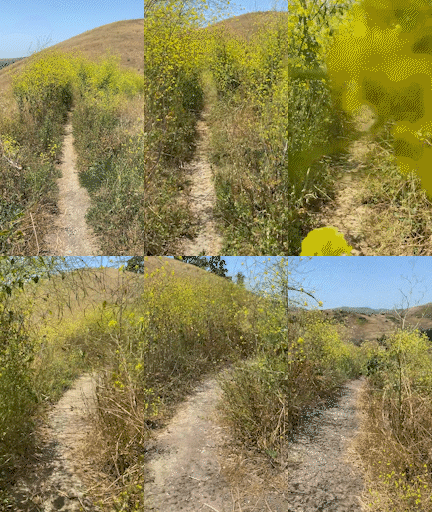
At the middle point of the loop, the trail connects back with the main fire road along a north/south facing route with the full western sun in the afternoon. A wall of black sage, buckwheat, bush sunflower, coyote bush, and deer weed seemed to be thriving in the late spring heat. All of this was flanked by mustard forming, at one point, a trail tunnel that required navigating through. All of the plants looked healthy and robust as I descended the plateau into the lower creek bed.
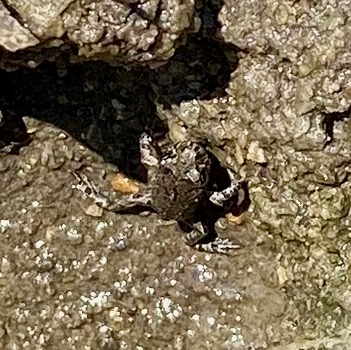
It was at this point I reconnected to the main fire road and began my trek back to the start. Along this way, I crossed a trickling creek with patches of slow-moving water that formed pools of slow-moving water. Here, tadpoles and small frogs hid in plain sight scattering when a shadow enveloped them. Neither the frogs nor tadpoles were larger than my fingernail. The frogs were grey-mottled and blended into the surrounding soil so well that I scarcely saw them before they would jump away. It was remarkable to see on so warm an afternoon in the open like that.

Closing the loop of the trail, I returned to the start whereupon I stumbled onto two fence lizards playing tag on the visitor sign. All said it was hot, and I was spent. I concluded my outing at the Upper Las Virgenes Canyon Open Space in the West San Fernando Valley.
Field Observations
- Many hikers at start.
- Several at end, some jogging.
- Mountain bikes, silent and at speed on the trail.
- Lots of grasshoppers, lizards, earwigs, ladybugs, and hover flies.
- Decent trails, some ruts, no washouts.
- Running water in creek in lowest points.
- Dragon flies (Orange and blue).
Observed Species
- California Sage – Artemisia californica
- Valley Oak – Quercus lobata
- Coast Live Oaks – Quercus agrifolia
- Black sage – Salvia mellifera
- Mustard (field mustard?) –
- Common wild Oat(?) – Avena fatua
- American Bird’s-foot Trefoil – Acmispon americanus
- Goldenstar – Bloomeria crocea
- Common Fiddleneck – Amsinckia intermedia
- Buckwheat – Eriogonum fasciculatum
- Woollypod Milkweed – Asclepias eriocarpa
- Milk Thistle – Silybum marianum
- Maltese Star Thistle – Centaurea melitensis
- Annual yellow sweetclover – melilotus indicus
- Laurel Sumac – Malosma laurina
- Cheeseweed Mallow – Malva parviflora
- Deerweed – Acmispon glaber
- Purple Clarkia – Clarkia purpurea
- Hairy Vetch – Vicia villosa
- Telegraph weed -Heterotheca grandiflora
- Southern Bush Monkeyflower – Diplacus longiflorus
- Hyssop loosetrife – Lythrum hyssopifolia
- Chaparral Mallow – Malacothamnus fasciculatus
- Palmer’s Goldenbush – Ericameria palmeri
- Grasses – Several
- Pallid-winged Grasshopper – Trimerotropis pallidipennis
- European Earwig Complex Forficula auricularia
- Acmon Blue – Icaricia acmon
- Western Fence Lizard – Sceloporus occidentalis
- Flame skimmer dragonfly (Orange) – Libellula saturate(?)
- Hover flies
- Lady Bugs
- Tadpole
- Frogs
 Exploring Urban Ecosystems and Patch Ecology
3 responses to “Observing the Upper Las Virgenes Canyon Open Space Preserve in May”
[…] for a weekday for the space, but by comparison with similar spaces like the Marvin Braude and the Upper Las Virgenes Canyon, the Placerita Canyon trail was empty and very easy to […]
LikeLike
[…] Read: Observing the Sepulveda Basin Wildlife Reserve in May […]
LikeLike
[…] native plants in the ecosystems where they naturally occur. In particular in Placerita Canyon, the Las Virgenes Open Space and the Santa Monica […]
LikeLike