California Naturalist Outing
Sepulveda Basin Wildlife reserve
11 a.m.-1 p.m.
Route: Entering space from the dirt parking lot below the archery fields.
Weather: Hot, 80 °F at start and 101 °F at end. Sky was mostly clear, air was humid and heavy.
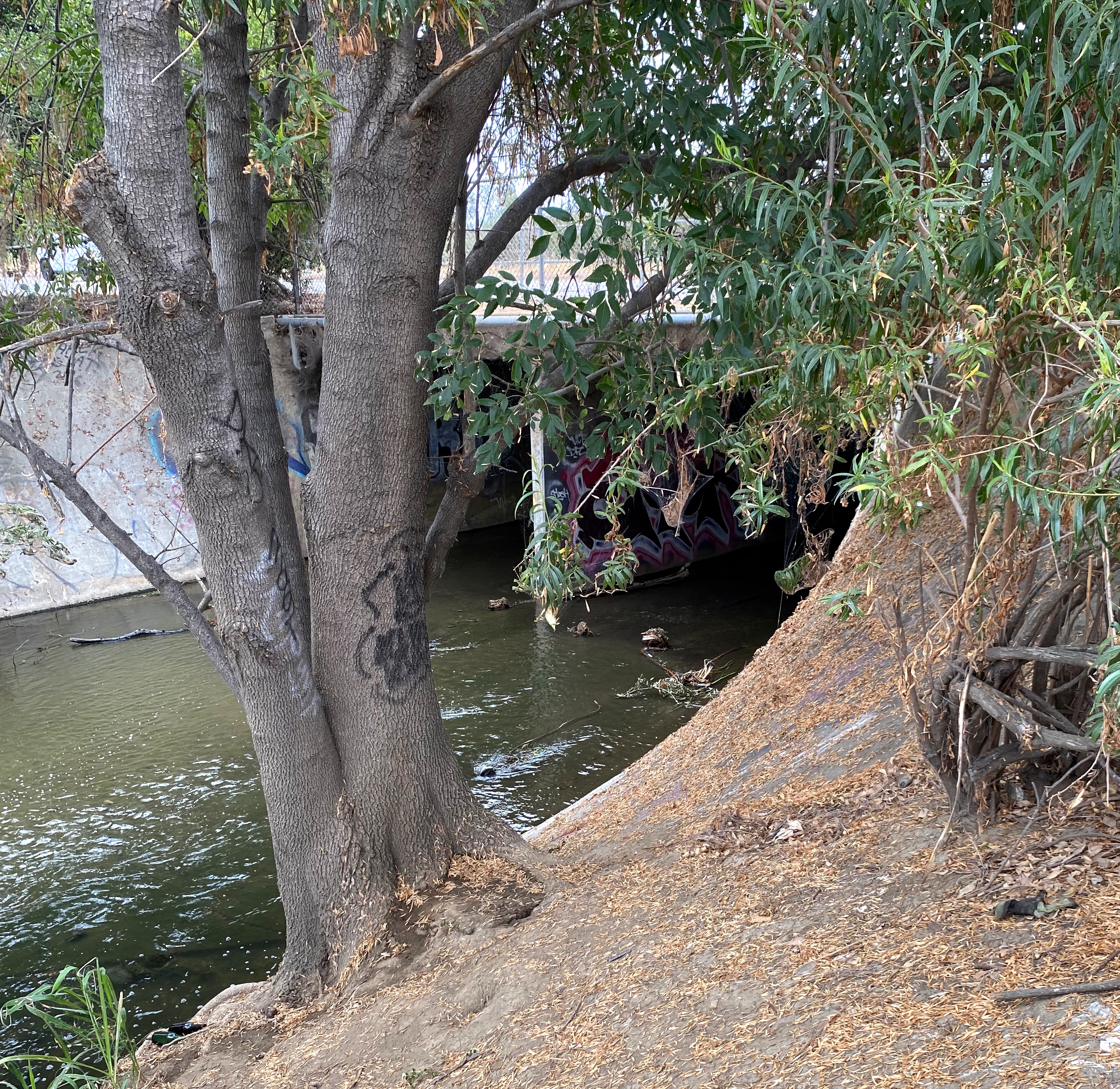
I began this excursion by entering from the north of the lake. My first encounter was the shouldering remains of what looked like a campfire beneath a large poplar tree. The poplar tree has a wide sweeping open space around its trunk with all the leaf litter and debris (literally) broomed away by the now, absconded camper. Having burned close to the trunk the fire had been dealt with by another passing naturalist.


This visit was to do a bit of reconnaissance and species observation.
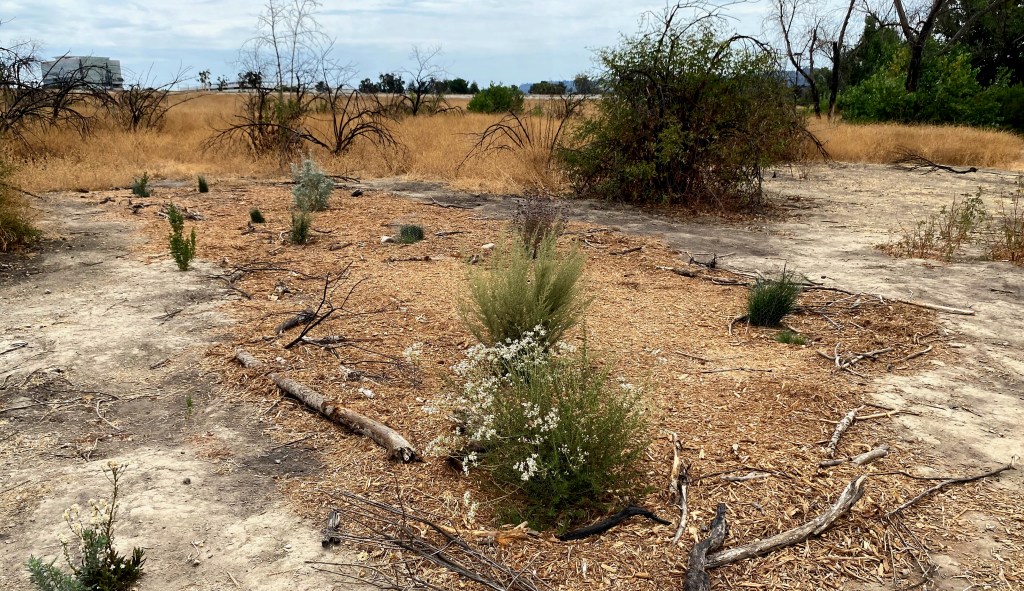
The surveying was for upcoming fall planting west of Haskell creek into the open field that opens out to Victory Blvd. As a wild space, it’s been woefully neglected and ravaged by years of neglect and damage from repeated fires.


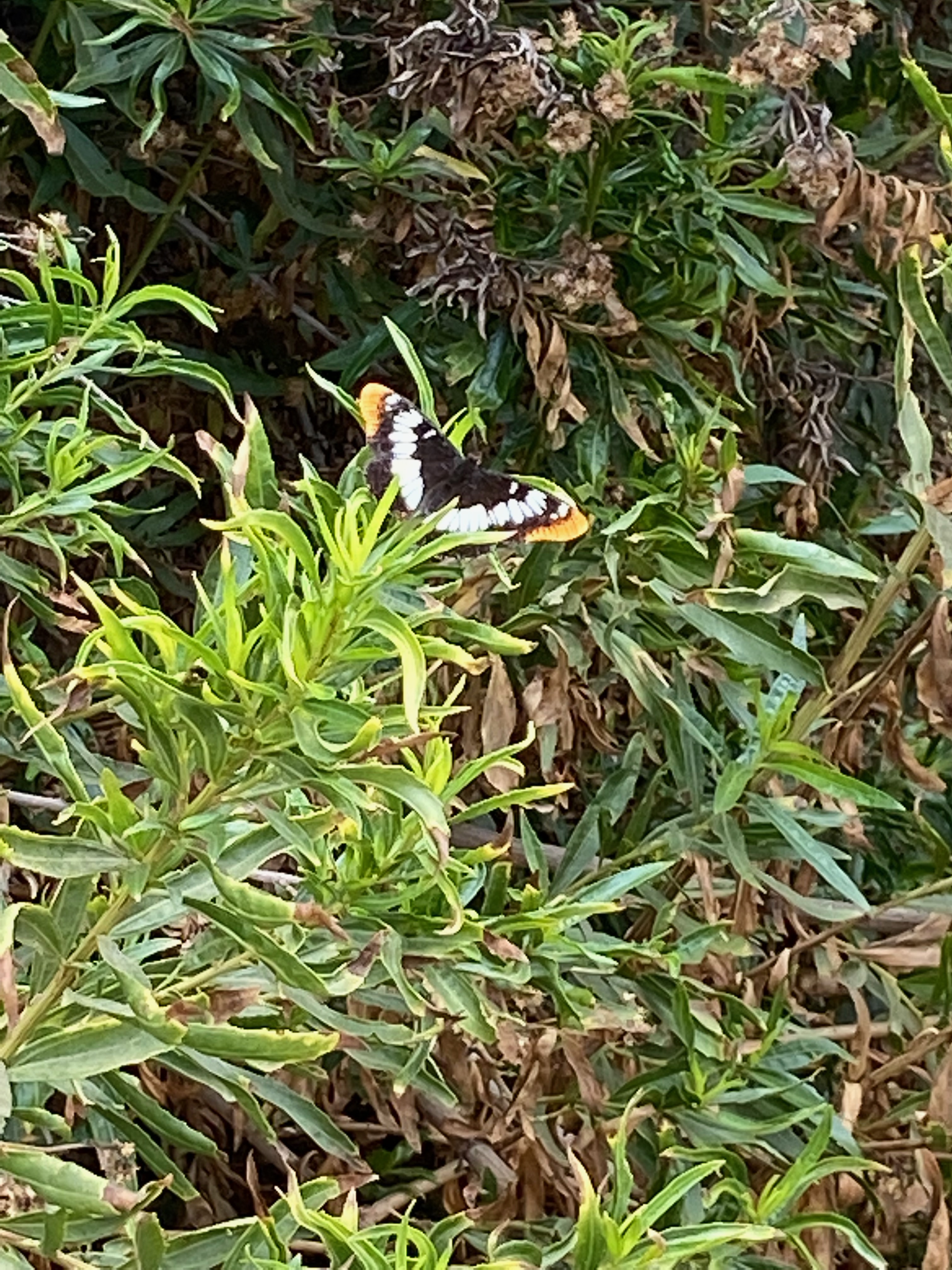

Burning to the ground in 2019, the Sepulveda Basin Wildlife Reserve became a moonscape of ash replaced with mustard, weeds, and fennel. The planting plan for 2022-23 is to install 60-70 different individual plants:
- Trees (sycamore, oak, and bay laurel)
- Shrubs (toyon, lemonade berry, sugar bush, and laurel sumac)
- Herbaceous scrub (several sages, buckwheat, and other pollinator and bird-friendly species).
I’m hopeful that this mix and volume of planting will jumpstart a natural process in the space that we can build on in the years to come.


Past Plantings
Checking on plantings from 2021-22, many of the installed plants in late 2021 and early 2022 seem to be thriving. Most have survived their first season in the wild. The three Toyons from 2020 have tripled in size as have buckwheats and Artemisia Californica planted in 2022. Milkweed seems to have found some footing on the north side, making it to fat fluffy seeds ready to float away on the breeze.
South of Burbank
Moving through the tunnel to the south (dam) side of the Sepulveda Basin wildlife reserve revealed jewels amidst the dry invasive mustards and grasses. Along the path that parallels Burbank Blvd. are a few sugar bush (Rhus ovata), toyon (Heteromeles arbutifolia), lemonade berry (Rhus integrifolia), and buckwheat (Eriogonum fasciculatum).
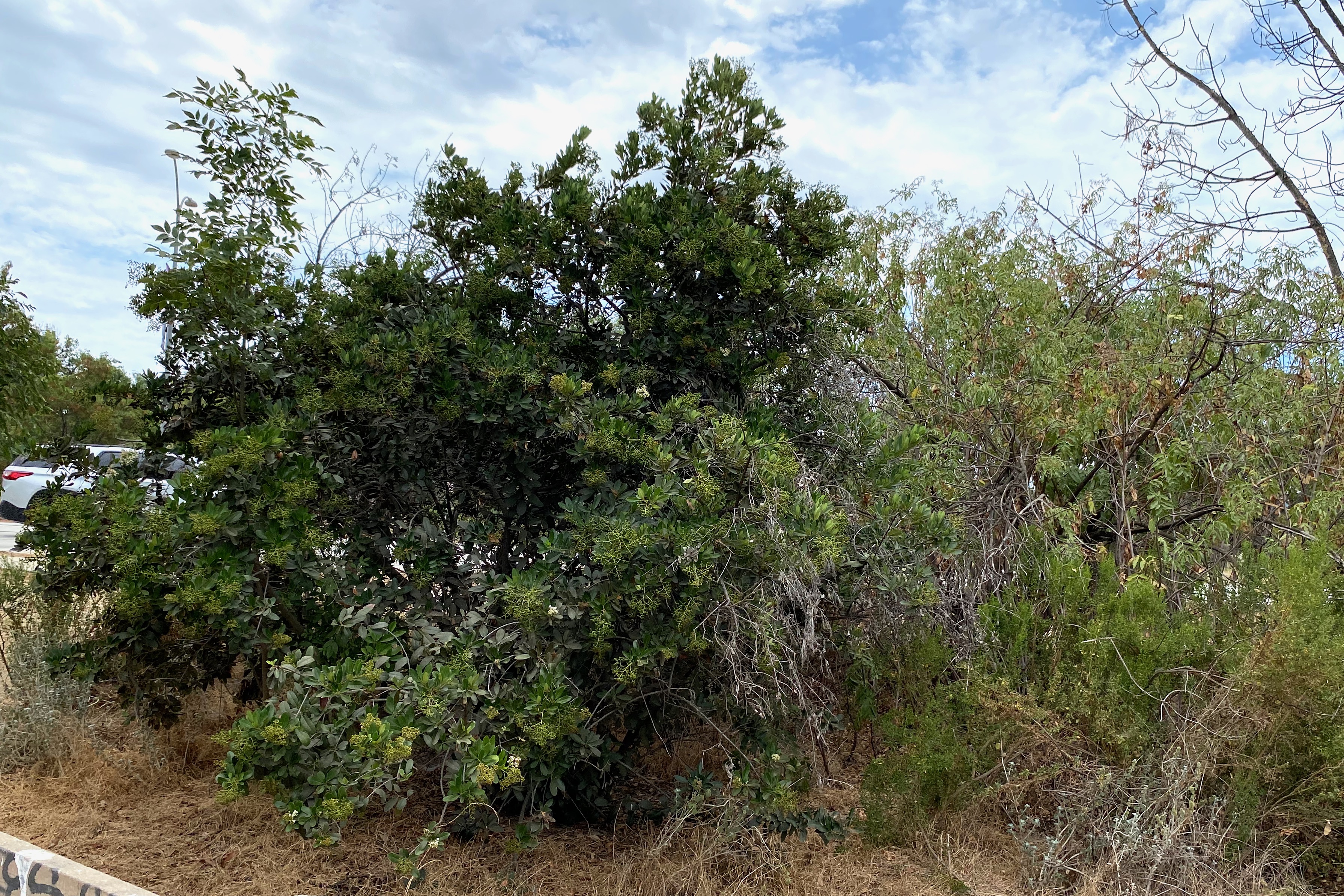


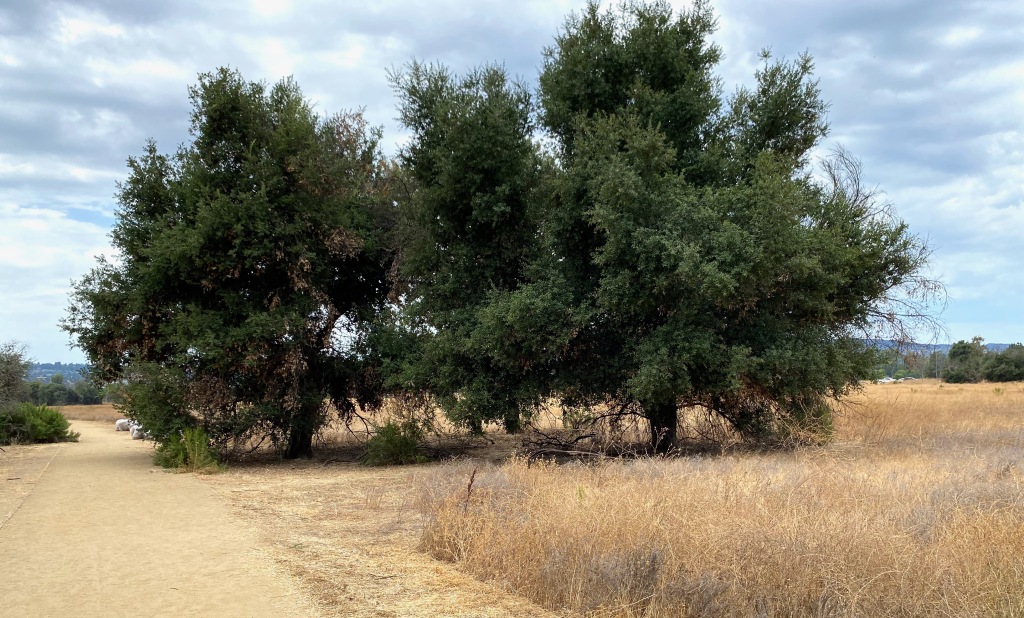
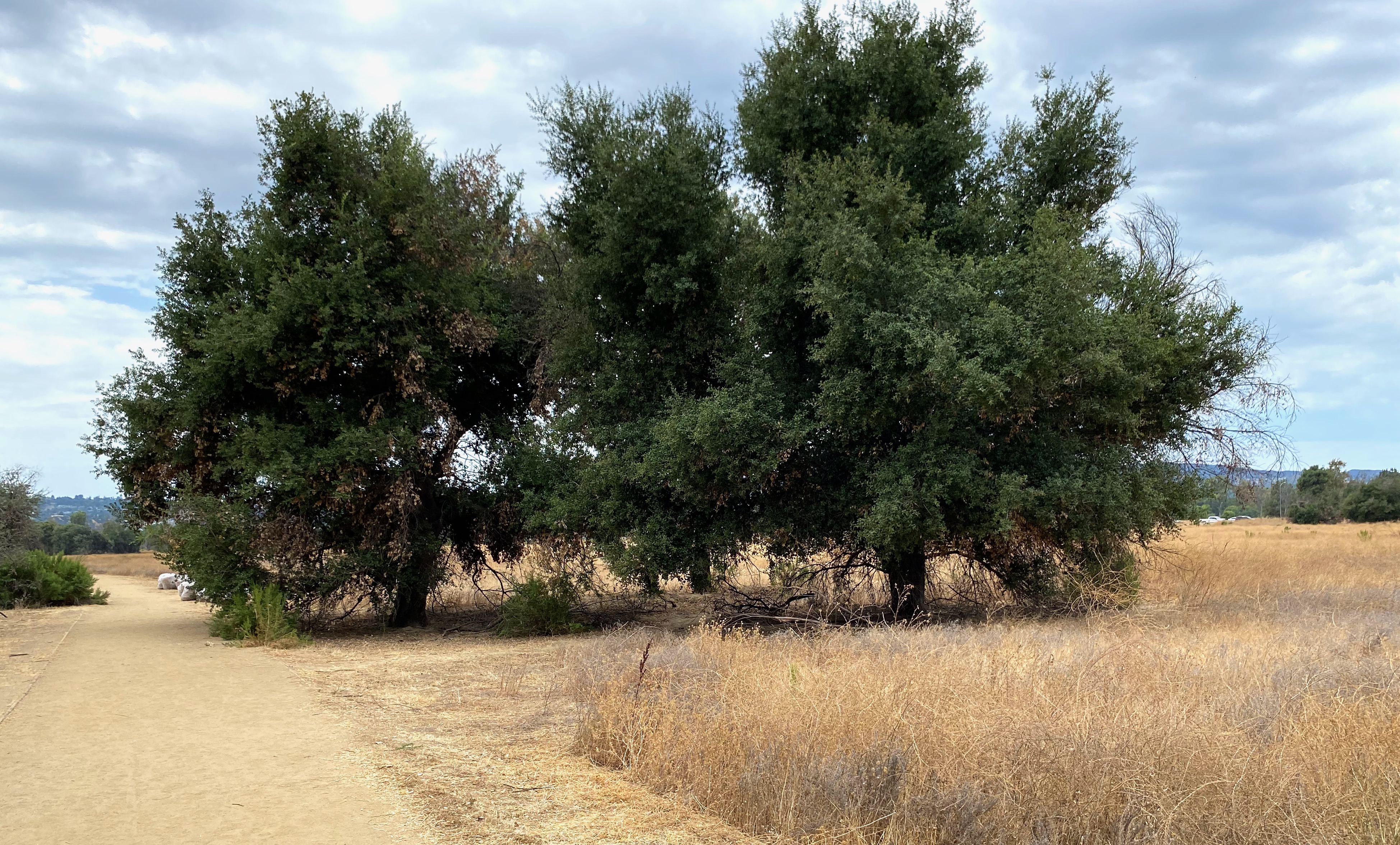
These native gems were stand-outs against the fields of mustard that had been left to take over the space. Another gem was a stand-alone majestic oak. This grand old tree was hard to miss.

Also, not hard to miss was the burn scar from an arsonist or encampment that occurred in the last week of July. As I heard it, the Los Angeles Fire Department ran a bulldozer through and cut a tiny loop fire line around it. I’m sure the fire had a big impact, but the brute force of the dozer line added to the damage. Ash and charred vegetation ringed by dozer tracks. I’m not sure what a better solution would have been. Maybe better management of the space? More patrols and more enforcement? Most of the city resources are stretched so thin.

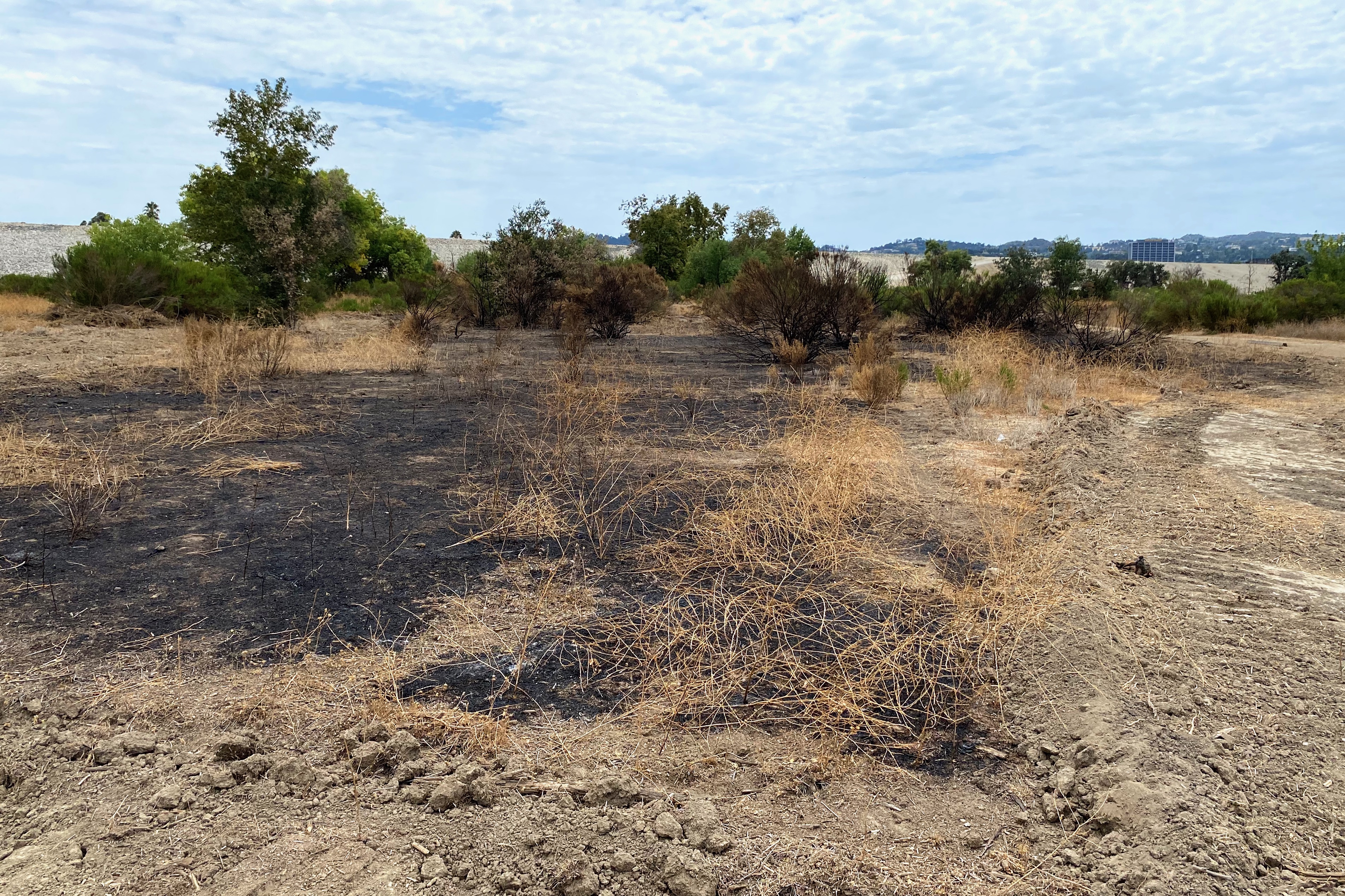
Through the dam side of the reserve, I made a wide loop to where the Los Angeles River runs into the Sepulveda Dam and circled back up through the tunnel and back to the parking lot. Temperatures had reached a hot and humid 100, give or take, and the air felt heavy. The open space was teaming with people fishing, flying drones, and riding single-wheel dirt scooters. What I didn’t see were a lot of were people soaking in nature around in the open space of the basin.
 Exploring Urban Ecosystems and Patch Ecology
3 responses to “Observing the Sepulveda Basin Wildlife Reserve in July”
[…] Location in July […]
LikeLike
[…] Read: Observing the Sepulveda Basin Wildlife Reserve in July […]
LikeLike
[…] Read: Observing the Sepulveda Basin Wildlife Reserve in July […]
LikeLike