California Naturalist Outing
Upper Arroyo Park/Trail
JPL Bridge – Millard Canyon
- Route: Entering at the fence line, north. Stopping along the creek, road, and trail.
- Weather: 54° F at start. Clear blue sky, dry air, crisp but fast warming.
Visit to the Lower Arroyo Seco

This was our first excursion up into the Upper Arroyo as a class. The goal of this outing was to observe the space, look at the similarities and differences of plant communities and to try and see the space as a mosaic of patches, a “landscape ecology.” Part of that process included visually analyzing the percentage of coverage of species and naming “patches” by the three most common species in a patch, starting with the most dominant species and descending to the least. I.E.: Patch name: first species, second species, third species. This becomes clusters of species to create a mosaic.

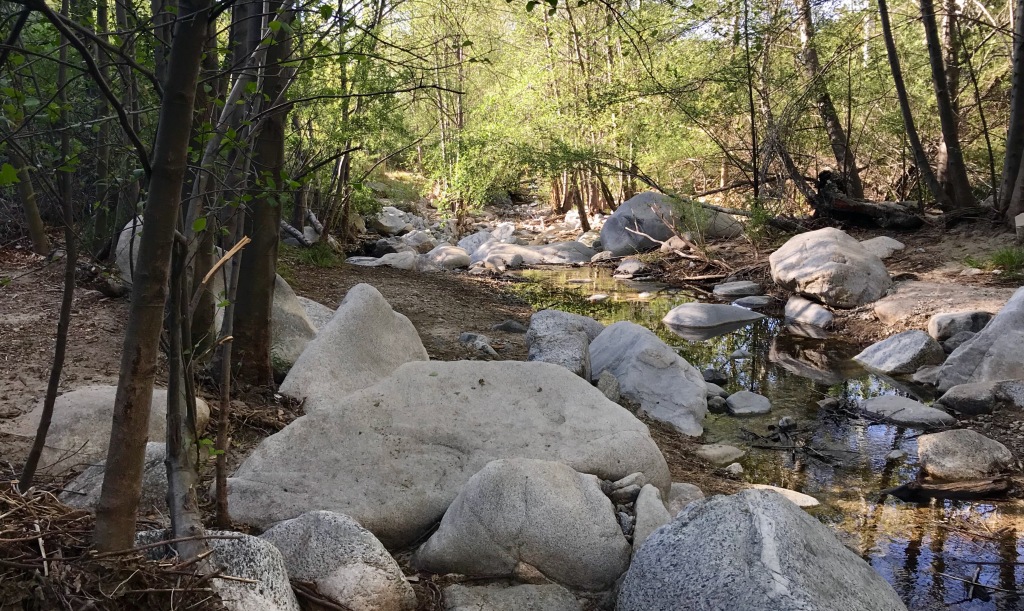
The location is a geologically interesting one with faults and multi-level ground morphology creating pools and running streams of water coming down from the hill into deep channels of bedrock filled with sand and gravel that snake their way down into the Los Angeles river basin along the Arroyo Seco. At the trail head, the RockD app shows late cretaceous Granitic rocks, leucocratic granodiorite pushing, fracturing, and breaking down into the sand and gravel filling the Devil’s Gate dam.
The space has an interesting history entwined with the space race and the (infamous) rocket scientist Jack Parsons who launched solid rockets in the in the wide shoals of the arroyo. Those tests, and barrels of jet fuel dumped into the, then, mostly empty riverbed creating a modern day federal super fund clean-up site (along with cancer hot spots from polluted ground water). Percolates, a cancer-causing chlorine-oxygen molecule, is a salt and used as an oxidizer for pyrotechnic devices has been found in the deep ground water run-off from the hills and picked up in the, now clean, riverbed.
Much lie the Lower Arroyo, the upper is dynamic and historical site with its own ecological history and anthropogenic impacts from past and present manipulations. When measured in geologic time it is but one small effect in a much longer process (non-the-less toxic to human).

Broadly, as a class we discussed the many natural effects on the region from fires, floods, people, and earthquakes, it very much took on the mantle of a dynamic environment—one that is always changing and moving (growing, burning, shaking and falling).
Immediately at the creek, willow, alder, and mule fat populated the edges, crisscrossing the moving water and creating an organic canopy of tree limbs and leaves overhead. Further up, oaks, sycamore, sage and buckwheat dotted the canyon walls with walnut, ceanothus and yerba santa (the latter being edible, the taste reminding me of a dentist’s office).
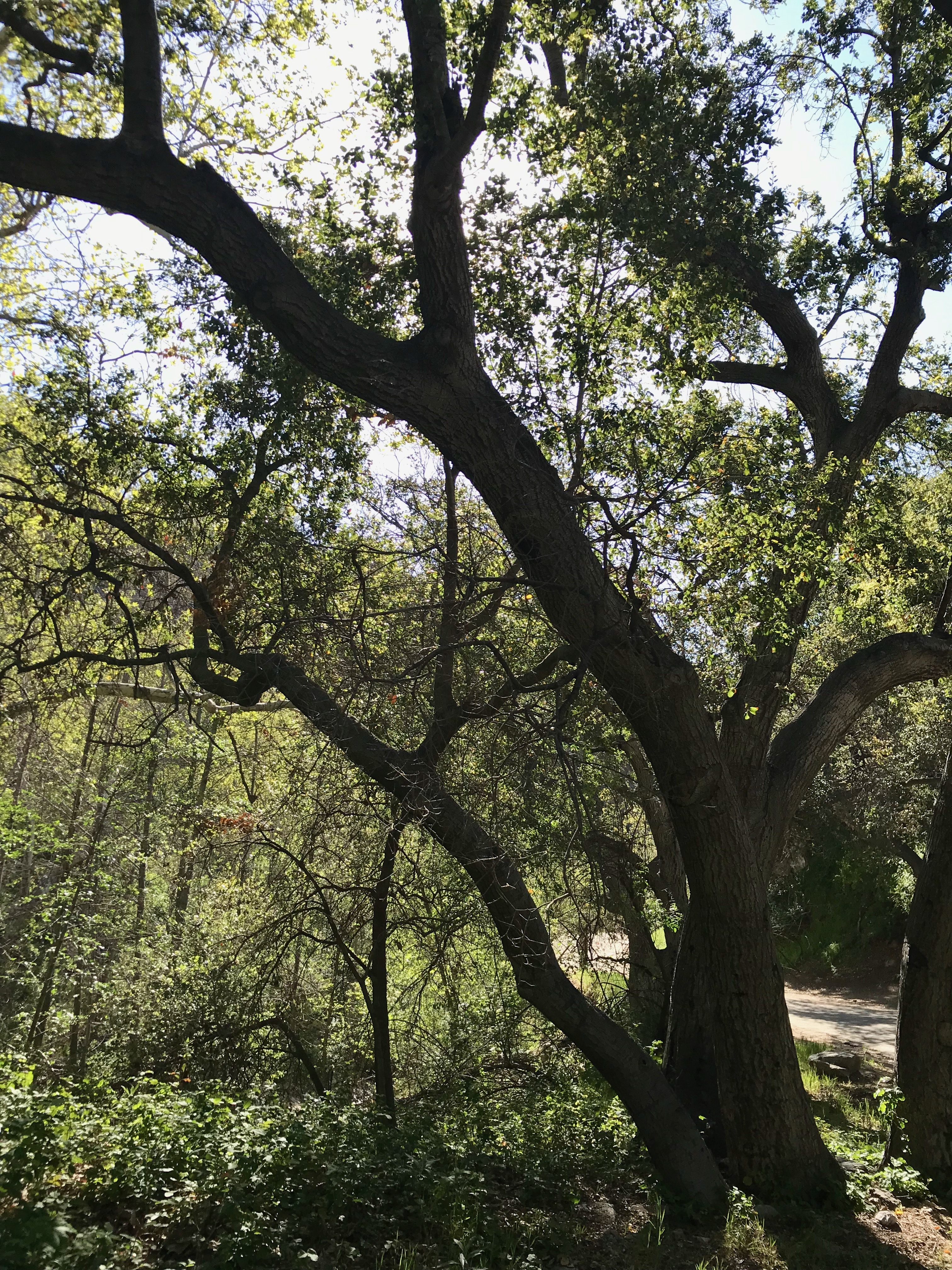

Taken in total, the Upper Arroyo is very much a wild space but with a wide breadth of human adaptation and use (and re-use) with a significant presence over the last century.
Field Observations
- Lots of kids in outdoor schools.
- Old roads, rock walls, trails, and small buildings.
- Many mountain bike riders
- Dramatic slope effects
- Patchwork plant communities
- A vast number of tumbled stones, from very small to very large
Observed Species
- Buckeye – Aesculus californica
- Poison Oak – Toxicodendron diversilobum
- Black Sage – Salvia mellifera
- California Sagebrush – Artemisia californica
- Laurel Sumac – Malosma laurina
- Elderberry – Sambucus melanocarpa
- Yerba Santa – Eriodictyon crassifolium
- Black Walnut – Juglans californica
- Toyon – Heteromeles arbutifolia
- Arroyo Willow – Salix lasiolepis
- Alder – Alnus rhombifolia
- Mule fat – Baccharis salicifolia
- California Quail – Callipepla californica
- Grasses (various)
 Exploring Urban Ecosystems and Patch Ecology
12 responses to “Upper Arroyo Seco – Visit 1”
[…] the second location (the Upper Arroyo) The human presence was less pronounced, but still noticeable with old bridges, cabin foundations, […]
LikeLike
[…] Visit 1 | Visit 3 | Visit 4 | Visit 5 […]
LikeLike
[…] Visit 1 | Visit 2 | Visit 4 | Visit 5 […]
LikeLike
[…] Visit 1 | Visit 2 | Visit 3 | Visit 5 […]
LikeLike
[…] Visit 1 | Visit 2 | Visit 3 | Visit 4 […]
LikeLike
[…] Visit to the Upper Arroyo Seco […]
LikeLike
[…] Visit to the Upper Arroyo Seco […]
LikeLike
[…] Visit to the Upper Arroyo Seco […]
LikeLike
[…] Visit to the Upper Arroyo Seco […]
LikeLike
[…] Visit to the Upper Arroyo Seco […]
LikeLike
[…] Visit to the Upper Arroyo Seco […]
LikeLike
[…] is one of my favorite plants in the hills over SoCal. My first few encounters with it were in the Upper Arroyo Seco where it was growing sparsely along the hillside. Here, in the canyon at Placerita, it was […]
LikeLike