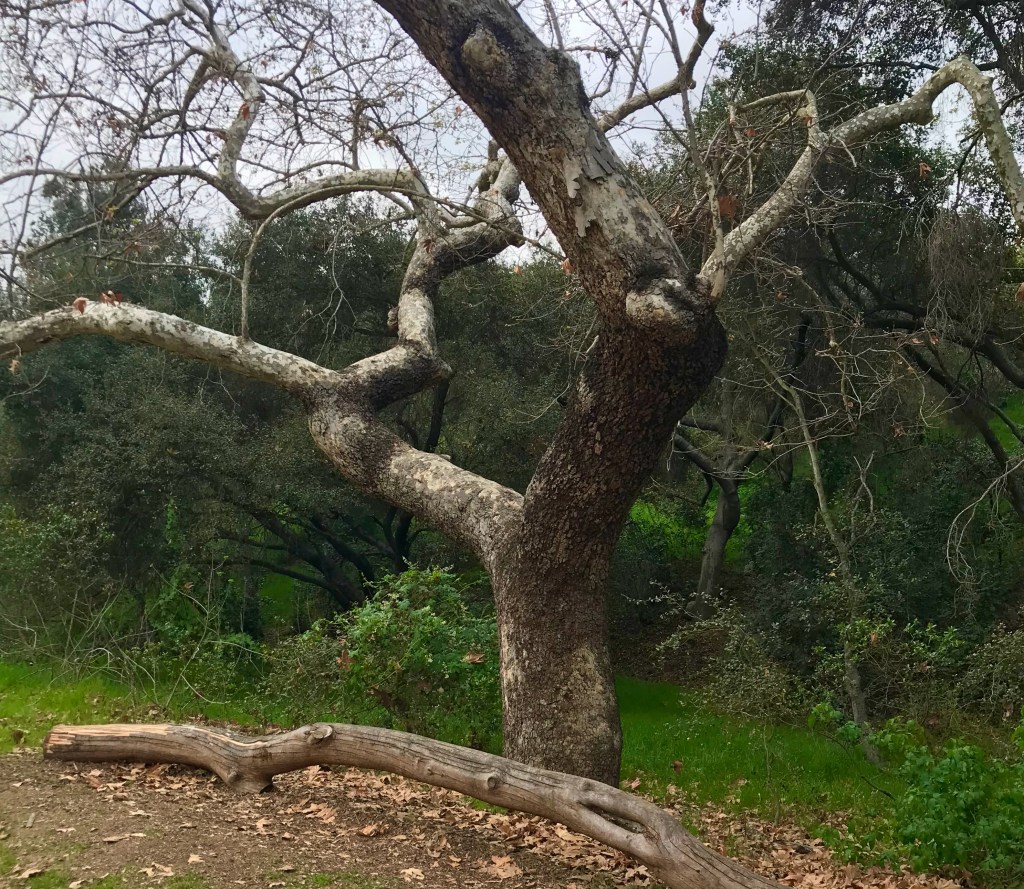
California Naturalist Outing
Lower Arroyo Seco Park
Pasadena, CA
8:50 a.m. – 11:45 a.m.
- From the Rose Bowl Parking Lot (south side) near the aquatic center.
- Route: Footpath along the road to the trail head
- Weather: Started-out overcast, 54°F. Felt cold, with a breeze. Air was humid. Sky was overcast with a slight drizzle. Rain fell hard at 11 a.m. for approximately 5 minutes.
Visit to the Upper Arroyo Seco
This was the fourth trip into the Arroyo with the goal/purpose to observe and broadly measure the different species in several biomes.
At the first turn down the trail in the wild space, I ventured into the riparian creek to take in the space. Once on the creek floor, I could smell what seemed to be a skunk spray (which could have been the scent of marijuana from someone I encountered in the space). Exploring around, I found the carcass of a rended skunk that looked to be about a day or two old. It was mostly intact with some visible but rotting wounds. Closer investigation found maggots inside the body cavity already beginning to break the carcass down.
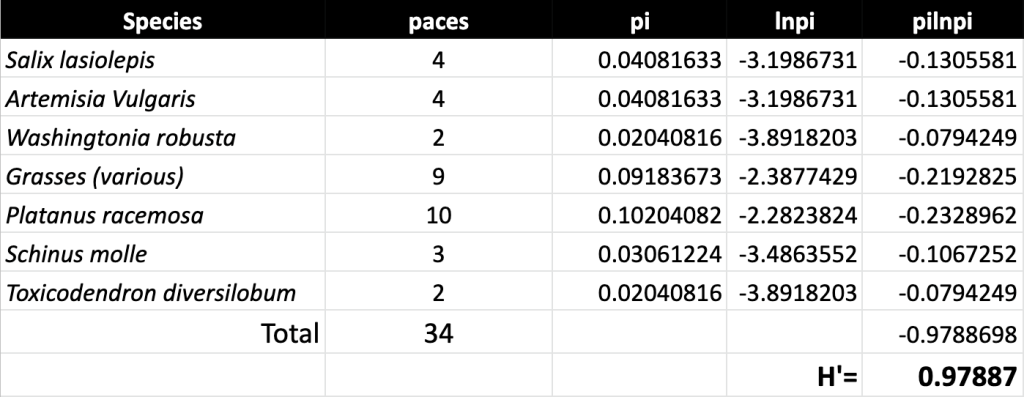
I walked the creek to get a rough estimate of species, finding 7 different species in 34 paces.
Riparian Species Count
Moving further down the trail, going under the 134 and Colorado Street bridge and over the dam, I moved into the meadow space. In this space was a proliferation of grasses and “weeds” and a strange mix of topicals, all growing into one another.
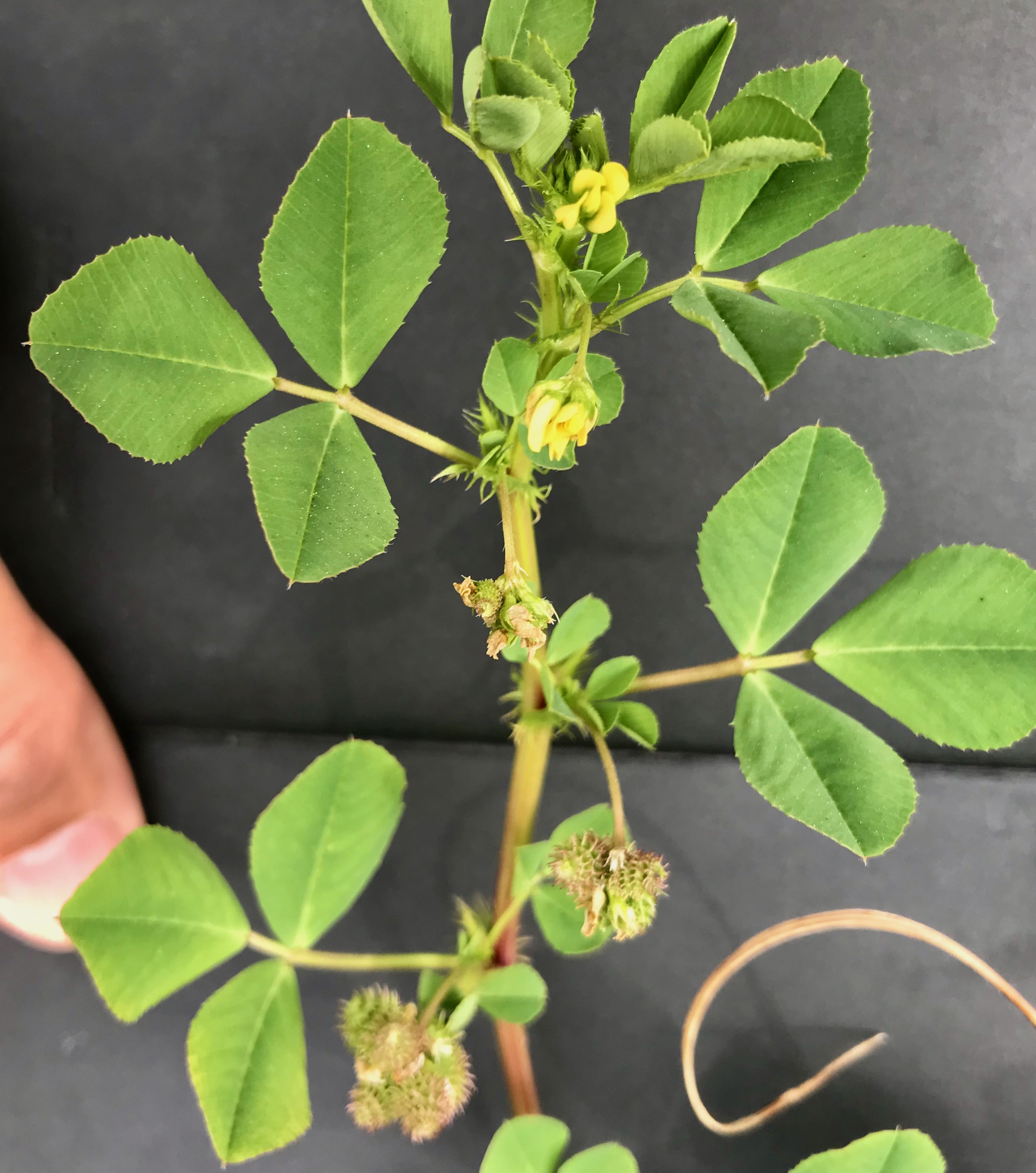
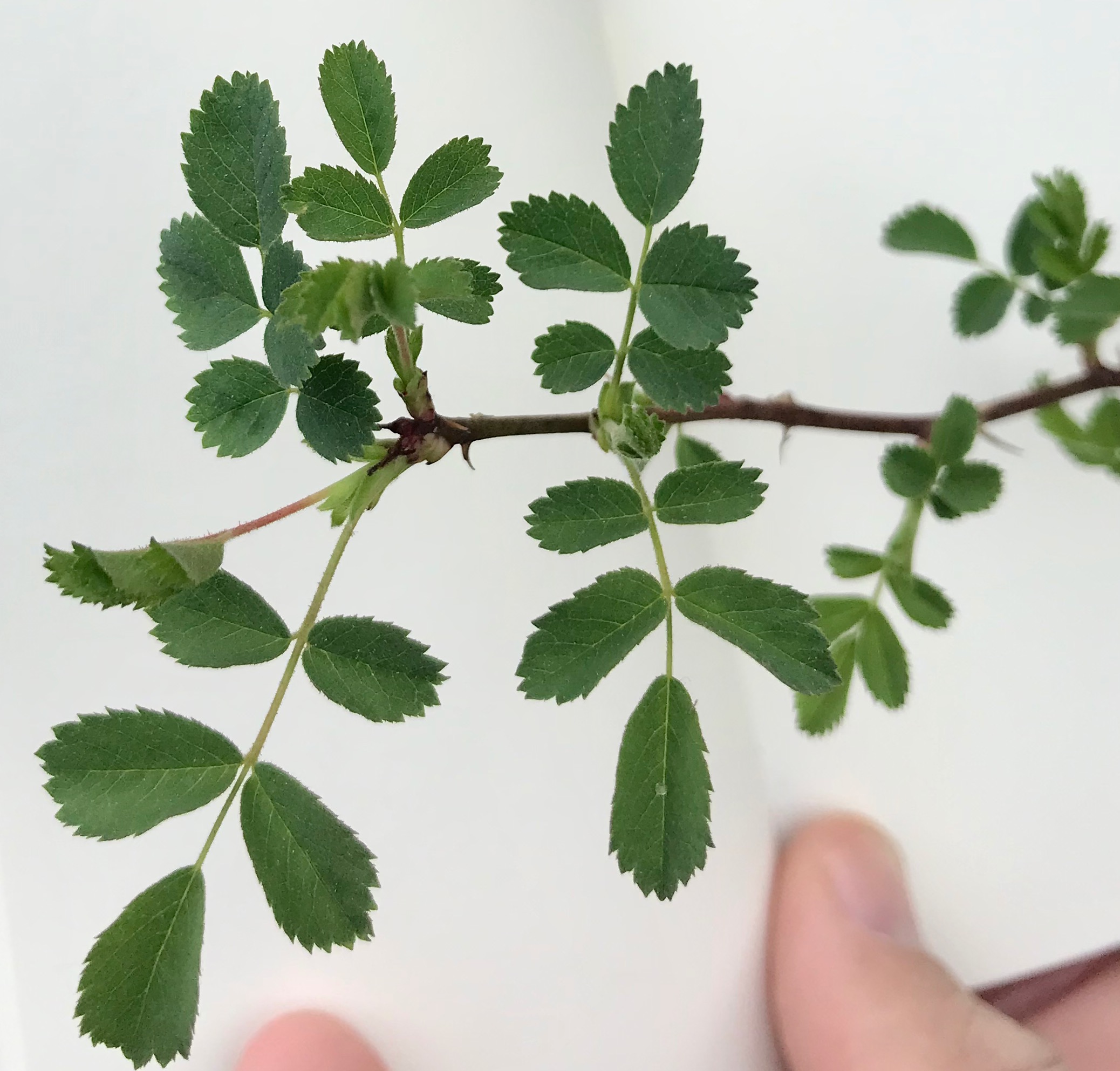
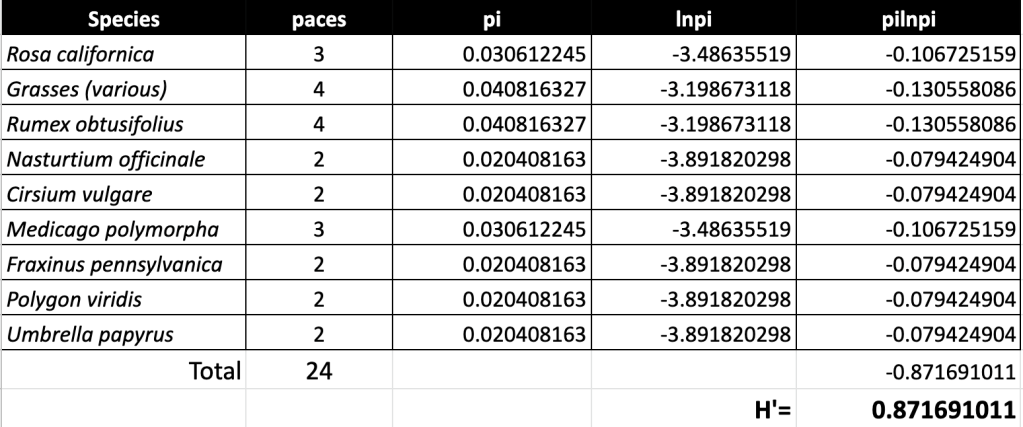
The space itself was a raw mix of “wet” meadow and rough riparian, bordered by oak banks. There was a tremendous number of species in the space with lots of diversity, lots of bugs and lots of birds. Throughout were a few cut stumps and spongy soil. Along the sides were oaks, sycamore, laurel sumac and wild cucumber. All of this beside a sterile concrete channel to sluice the water down channel. In a very few of paces, I encountered several plants and trees.
Meadow/Creek Species Count
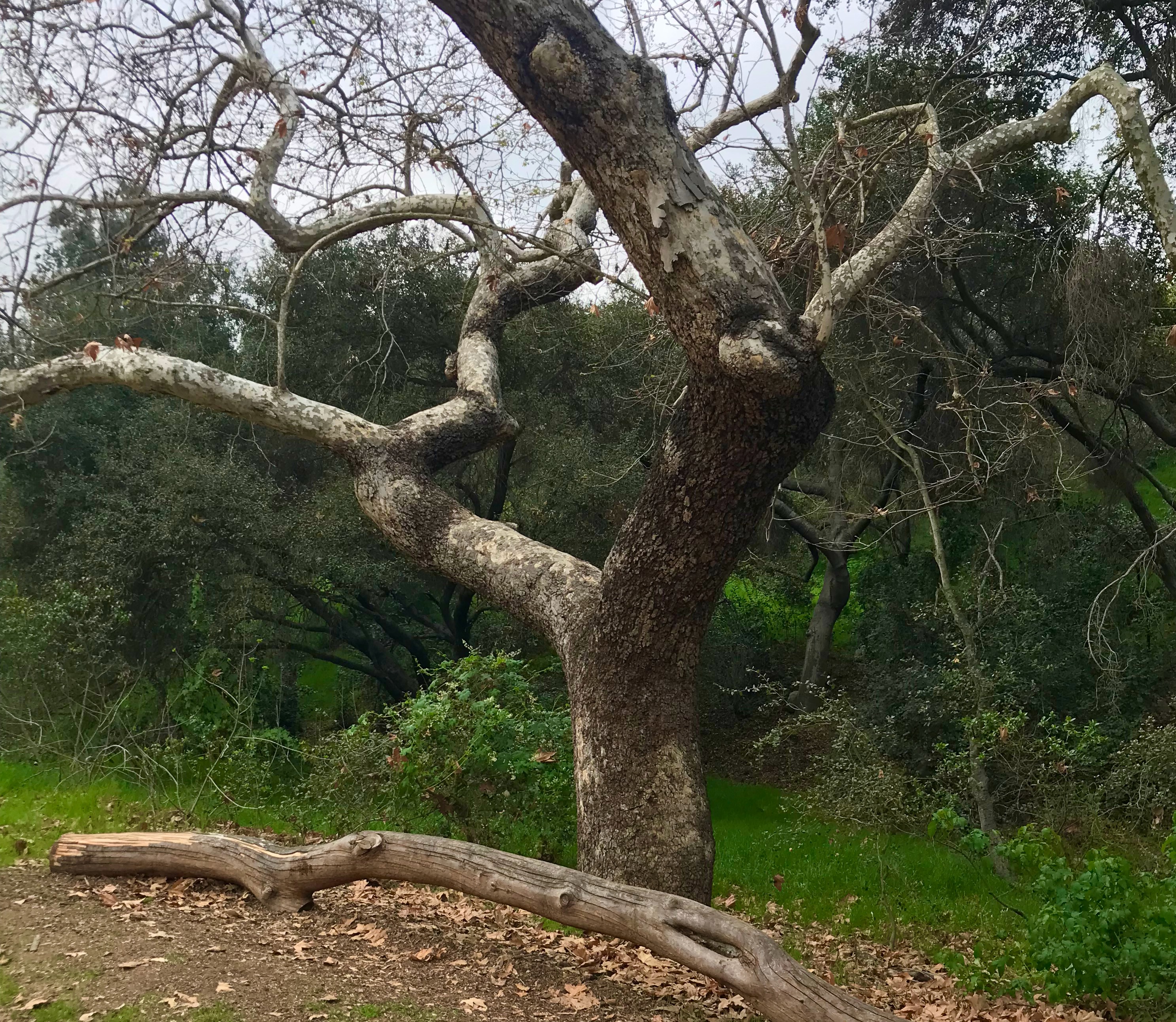
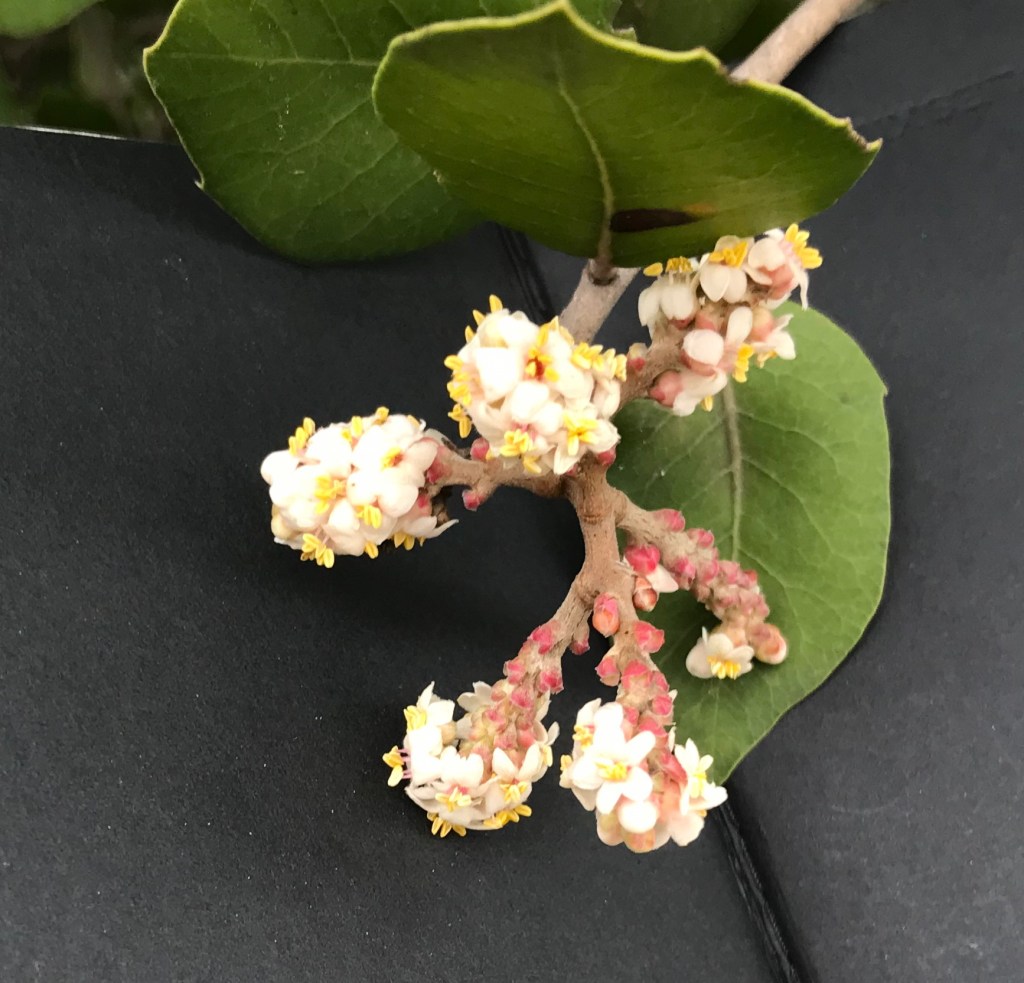
Up from the creek, I moved into the oak forest and chaparral. Everything was in full spring mode with new green growth and lots of grass and nettles coming up. This area was more a mix of willow and sycamore but now with oaks on the sides in the dryer soils. Interestingly, palm trees (massive) eucalyptus (large and old) and very dry old chaparral. In the restored or refreshed creek bed, the remains of snails sit just on the surface of a very dry channel. Black mustard was starting to colonize and make itself known with some early bloomers. On the bank were old growth chaparral of California sage (Artemisia Californica) and buckwheat (Eriogorum fasciculatum). The soils on the bank with the chaparral was very dry and rocky. Across from this chaparral was a hybridized sugar bush/lemonade berry that was giant (over 10 feet tall) with what looked like a packrat den underneath. Surrounding this bush was a number of yellow currants, grasses, mule fat and laurel sumac as well as huge old sycamores.
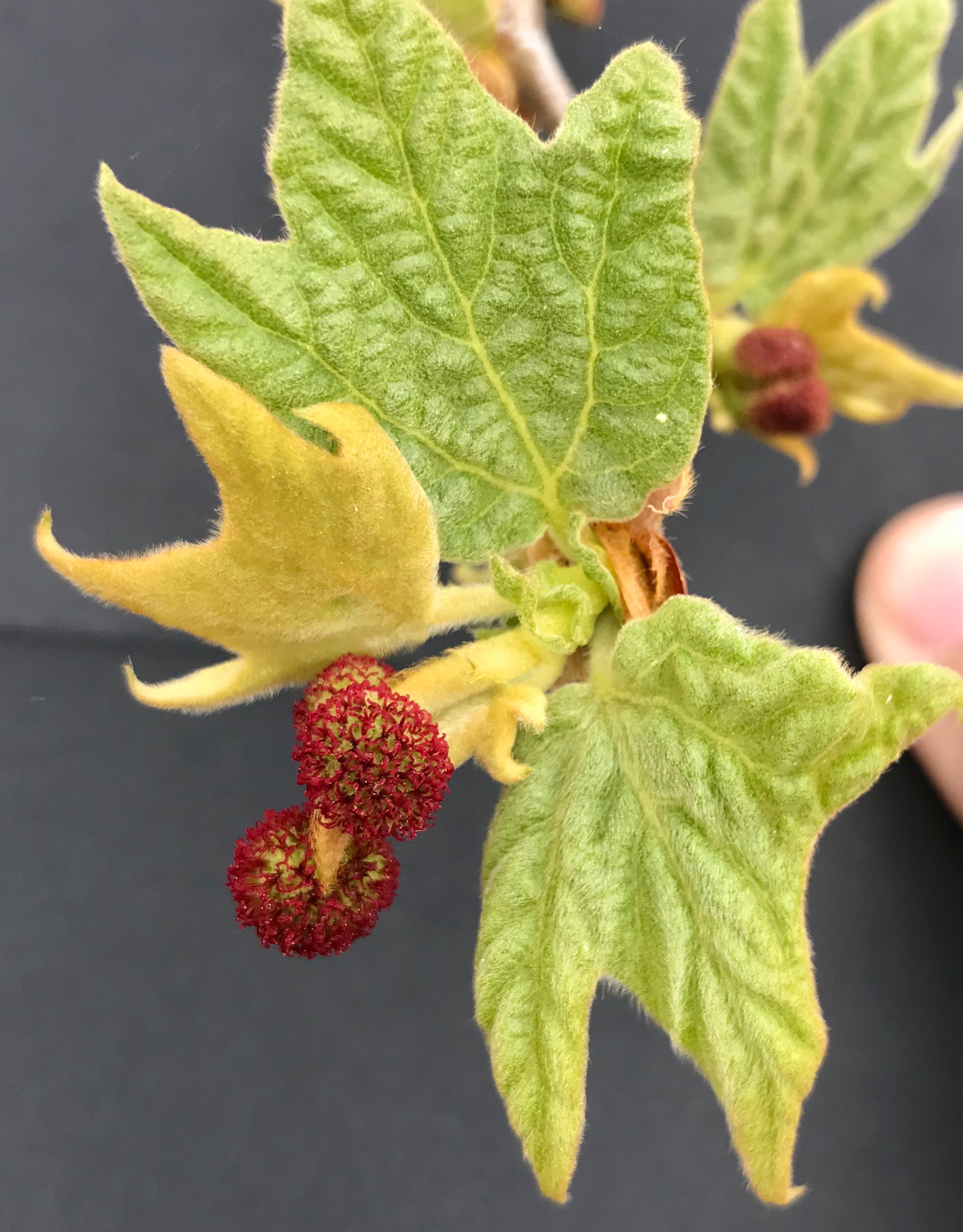
Further down the trail I moved into the true chaparral which is a vast open space of buckwheat and sages (on the edges) with very dry soils. Gophers are king here with mounds and moved earth nearly everywhere. Game trails crisscross the space with bare soil treads boarded by grasses. There was far less diversity here and fewer bugs and birds. Trees are still present but larger blue elderberries edge small stinging lupines and mule fat.
Sage/Chaparral Species Count

Significant rain began to fall at this point, and I decided to end my observations for the day.
Field Observations
- Transitional spaces blur and blend as habitat mix
- Animal life is present but not obvious (signs but not seen)
- Interesting things in the trees: cucumbers and galls
- Human presence less obvious in spaces down channel


Observed Species
- Western Sycamore – Platanus racemosa
- Bermuda buttercup – buttercup oxalis
- Mexican fan palm – Washingtonia robusta
- Peruvian Pepper tree – Schinus molle
- Stinging Nettle – Urtica dioica
- Poison Oak (sumac) – Toxicodendron vernix
- Sweet Pittosporum – Pittosporum undulatum
- Umbrella Papyrus – Cyperus alternifolius
- Mugwort – Artemisia vulgaris
- Skunk – family Mephitidae
- California Wild Rose – Rosa californica
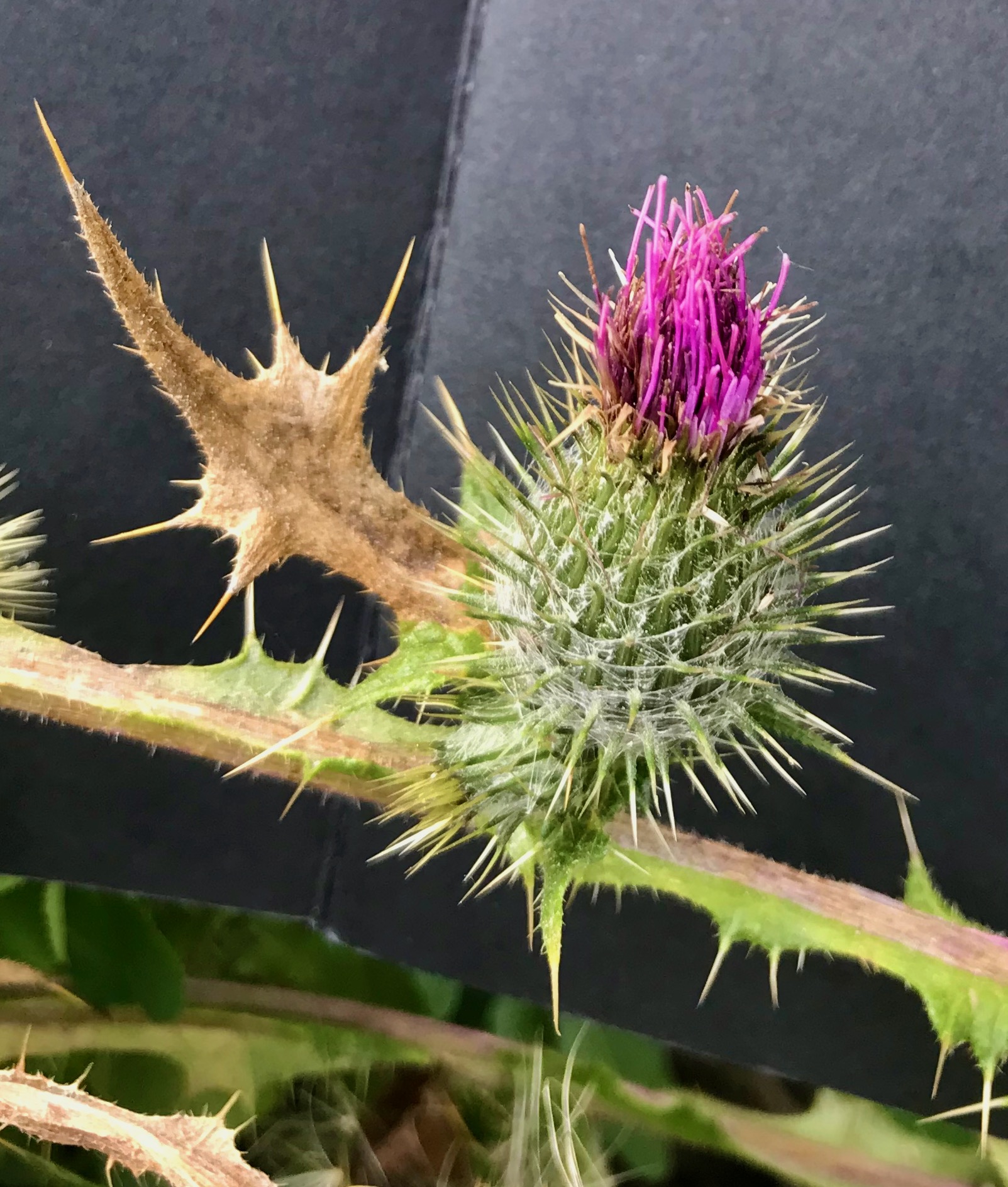
- Bull Thistle – Cirsium vulgare
- Live Oak Apple Gall Wasp – Amphibolips quercusinanis
- Black mustard – Brassica nigra
- Hybrid sugar bush/lemonade berry – Rhus integrifolia × ovata
- California Buckwheat – Eriogonum fasciculatum
- California sage – Artemisia californica
- Prairie Flax – Linum lewisii
- Mule fat – Baccharis salicifolia
- Burr Clover – Medicago polymorpha
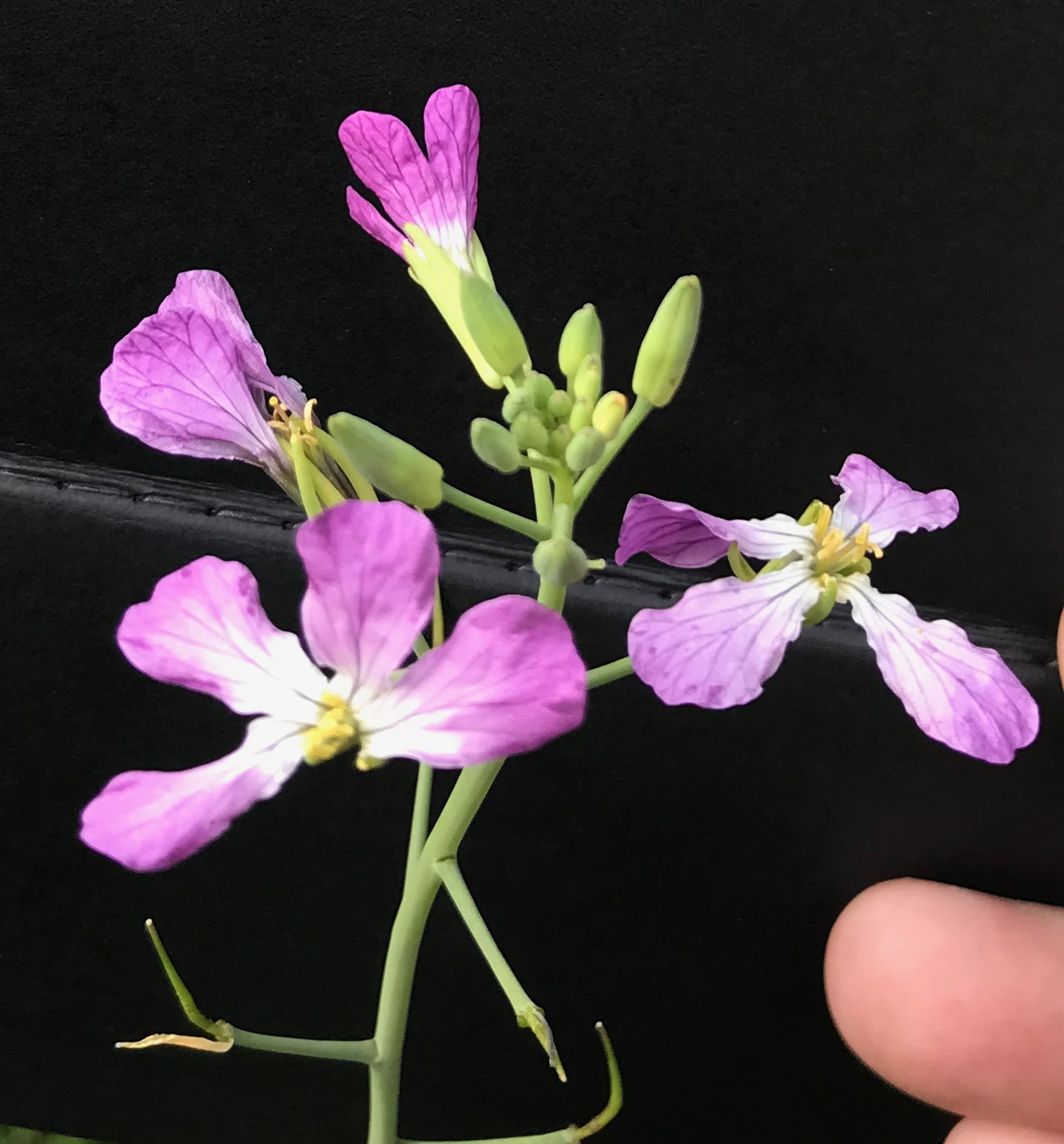
- Wild radish – Raphanus raphanistrum
- Eucalyptus tree (unidentified)
- Oak trees (several)
- Snail (shell)
- Lichen
- Tropical plants (several
- Various invasive grasses
Read: Becoming A Naturalist
 Exploring Urban Ecosystems and Patch Ecology
5 responses to “Lower Arroyo Seco – Visit 4”
[…] 2 | Visit 3 | Visit 4 | Visit 5 | Visit […]
LikeLike
[…] 1 | Visit 3 | Visit 4 | Visit 5 | Visit […]
LikeLike
[…] 1 | Visit 2 | Visit 4 | Visit 5 | Visit […]
LikeLike
[…] 1 | Visit 2 | Visit 3 | Visit 4 | Visit […]
LikeLike
[…] 1 | Visit 2 | Visit 3 | Visit 4 | Visit […]
LikeLike