California Naturalist Outing
Lower Arroyo Seco Park
Pasadena, CA
8:50 a.m. – 11:30 a.m.
- From the Rose Bowl Parking Lot (south side) near the aquatic center.
- Route: Footpath along the road to the trail head
- Weather: Cool 67°F at start, mid 70°s at end. Clear sky with a few high wispy clouds. Air was crisp and slightly humid.
Visit to the Upper Arroyo Seco
On this occasion, my focus was deep diving into the riparian habitat.
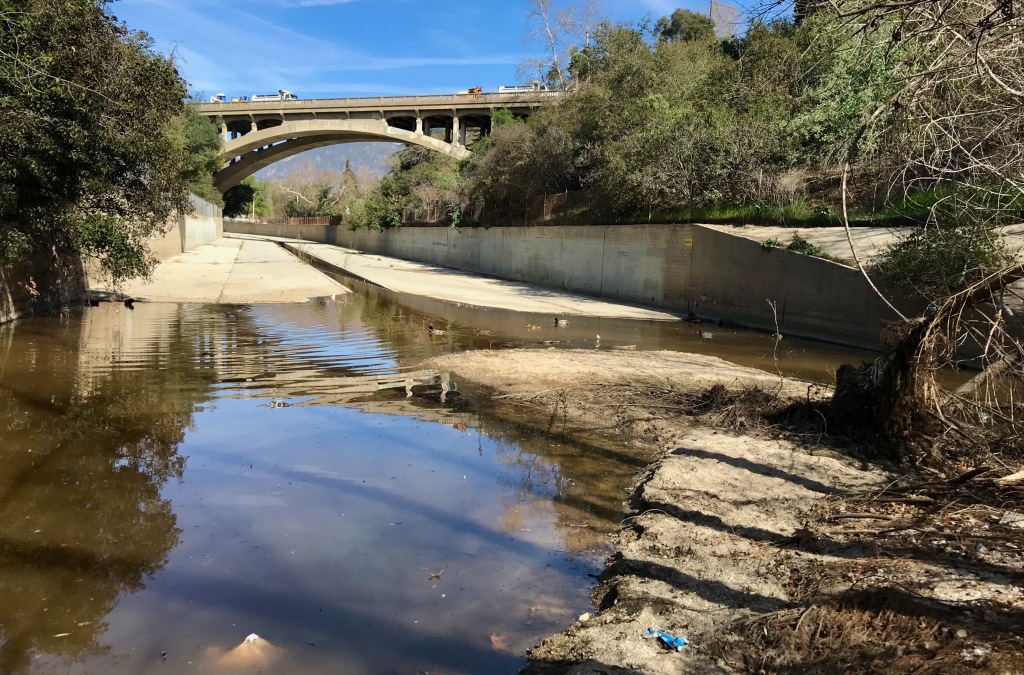
Starting where the trail breaks to the creek bed, I walked along the water’s edge to get a look at the topology, rocks, and soil in addition to the water quality throughout.
The water was generally very slow moving. In some pools, water was stopped/stagnant and covered in brownish green algae that was loose to the touch and would cloud the water when disturbed. These pools looked very brackish and stale with little signs of life at the very early (and cold) hour. Also in the environment were many signs of trash from storm runoff. Oil, pandemic mask, and wrappers of one kind or another were throughout. Some of the pandemic trash seemed to be medical grade (high quality) and not likely prone to breaking down in a meaningful way in the environment.
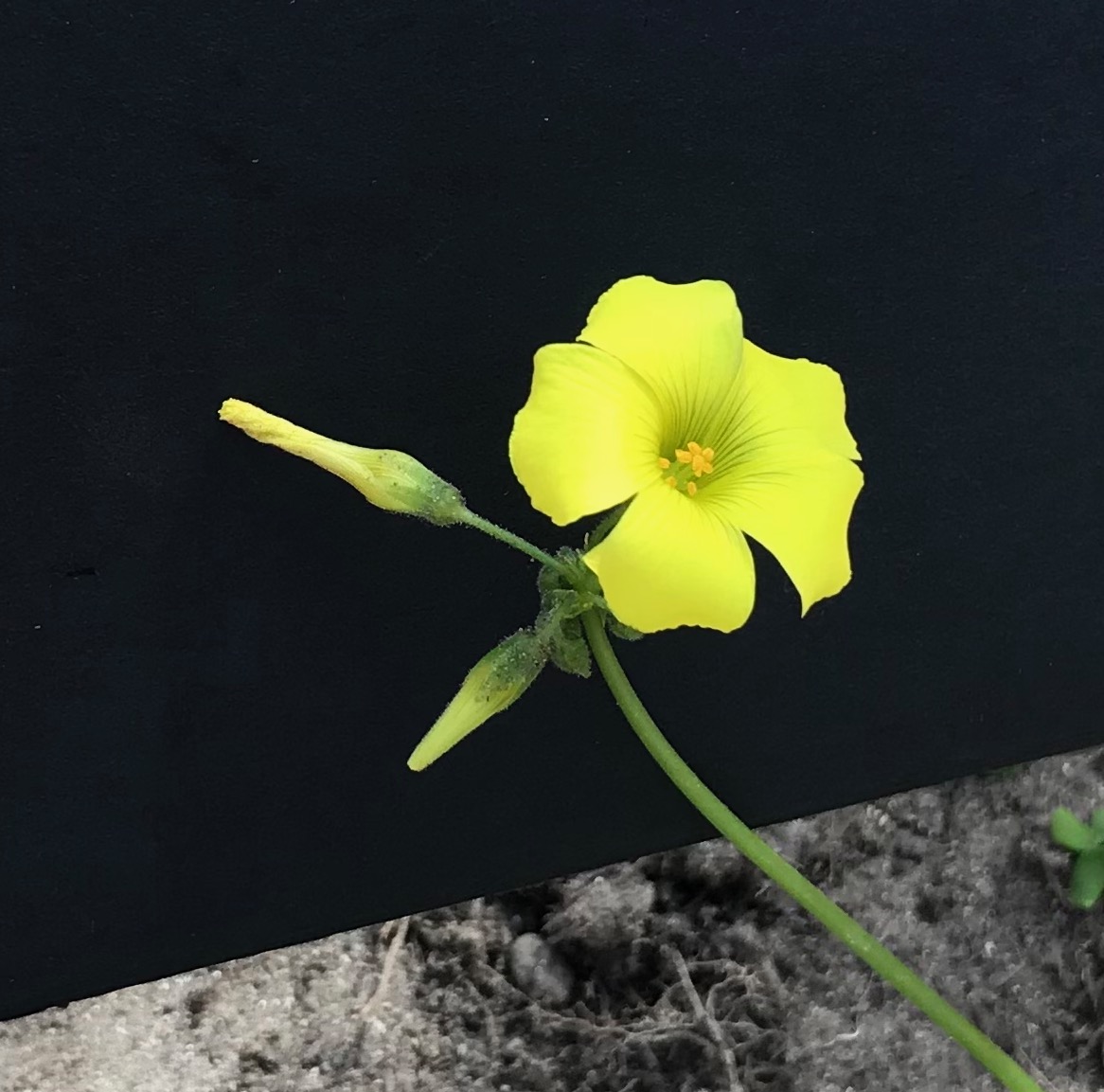
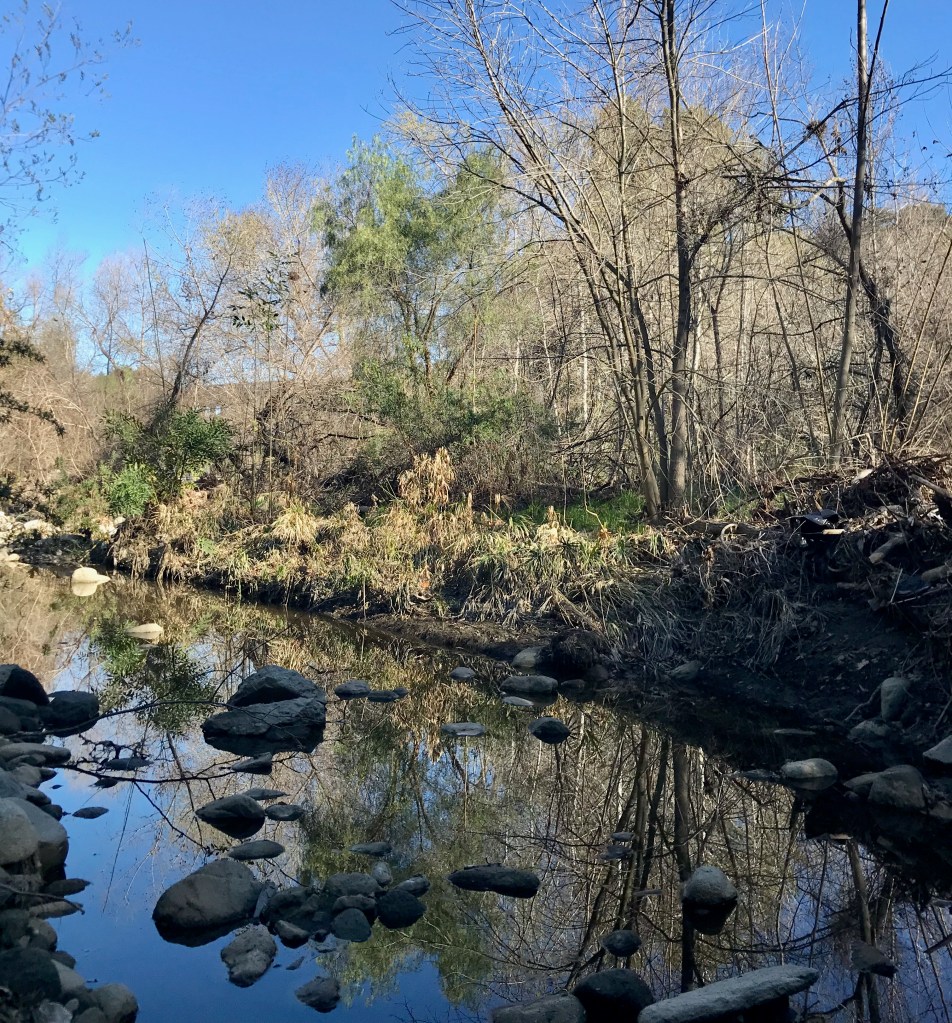
Plant-wise, there was a good mix of riparian habitat species with willows and sycamores dominating the space. Several smaller plants, including papyrus, sorrel and grasses were intertwined with English ivy and invasive grasses on the stream banks. Noticeable in a few spots were Mexican palm fans, periwinkle, and Bermuda buttercup—all looking happy in the space.


Over the Dam
Following the wet creek (on the west side of the channel) to the first overflow dam, signs of horse, animal (dog?) and human feces littered the trail. The path to reach the check dam under the 134 freeway. Along the west side there were several curves in the creek and microclimates. In these spaces native hummingbirds with their green and fuchsia feathers darted and flew. Past the dam, the creek began to morph into a less wild mix of concrete debris, tumbled stone sand and gravel.


The ecosystem past the dam took on a mix of riparian and oak forest with a hodge-podge of plants. In one spot, under the 134 on the west side, I spotted a Toyon above the bank hidden in the brush that was more than 30 feet tall and full of red berries. It appeared that this bushy tree never received more than ambient light from sun that peeked through from the south.
Moving back up stream to the trail head, I followed the dry side of the creek finding much more non-native grass, hardier riparian plants (sorrels and Bermuda buttercups, willows near the oak forest just a few yards up the embankment to the east).

Field Observations:
- Few birds early on
- Hummingbirds
- Ravens
- Other birds
- Very few bugs
- Some Mallard ducks
- Bees
- Hover flies
- No/few animals
- Some mammal tracks: dog, opossum, raccoon
Species List:
- Arroyo Willow – Salix lasiolepis
- Western Sycamore – Platanus racemosa
- Bermuda buttercup (buttercup oxalis
- Mexican fan palm – Washingtonia robusta
- Peruvian Pepper tree – Schinus molle
- Stinging Nettle – Urtica dioica
- Poison Oak (sumac) – Toxicodendron vernix
- Sweet Pittosporum – Pittosporum undulatum
- Umbrella Papyrus – Cyperus alternifolius
- Various invasive grasses
 Exploring Urban Ecosystems and Patch Ecology
5 responses to “Lower Arroyo Seco: Visit 3”
[…] 2 | Visit 3 | Visit 4 | Visit 5 | Visit […]
LikeLike
[…] 1 | Visit 3 | Visit 4 | Visit 5 | Visit […]
LikeLike
[…] 1 | Visit 2 | Visit 3 | Visit 5 | Visit […]
LikeLike
[…] 1 | Visit 2 | Visit 3 | Visit 4 | Visit […]
LikeLike
[…] 1 | Visit 2 | Visit 3 | Visit 4 | Visit […]
LikeLike