California Naturalist Outing
Upper Arroyo Park/Trail
JPL Bridge to the Gould Mesa Trail camp
8:45 a.m. – 11:30 A.m.
Route: Entering the canyon at the fence line, up the old road, following the left fork in the road towards the Gould Mesa Trail camp.
Weather: Cool, 51°F. Clear sky, crisp and windy (strong at times).
Visit to the Lower Arroyo Seco
On this journey, my goal was to reach and observe the path up to the Gould Mesa Trail camp which is a short jaunt from the parking lot at the JPL Bridge. This trail was surprisingly busy for the mid-weekday with hikers, dog walkers, casual walkers, and young children in a school group.
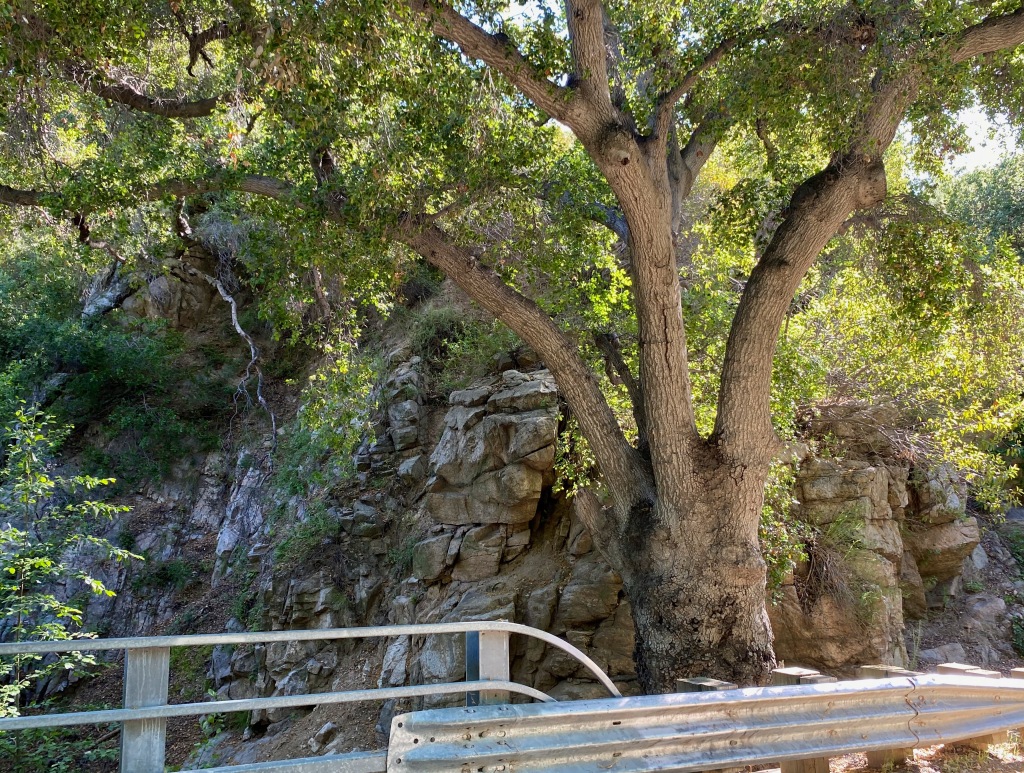
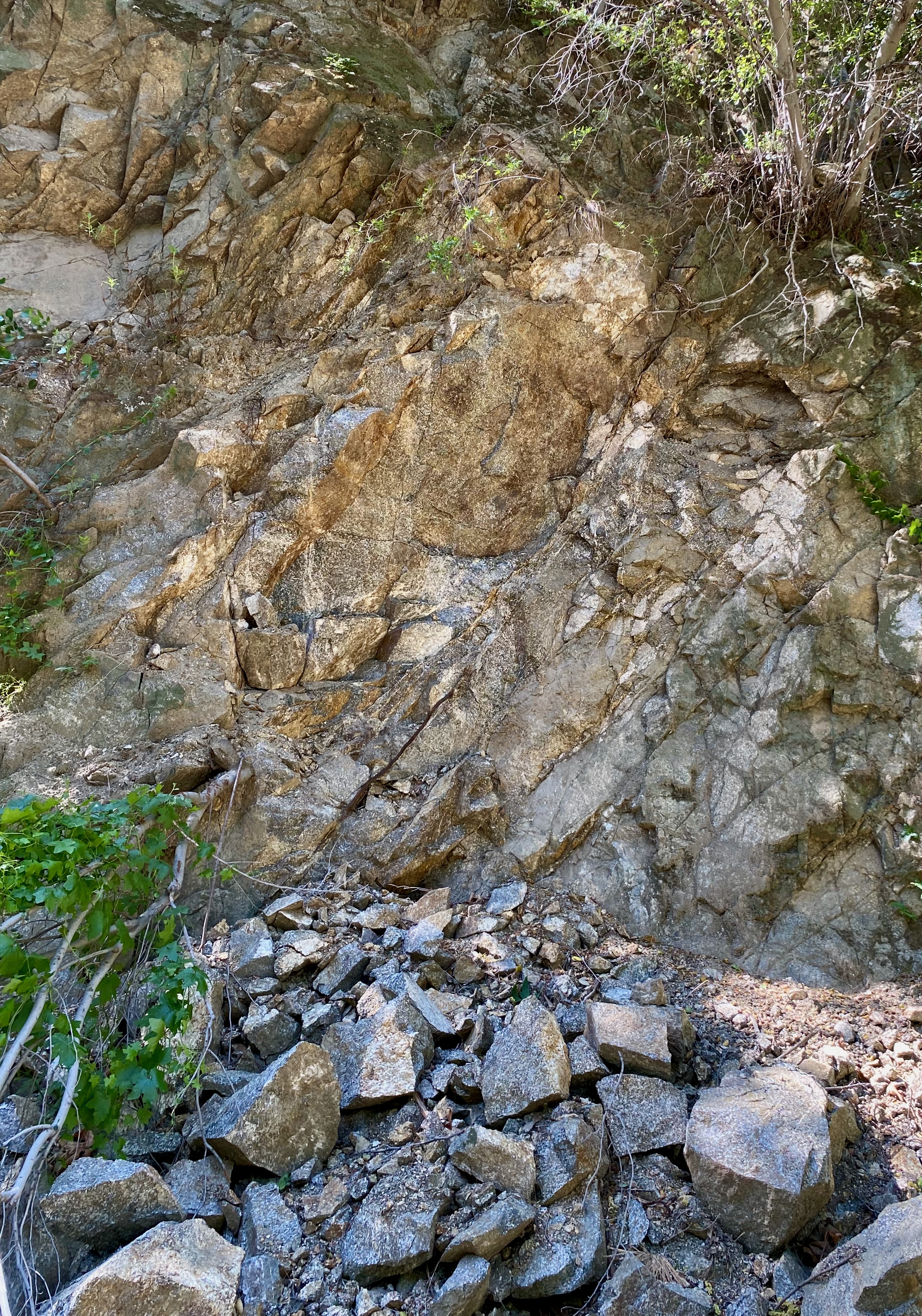
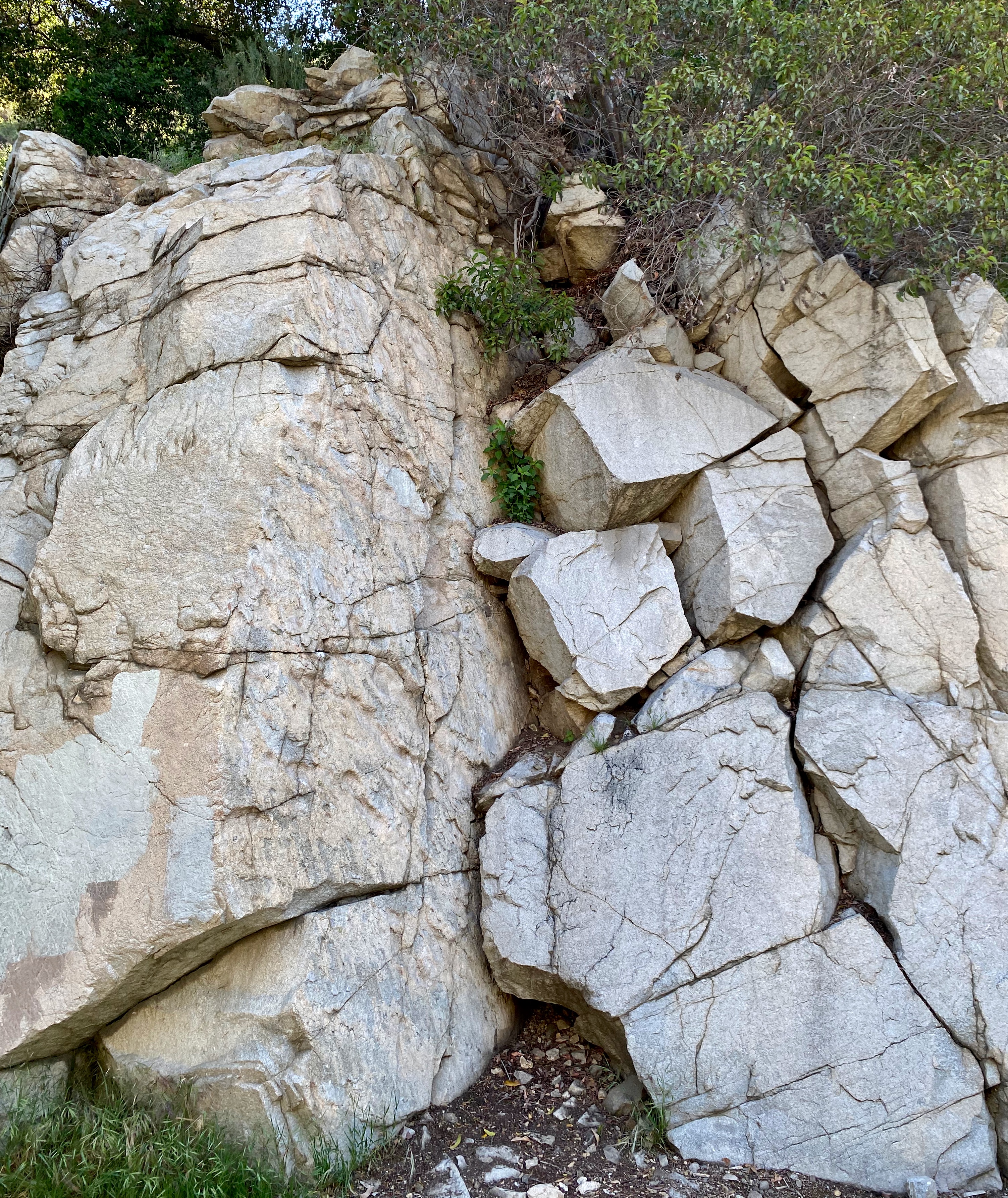
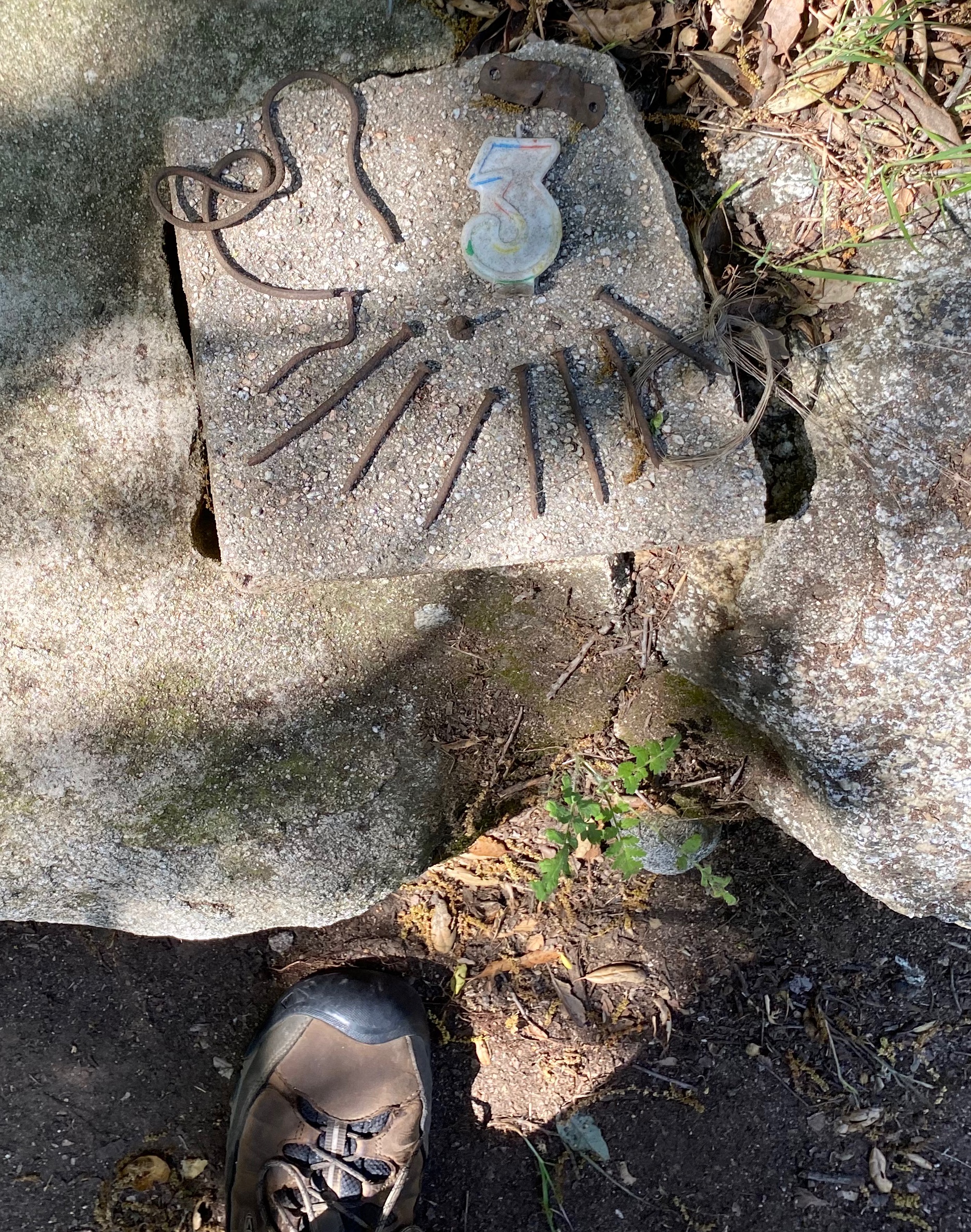
The trail was a mix of open, natural ecosystems, rock walls (with mixed composition granite), rick falls (some recent) and old structures—some of which were still in regular use as homes. There were several abandoned bridges and the remnants of old cabin homes, many of which still very much intact despite the building long gone from the site. It was amazing to see so many details from the structures including steps leading to nowhere, stone walls with built inviting river rock benches, and foundations set with grid precision. The juxtaposition was stark between the wild reclaiming the crafted.
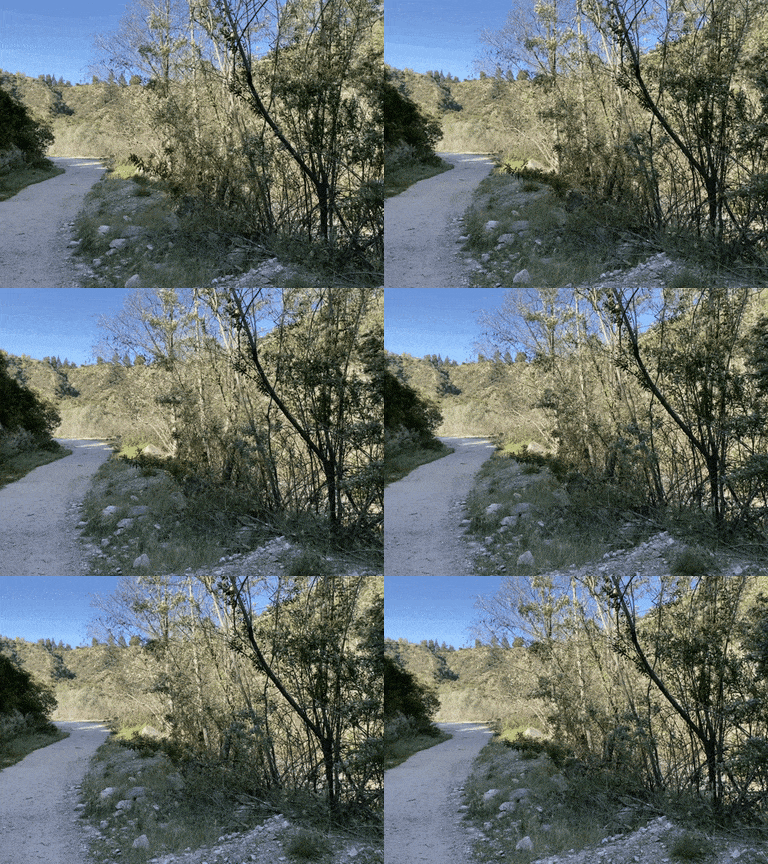
The wind up in the canyon was strong but not prohibitive to being in the space. It alternatively howled and halted without forward or advance notice. At one point, the wind kicked up some irritant causing me to choke and cough, the cause of which I could never ascertain. Rinsing my mouth and getting out of the area it occurred in (just inside the foundation of an old cabin foundation) it stopped just as quick as it occurred.
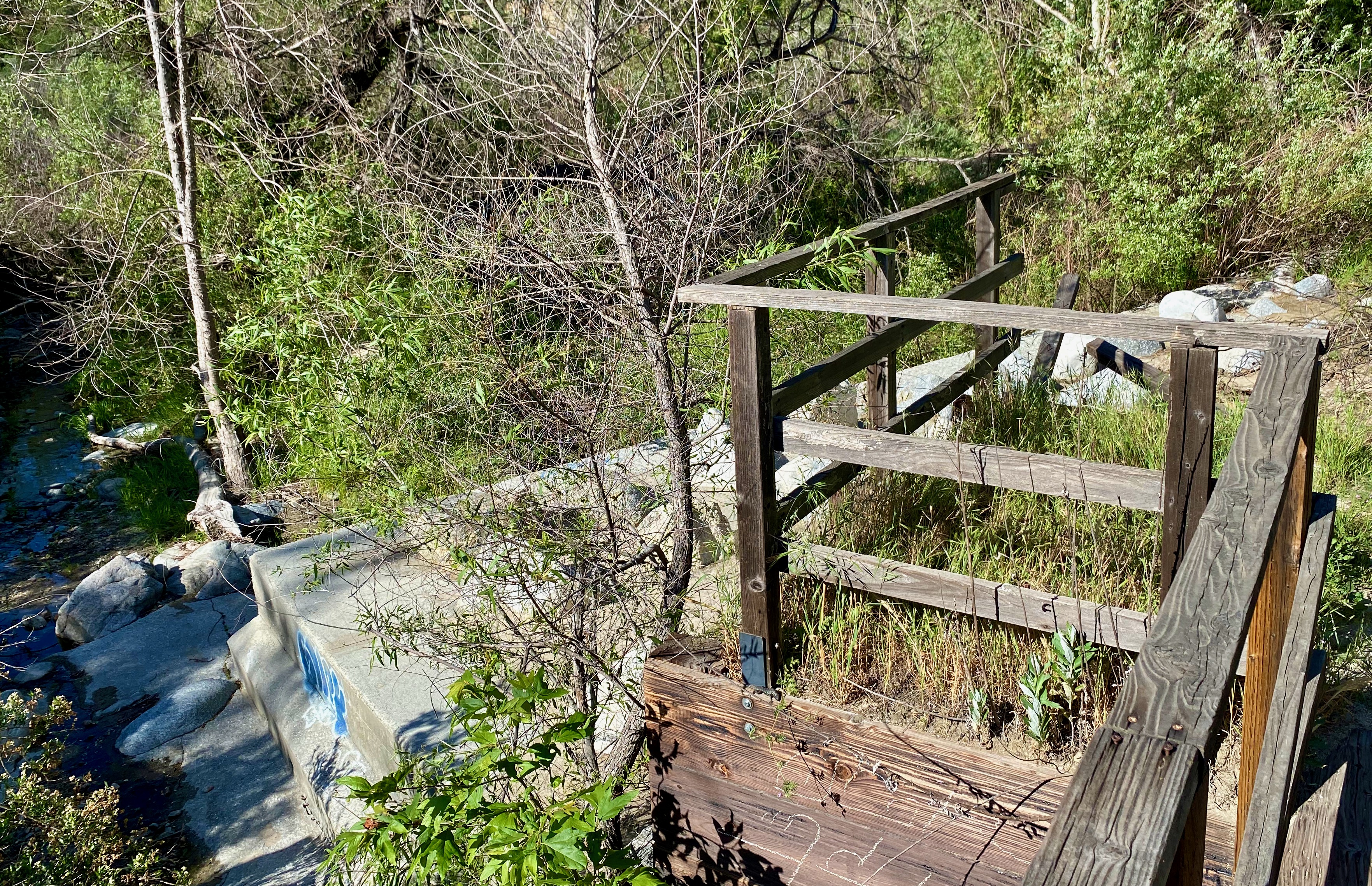
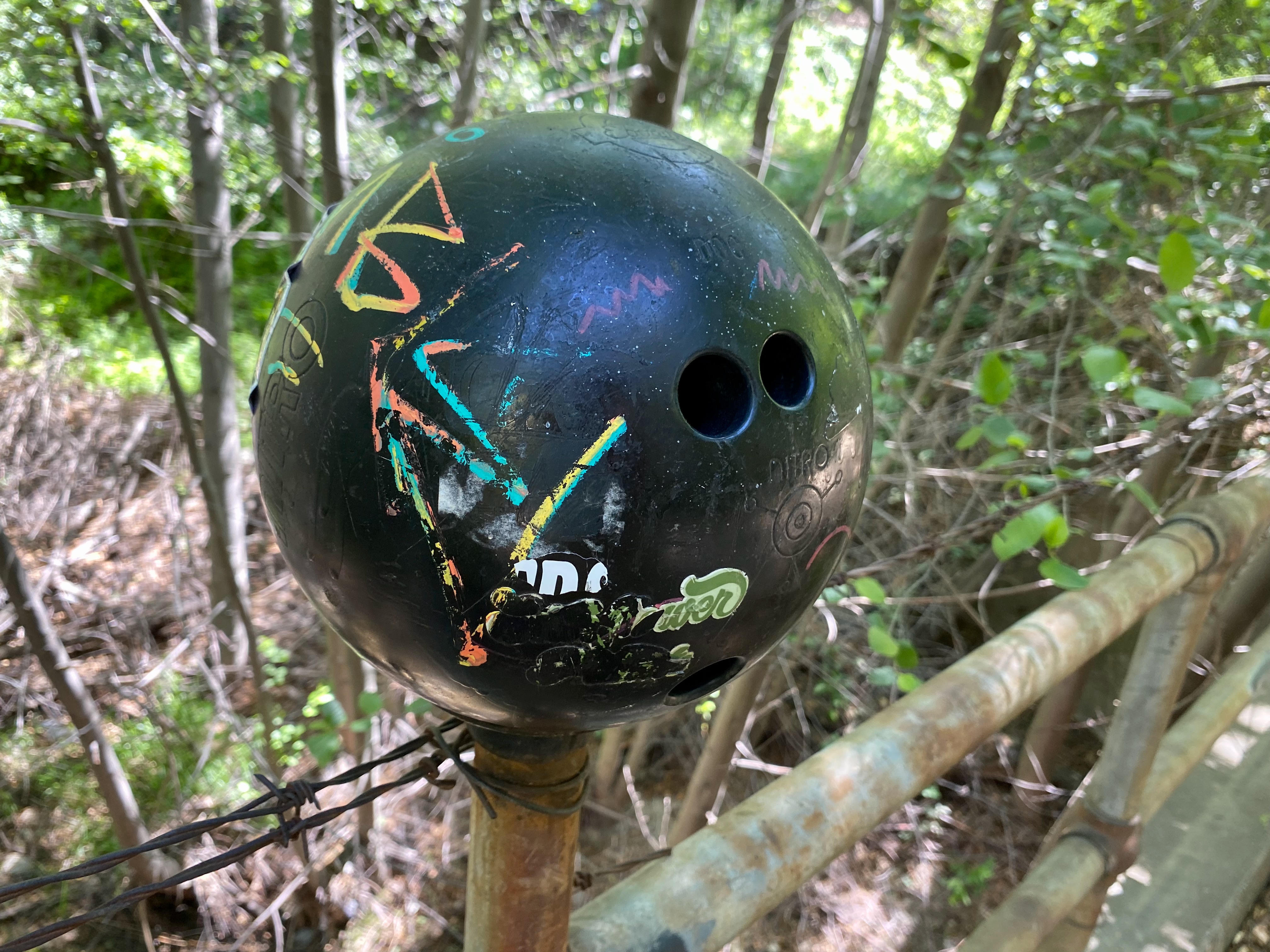
This path, if anything else, was a perfect specimen of a “wilderness trail.” It followed a meandering creek, twisting over and through it. Along the way were several old washed-out bridges blocked by with all manner of barriers. Wire fencing, barbed wire, physical barriers, and natural overgrowth—making the prohibited paths all the less inviting. If the old physical barriers weren’t interesting enough, along one bridge, a bowling ball was festooned on post, out of place, but tastefully situated as a clear waypoint to the campsite. For as wild as the space was, it still had plenty of signs of past human use and/or presence.

Unlike previous areas, this path seemed to have less fauna at the path edge. Birds were present, but not in great abundance or even in ear shot except for the occasional cooing of a pigeon. Leaving the path, I did venture down into the creek space to see what life was present, if any. I was delighted to see small fish (trout?) and what I later learned was a California newt. This native was in its aquatic form, swimming at the foot of a larger boulder in the creek bed.
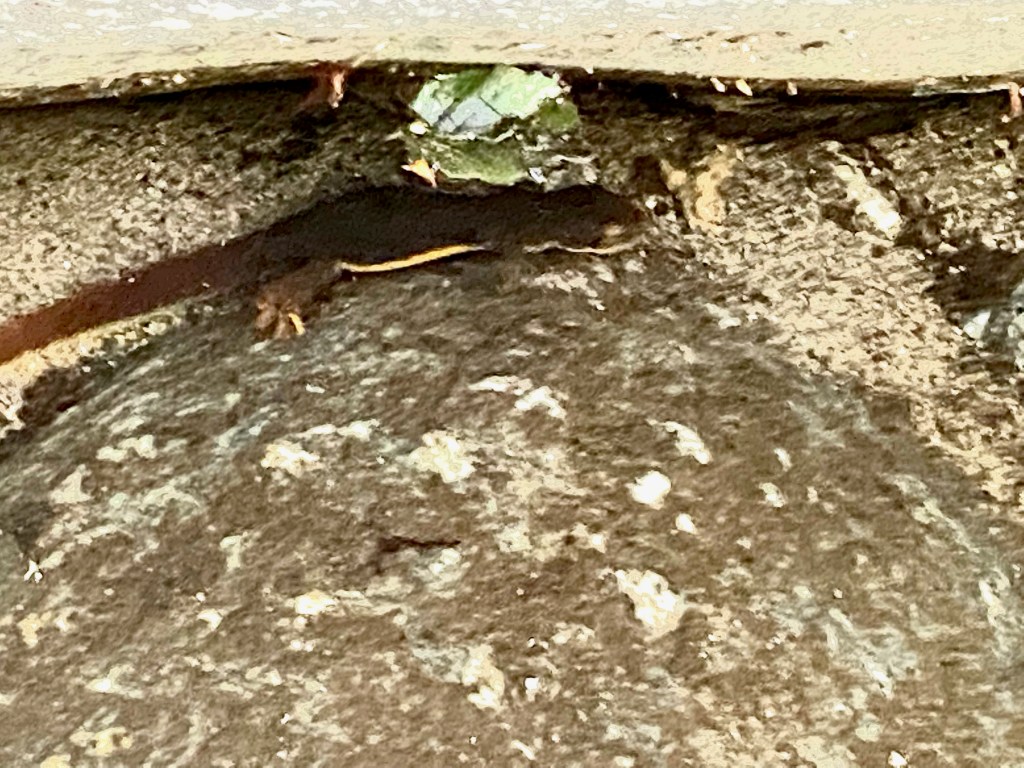
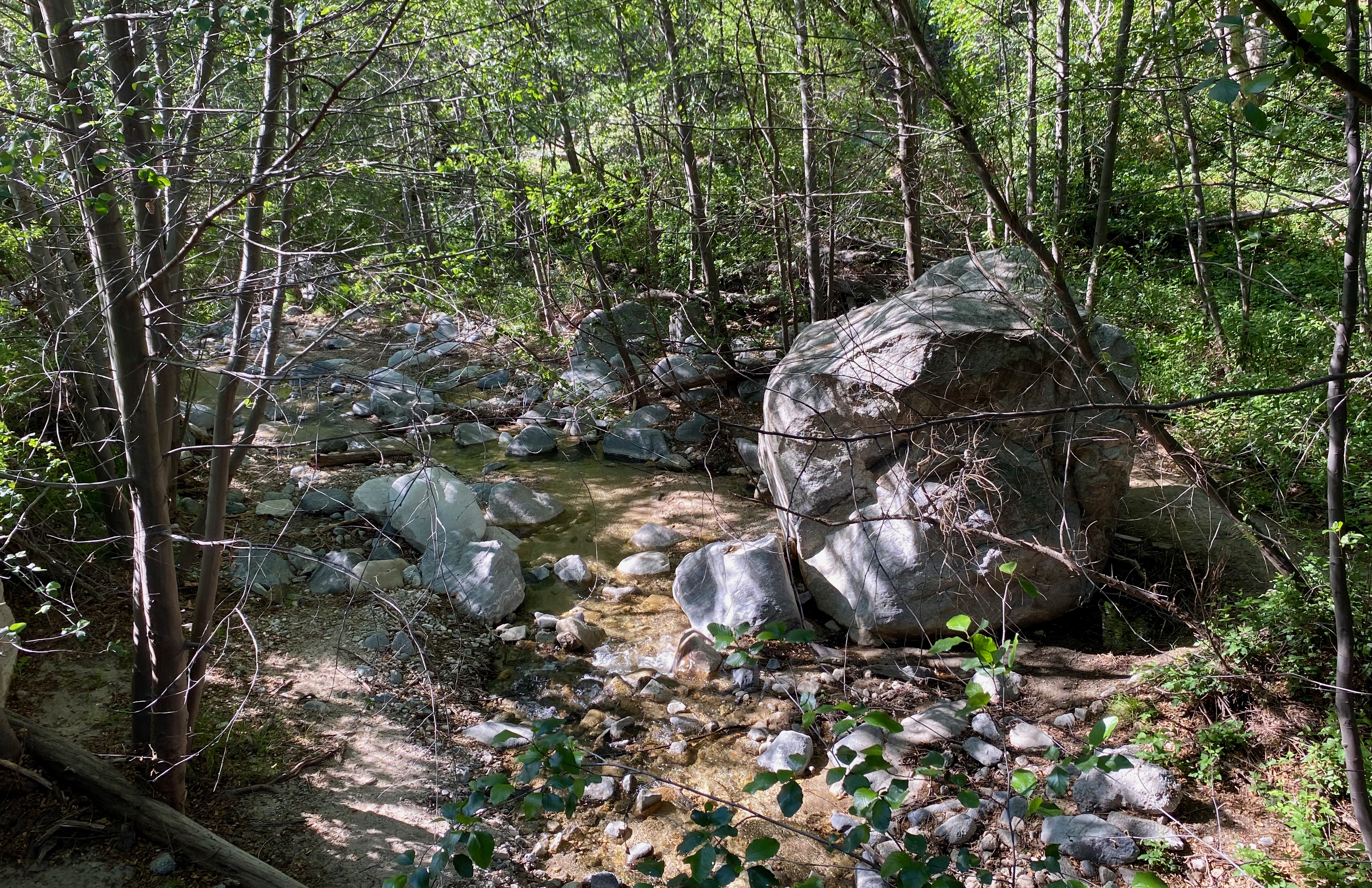
These large boulders were a hallmark of this trip and found every few dozen feet in the trees and along the creek bed up the canyon floor. Many looked to be many years in place with lots of overgrown vegetation surrounding them. Some, like the one in the creek with the newt, seemed to be ideal hovels or dens of one kind or another for animals looking for shelter. None of the shelters made from the large boulders seems human size, but I can imagine both larger and smaller such dwellings exist in places less accessible to the day-tripper naturalist. The degree of rockfall was significant all along the path.


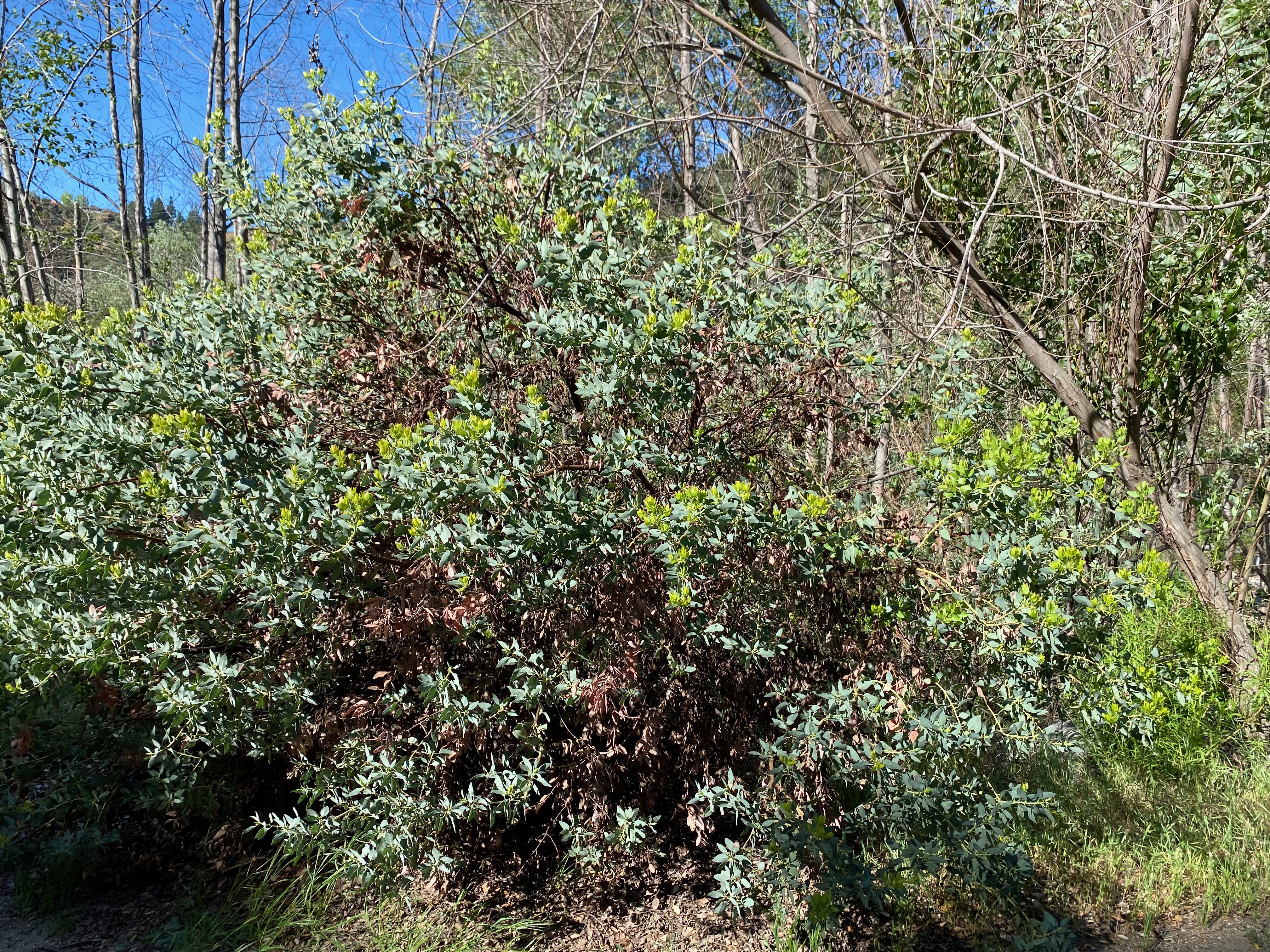
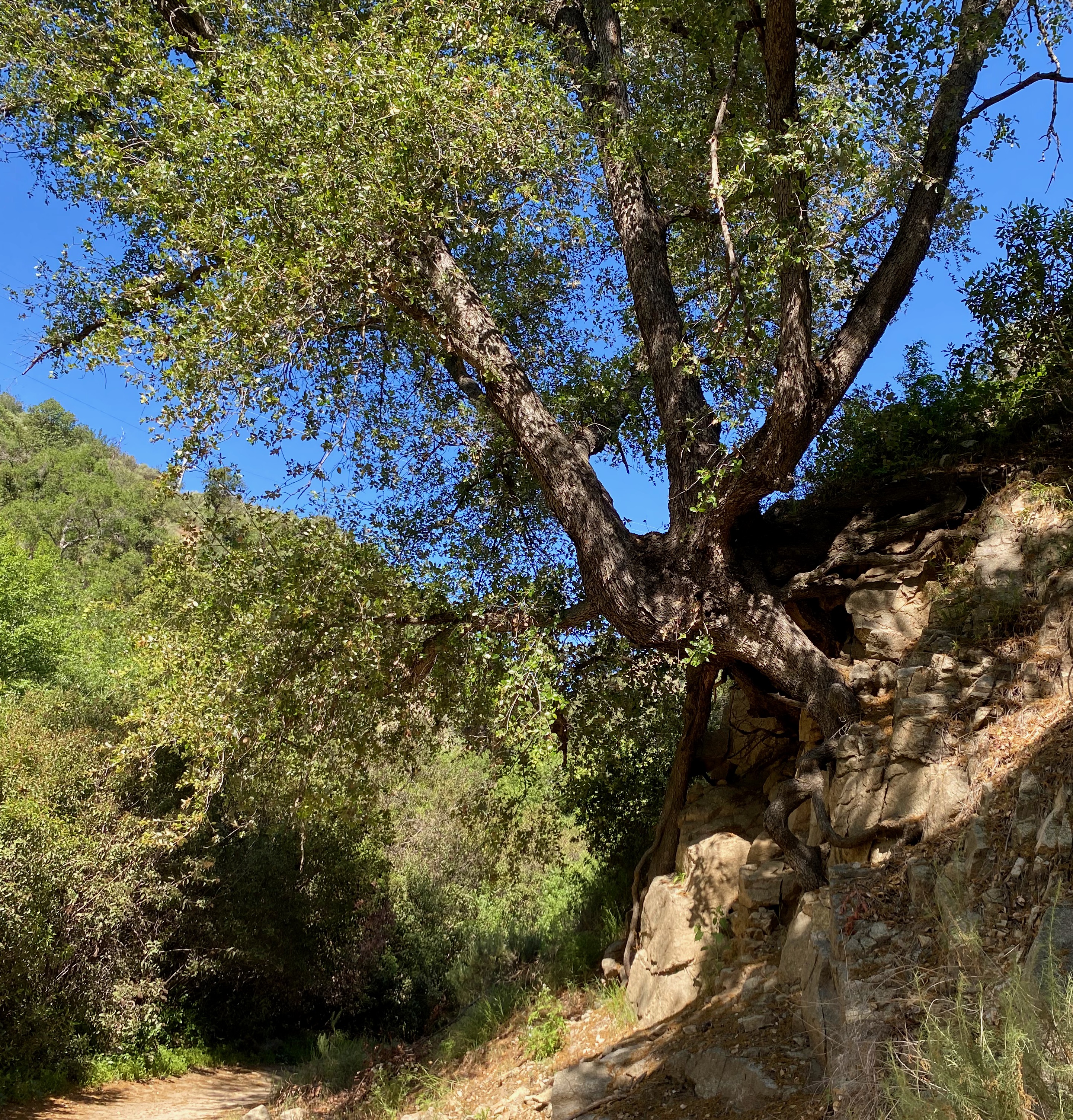
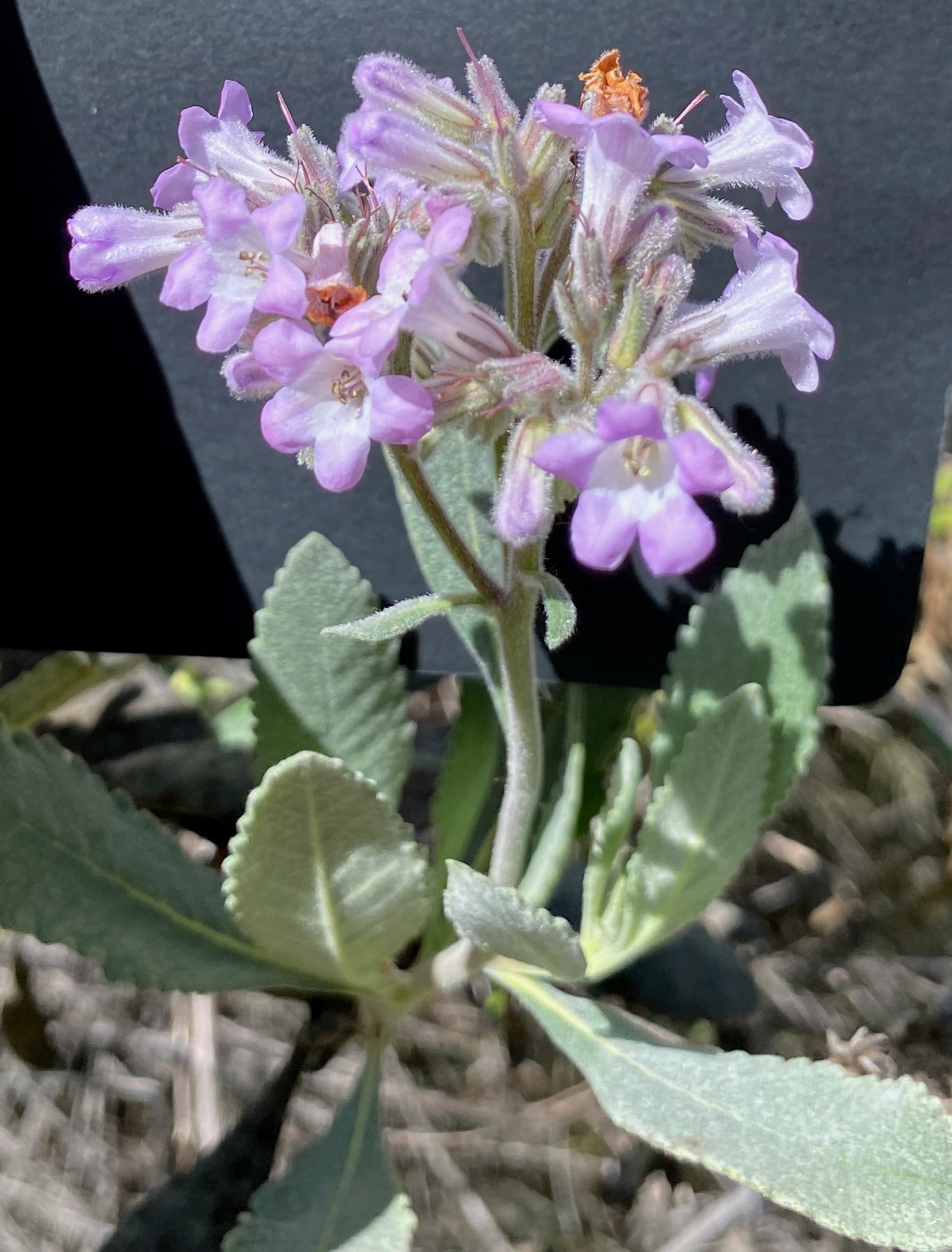
At one point along the path, a colleague and I walked through a meadow, of sorts, surrounded on both sides by riparian trees and shrubs on the creek side and oak and scrub ion the dryer, western, slope side. Remarkably the soil was near entirely dry and sand like form years and years of decomposing granite stone pulverizing into fine grains of sand. What was so remarkable was that it had the quality of beach sand and yet many plants were firmly anchored and growing happily. It was in this location that I found a Yerba Santa in bloom and a high volume of non-native grasses growing profusely between Laurel sumacs, sugar bush, and yucca. One of these sugar bushes was in full and resplendent bloom. It was the only one I found in the space this way—covered in pink, white, and read flowers.
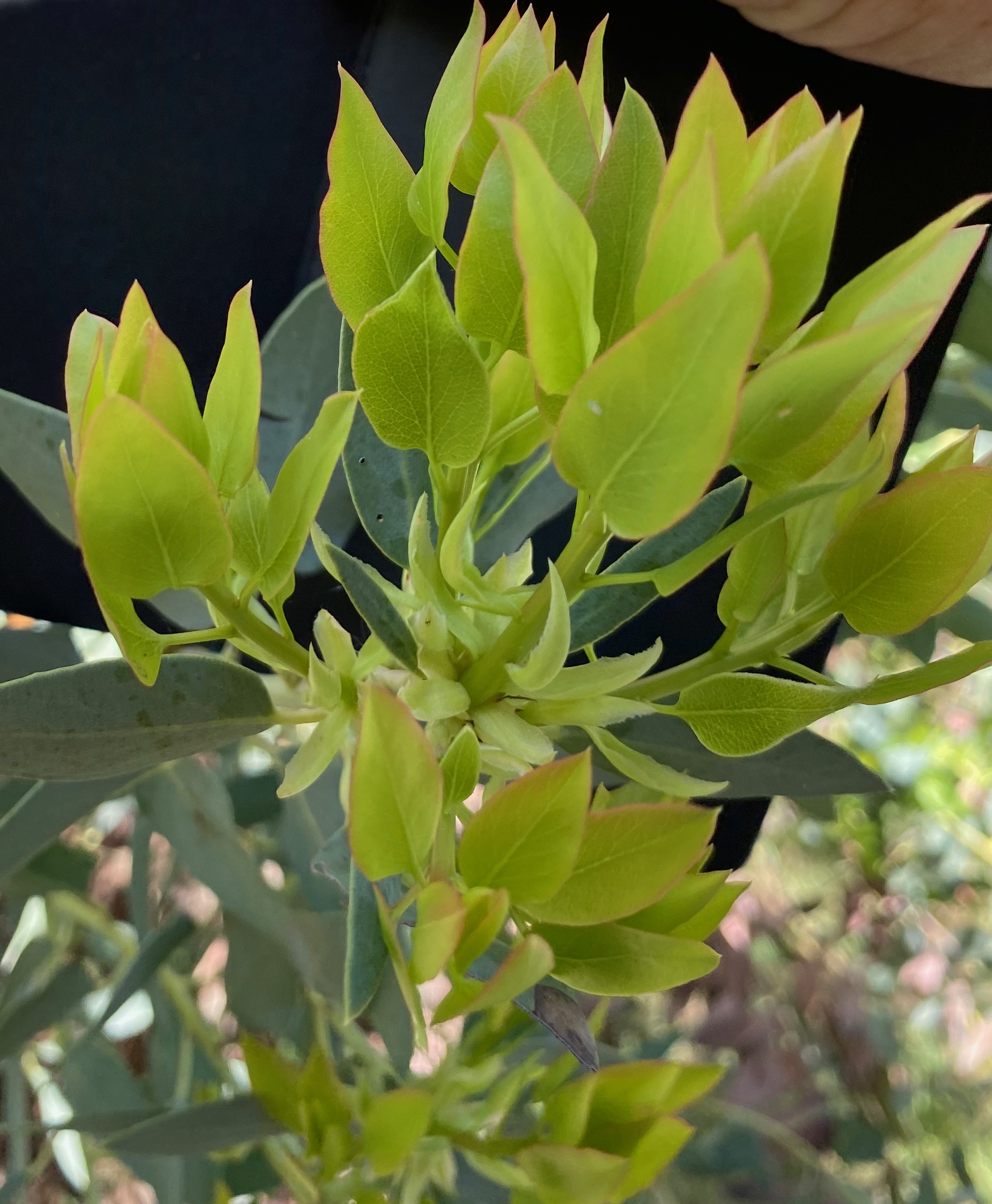
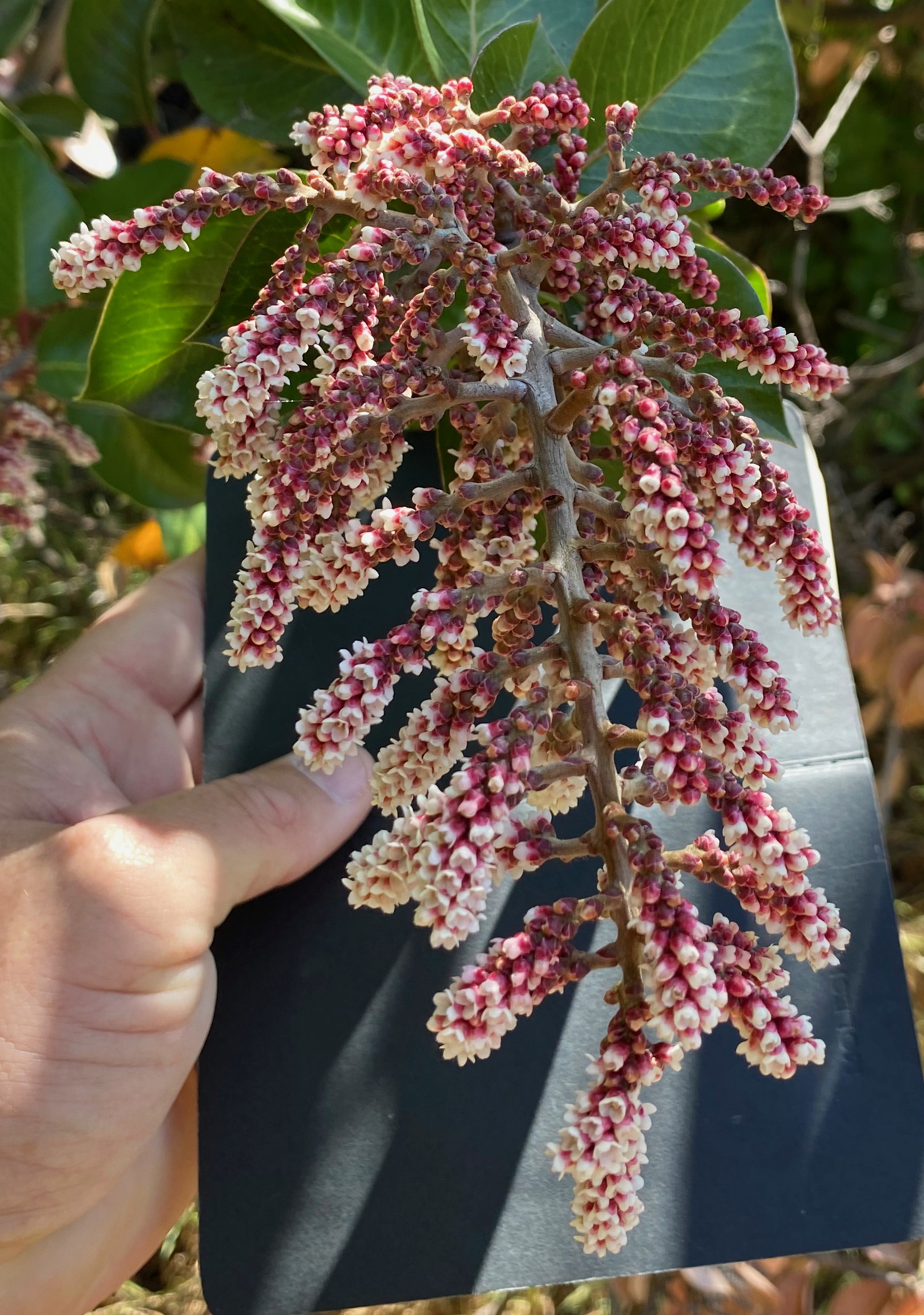
Despite the many people along the trail, I did not see as much poison oak or hemlock. This told me that the path to the campground was less disturbed and filled in with other less advantageous plants. That’s not to say both weren’t just behind the trail, but they weren’t growing in what I would think to be disturbed areas. Why this was the case, I believe, was because the trail edges were relatively undisturbed, meaning few ventured off the trail and into the brush, not giving the toxic plants the opportunity to creep into the disturbed spaces.
Reaching the Gould camp, I took a few minutes to take it all in. It stood out to me how disturbed the camp site was with open dirt and few shrubs are the edges. There were several old cabin footings and all the accoutrements of a camp site. I noticed the same squared poured concrete floors, like old cabin footprints down the canyon.

Here, I turned back around and headed down the trail back to the parking lot listening to the wind pick up and roar through the canyons taking in the mix of native and non-native trees left over from times past when the presence of humans tried to shape the land to their personal tastes. I arrived back into civilization near noon and concluded my days trip.
Field Observations
- Lots of rock fall
- Large newt at the base of a rock
- Walkers, mountain bikes and young children in school groups
- Loud wind through the canyons
- Old infrastructure: bridges, cabins, walls
- Bowling ball on a bridge
- Not as much poison oak (non-disturbed spaces)
Observed Species
- Alder – Alnus rhombifolia
- Arroyo Willow – Salix lasiolepis
- Black Sage – Salvia mellifera
- Buckwheat – Eriogonum fasciculatum
- California Sage – Artemisia californica
- Chilicothe – Marah macrocarpa
- Elderberry – Sambucus melanocarpa
- Laurel Sumac – Malosma laurina
- Mule Fat – Baccharis salicifolia
- Toyon – Heteromeles arbutifolia
- Western Sycamore – Platanus racemosa
- Mugwort – Artemisia douglasiana
- Castor Bean – Ricinus communis
- Tree tobacco – Nicotiana glauca
- Sugar Bush – Rhus ovata
- Wild Cucumber – Marah macrocarpa
- Thick-leaved Yerba Santa – Eriodictyon crassifolium
- Big Berry Manzanita – Arctostaphylos glauca
- Bigleaf Maple – Acer macrophyllum
- California Newt – Taricha torosa
- Pine Trees (several)
- Grasses (various)
- oak(s)
 Exploring Urban Ecosystems and Patch Ecology
4 responses to “Upper Arroyo Seco – Visit 5”
[…] Visit 2 | Visit 3 | Visit 4 | Visit 5 […]
LikeLike
[…] Visit 1 | Visit 3 | Visit 4 | Visit 5 […]
LikeLike
[…] Visit 1 | Visit 2 | Visit 4 | Visit 5 […]
LikeLike
[…] Visit 1 | Visit 2 | Visit 3 | Visit 5 […]
LikeLike