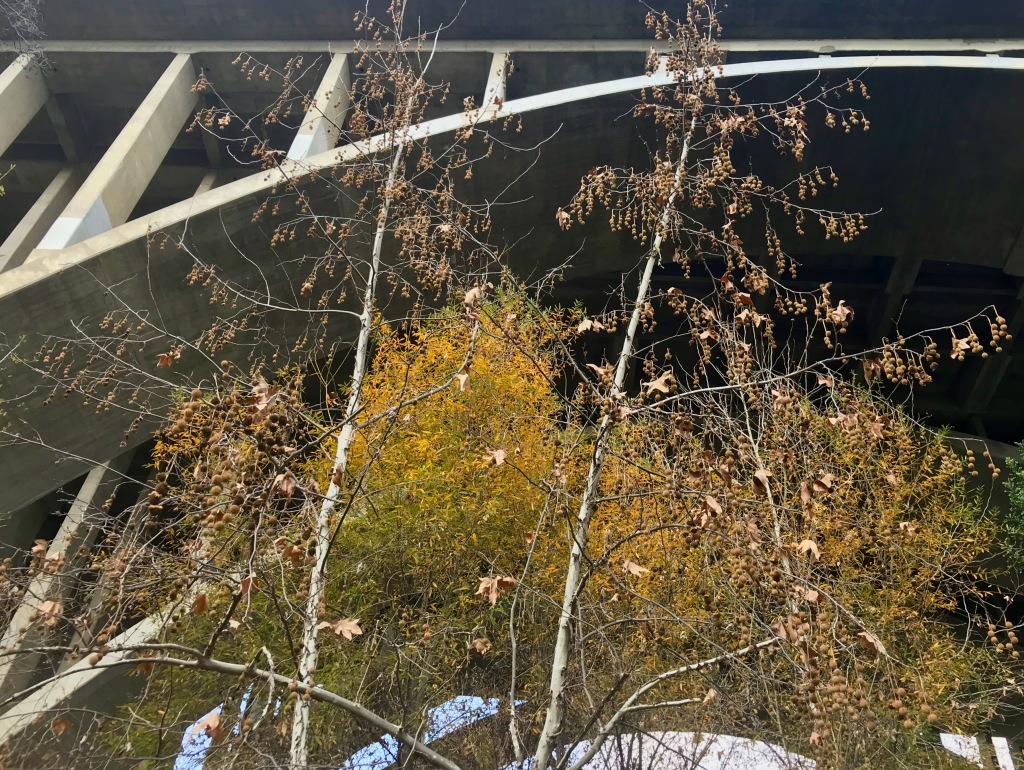
California Naturalist Outing
Lower Arroyo Seco Park
Pasadena, CA
8:50 a.m. – 11:15 a.m.
- From the Rose Bowl Parking Lot (south side) near the aquatic center.
- Route: Footpath along the road to the trail head
- Weather: Cool, not cold. Mid 50s. Air was moist/humid. Sky was overcast but burning off quickly.
Visit to the Upper Arroyo Seco
Down the trail into the wild area interface.
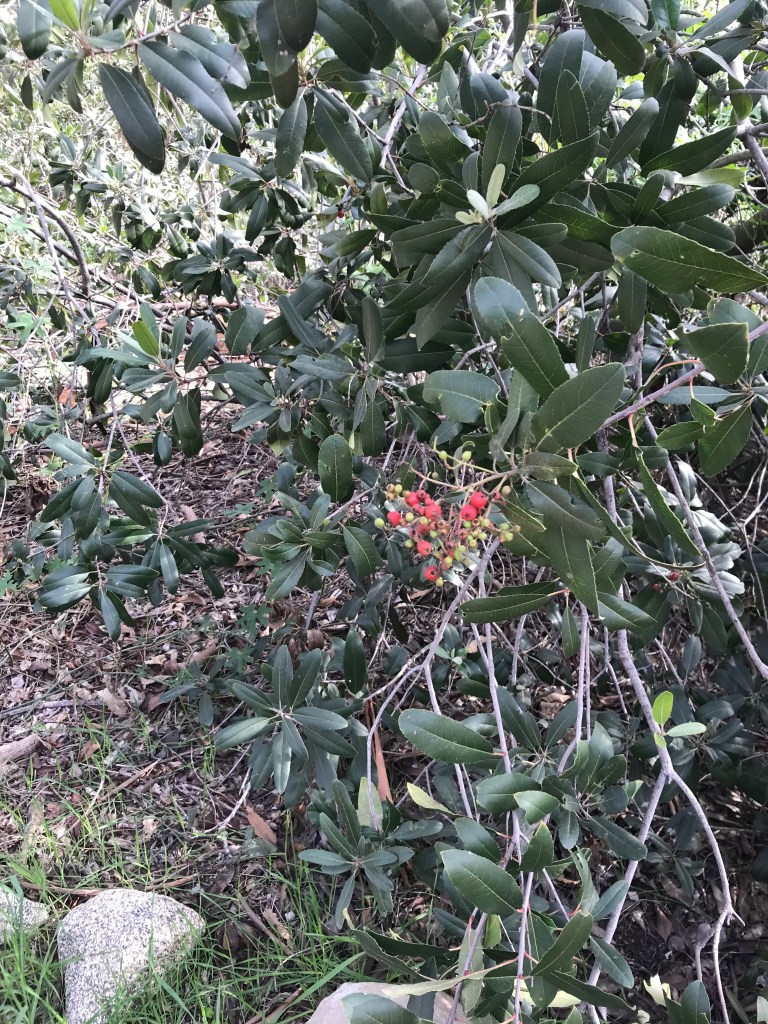
On this outing, as a group we moved down the trail through the riparian and chaparral area into the sage scrub open space. Collectively we looked at different drought adopted plants including white sage, black sage and buckwheat. In the area, invasive grasses exhibited a pervasiveness and growing in nearly every open spot of soil. On the edges, oak and toyon clung to the gentle southern slope of the arroyo wall. Lemonade berry and laurel sumacs were dotted here and there.

Stopping, we asked and explored questions around why chaparral existed. As a zone, it can be prone to fire, but certain species were adapted to the erosion/fire/regrowth process. We can see why chaparral needs fire to clear away old/dead woody material to make way for new growth. That new growth pulls minerals from years of erosion of surrounding hills used in their growing process. Encroaching grasses, however, are putting pressure on native species and operate as opportunists in the space.
Geology
Further, does the geology also impact what grows in the space? Could different rocks and/or soil types hold or store water that deep rooted plants can take advantage of?
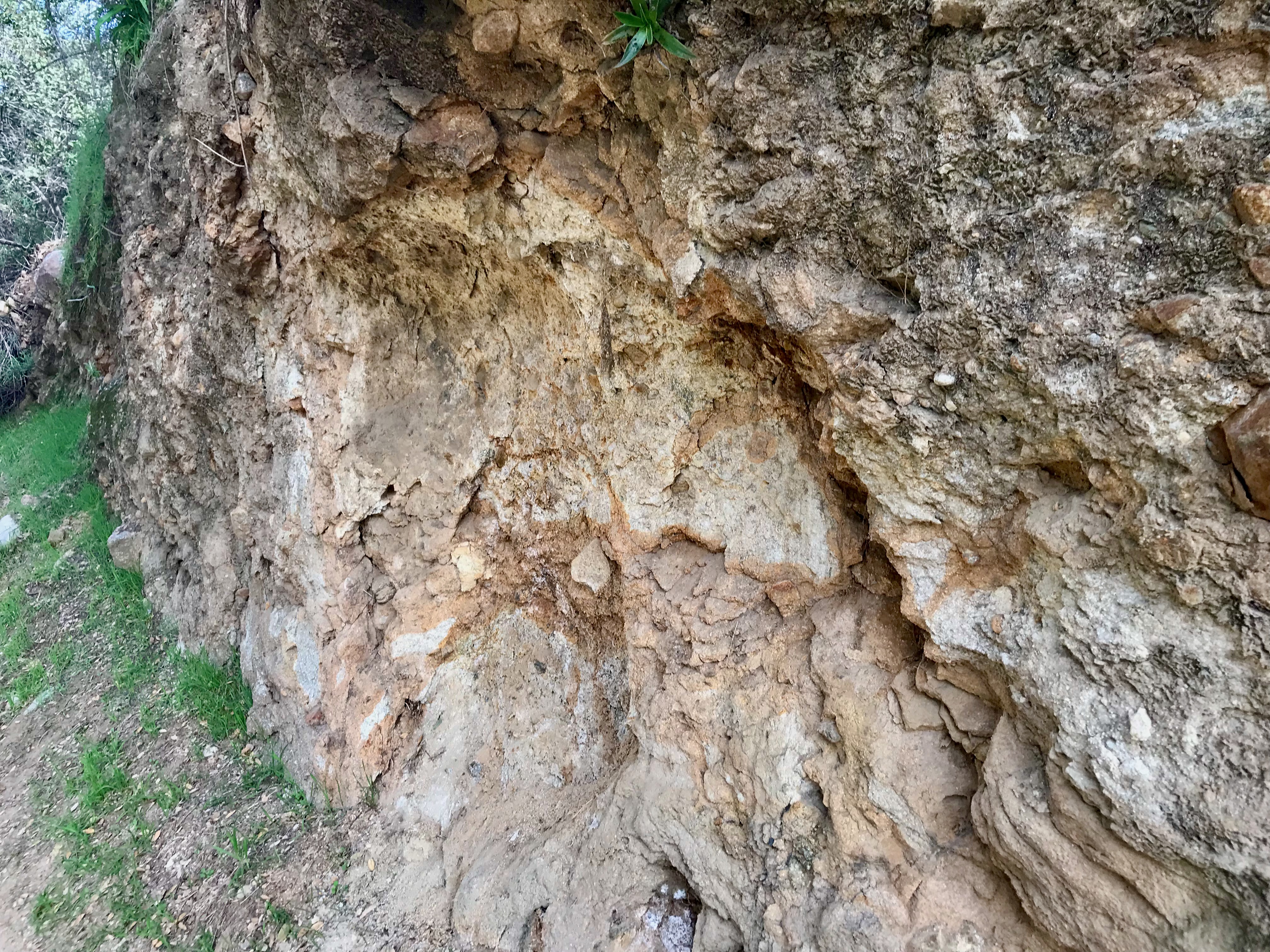
Our cohort walked further down the trail to explore the geology of the space We looked closely at the Topanga Canyon formation layer which is an old sedimentary erosion soil layer of from millennia of run off, floods and glaciation pushing the remains of long gone mountains in the Southern California region. It was VERY INTERESTING to see the minerals, stones, pebble and what I think was a fossil of some long-gone organism. Out of that layer, we observed closely how white salt deposits pushed their way through the old sedimentary layer. It was interesting to note how the salt makes the soil more alkaline and leaves a white crystalline deposit.


Field Observations:
- White sage – Salvia apiana
- Black Sage – Salvia mellifera
- Buckwheat – Eriogonum fasciculatum
- Toyon – Heteromeles arbutifolia
- Lemonade berry – Rhus integrifolia
- Laurel Sumac – Malosma laurina
- Lanceleaf liveforever – Dudleya lanceolata
- Western sycamore – Platanus racemosa
- Oak(s) – several
- Invasive grasses – several
- Topanga Canyon formation
- Salt deposits
- Old/abandoned wild beehive

 Exploring Urban Ecosystems and Patch Ecology